
The Rise of the Regenerative Vertical Path
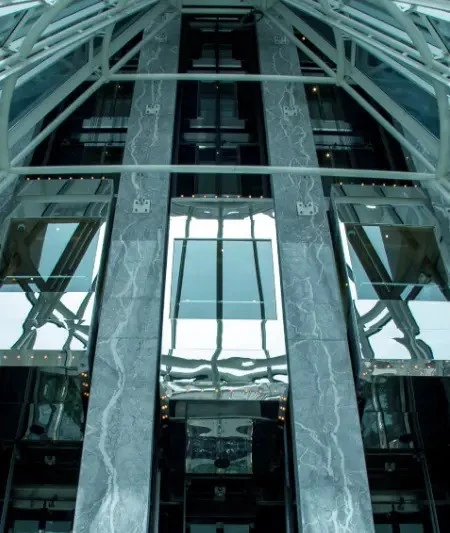
Adding elements of sustainability to modern architecture is a necessary engineering challenge, particularly in the United Arab Emirates’ (UAE) rapidly growing and densely populated urban centers. Sustainability efforts for a carbon-neutral facility start with the most energy-consuming aspect of the facility: the elevator. Standard vertical lift systems waste energy by dissipating what is referred to as “brake energy” in the form of residual heat. However, some new designs for elevators incorporate regenerative drives, which use “brake energy” to power the system. When the elevator needs to carry a light load upwards, the regenerative drive system captures the energy, and the elevator cab acts as a generator that sends the energy to the building's power grid. Additionally, vertical transportation systems (VTS) can incorporate light-emitting diodes (LED) for elevator cab illumination and a “standby mode” that powers down the cab light during non-traffic times.
Sustainability Metrics in Access Infrastructure
To determine the sustainability level of a facility’s access points, the following can be used as criteria to determine positive environmental features:
| System Component | Sustainable Feature | Environmental Impact | ROI Factor |
| Industrial Elevator | Regenerative Drive System | Recycles up to 40% of consumed energy | Lower utility bills |
| Sectional Doors | High-Density Thermal Breaks | Minimizes HVAC load in extreme heat | Reduced carbon footprint |
| Safety Barriers | Recycled Steel / High-Life Polymers | Reduces manufacturing waste | Lower replacement frequency |
| Control Systems | Smart Motion Sensors | Eliminates phantom energy draw | Extended equipment life |
Closing the Thermal Gap: High-Efficiency Envelopes
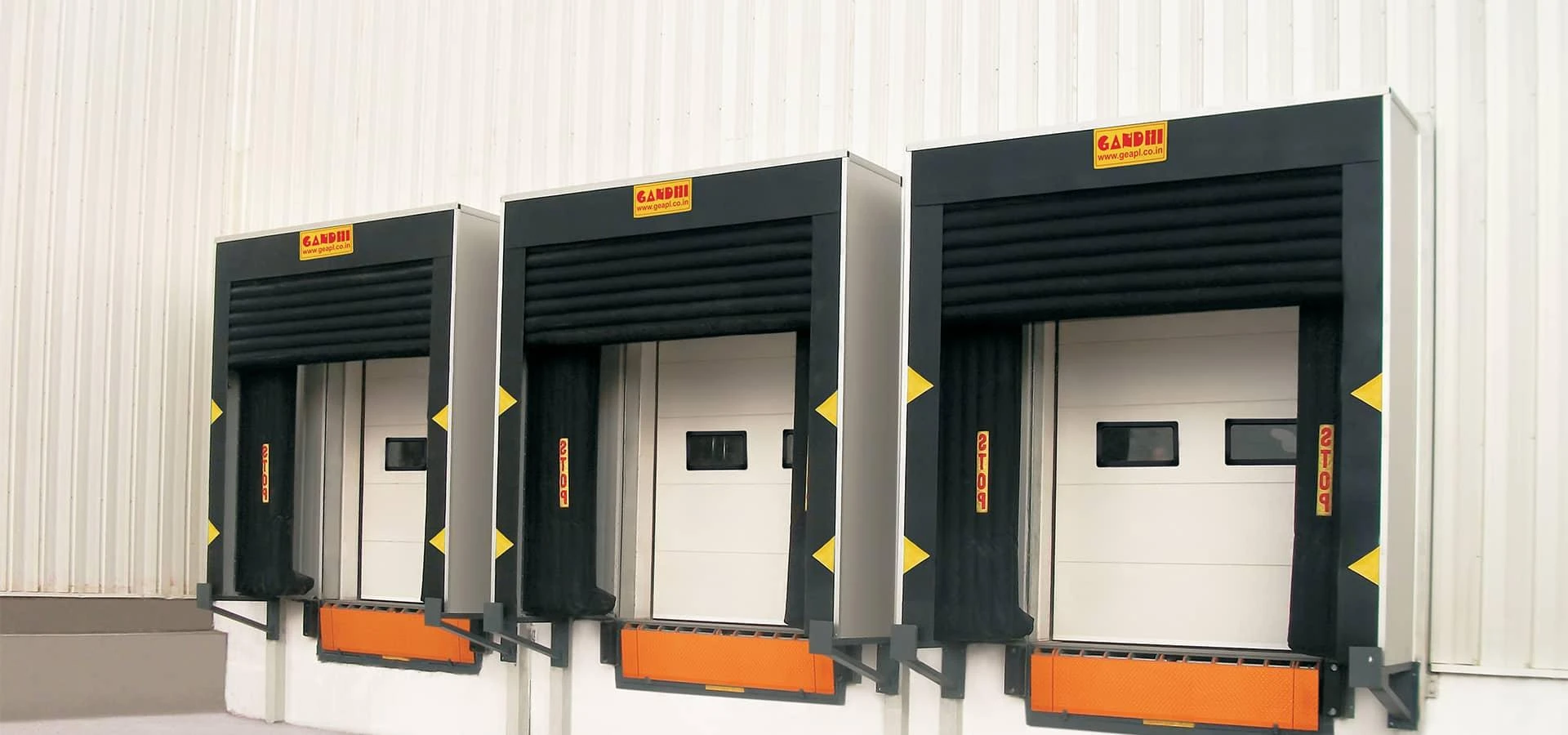
A building’s perimeter is, and always has been, a critical space for determining a building's sustainability. In the Middle East, the biggest energy expenditure by the facility, and the building's biggest energy inefficiency is caused by a door left open, is 'forcing' a room's air conditioning is caused by a door left open. Sustainability has become a primary metric in the performance of modern sectional doors. Thermal breaks - a component of sectional doors which is an insulating barrier - prevent high energy losses due to high energy exchanges.
There are a number of areas of focus when it comes to designing for sustainability at the threshold:
- Optimized Cycle Speeds: By utilizing high-speed motors, the "open time" is drastically reduced, preventing the mass exchange of cooled internal air with hot external air.
- Superior Perimeter Sealing: The advanced space saving sectional systems have multiple levels of weather seals that produce an airtight and dust-proof barrier, typically a desired laboratory grade closure.
- Material Longevity: Choosing doors made from high-recycled-content steel with eco-friendly coatings ensures that the hardware itself has a lower "embodied carbon" footprint from the moment of installation.
Sustainable Defense and Long-Term Durability
Even the most basic components of a facility’s safety infrastructure can be designed with an eco-conscious mindset. Even the traditional approach to Asset Protection, which relied heavily on disposable materials to be replaced frequently after minor impacts is responsible and removable. The focus of today’s sustainable bollards is the longevity and the recycled materials. High impact Polymer Material Flex, for instance, can be made from recycled plastics which are designed to flex and return to the exact original shape after an impact. Hence, needing not to be disposed of and replaced.
For buildings made entirely of steel, finish options that stand against corrosion can make products last for decades. By placing certain barriers, the insulated door tracks and high-efficiency elevator shafts can be kept safe, and the most expensive green technologies of the building will be undamaged. Access and high speed designs that incorporate sustainability provide balance to the speedy demands of modern trade and commerce.



















Sign in to leave a comment.