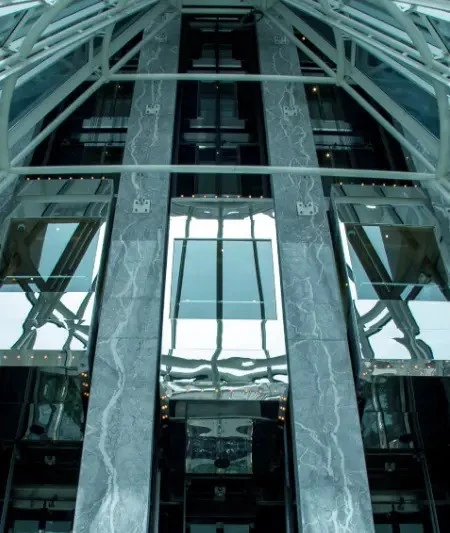

A home elevator is not the same risk profile as a commercial lift. The volume of daily use is lower. The passengers are often the people who live there, including elderly family members and children. When something goes wrong in a residential setting there is no building management team to call and no maintenance engineer on site. The safety of the system depends almost entirely on how it was specified, installed, and how consistently it gets serviced.
The Risks Nobody Talks About at the Point of Sale
Entrapment is the most shared safety incident in residential elevators. The car stops between floors and the resident cannot get out without assistance. In a commercial building the response is quick. In a home where nobody else is present it can be a very different situation.
Door and gate mechanisms on older residential systems carry specific risks for children. A gate that a small child can reach through while the car is moving, or a door interlock that is not functioning correctly, is a serious hazard. Modern elevator for home systems have improved significantly on this. Older installations that have not been updated or properly maintained are a different matter.
Overloading is less dramatic than it sounds but still a real issue. A residential elevator rated for two passengers being used to move furniture or heavy loads regularly will wear faster and fail earlier than one used within its rated capacity.
What a Safe Installation Looks Like
The safety of a home elevator starts before the product is chosen. An elevator supplier who assesses the specific property, the likely users, and the installation conditions before recommending a system is doing the job properly. One who sells the same product into every home regardless of context is not.
The key safety features to confirm in any residential elevators lifts installation. An automatic rescue device that brings the car to the nearest floor in a power failure. Door interlocks on every landing that prevent the car from moving with a door open. A telephone or intercom inside the car for entrapment situations. An emergency stop that the occupant can reach easily. Weight sensing that prevents movement if the car is overloaded.
These are not optional extras. They are the baseline. Any elevator for home that does not include all of them should not be going into a residential property.
The Elevator Supplier Relationship Matters More Than the Product
A home elevator from a reputable elevator supplier installed correctly and maintained on schedule is a safe system. The same product installed by someone who does not know the system, or left without elevator maintenance for three years because nobody arranged a service contract, is a different story.
Before any purchase the questions worth asking are direct. Who installs it and what is their experience with this precise system. What does the warranty actually cover and for how long. Who offers elevator maintenance after installation and what does that service essentially include? Whether parts are available locally or require lead time from overseas.
An elevators company that installs and walks away is a red flag. The after-sales relationship with the supplier determines whether the system stays safe over its working life.
Elevators Maintenance in a Residential Setting
Home elevators do not run as many cycles as commercial systems but they still need regular attention. Safety devices need to be tested. Door mechanisms need inspection and lubrication. The drive system needs to be checked. The emergency communication system needs to be confirmed as functional.
Most homeowners do not know when any of this was last done. The elevator was installed, it worked, and maintenance became something that happened when something stopped working rather than on a schedule. That is how systems that were safe at installation become unsafe over time without any single dramatic event.
An annual service by a qualified engineer from the elevators company or their approved maintenance provider is the minimum. In a home with elderly or young occupants using the system daily, twice a year is the more responsible schedule. The cost of that service against the consequence of a failure that could have been prevented is not a difficult calculation.
What to Do With an Older System
A home elevator that is more than ten years old and has not had regular elevators maintenance is worth having assessed by a qualified engineer before it continues in daily use. Safety standards have changed. Components wear. Door interlock technology that was acceptable a decade ago may not meet current expectations.
The assessment will either confirm the system is sound and identify what maintenance it needs, or it will identify what needs to be updated. Either outcome is useful. Running an ageing residential elevator on the assumption that it is fine because it has not caused a problem yet is not a safety strategy.

















Sign in to leave a comment.