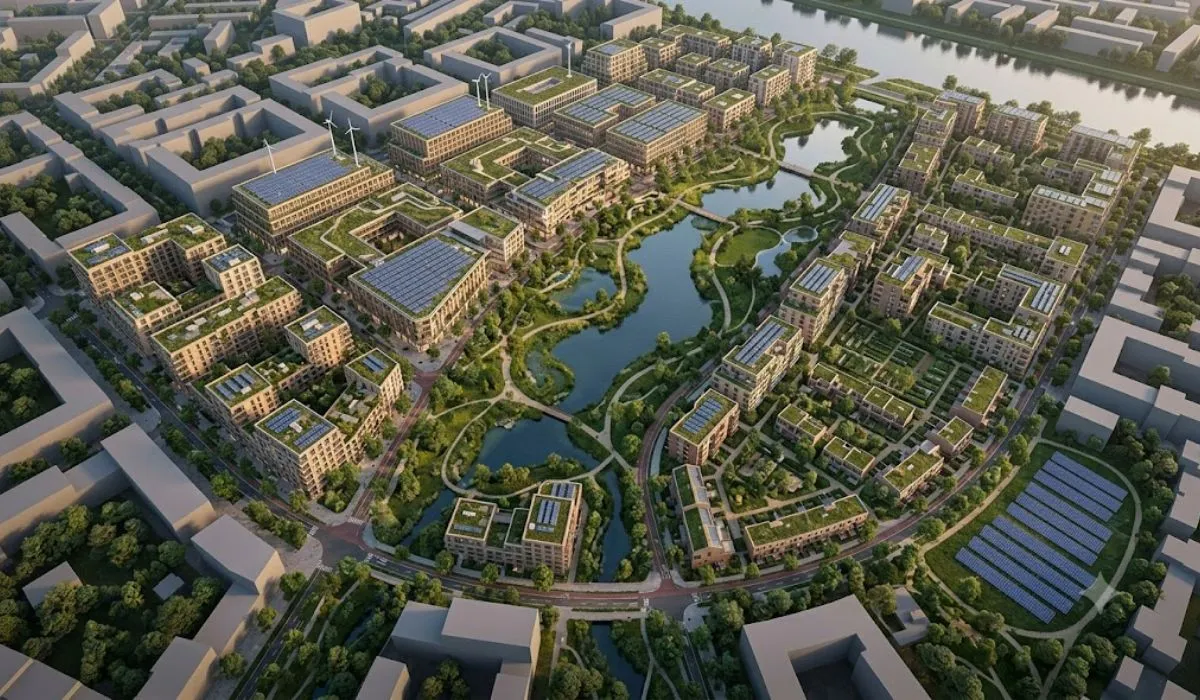

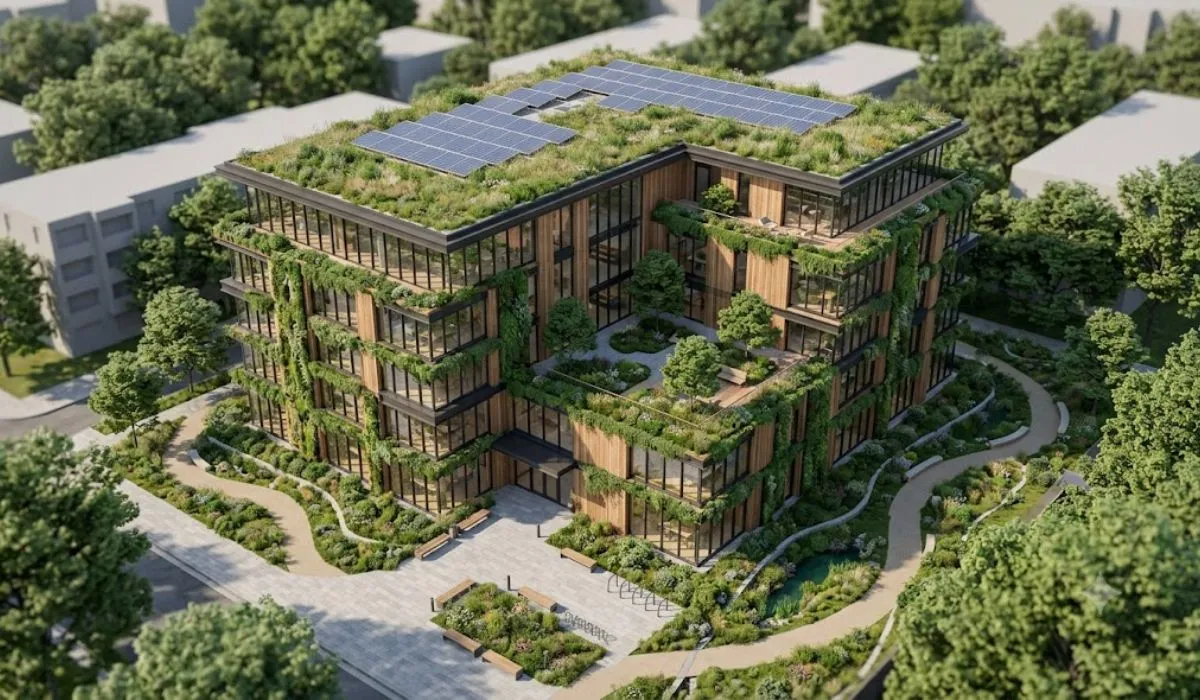
The construction and operation of buildings account for approximately 36% of global energy use and 30% of greenhouse gas emissions. We are at a critical juncture where the built environment must transform. This transformation isn't merely about adding solar panels or specifying recycled content. It requires a fundamental rethinking of design philosophy—a commitment to buildings that actively contribute to environmental health.
Green architecture represents the maturation of this philosophy. As an architect and sustainability consultant who has navigated the evolution from checkbox compliance to performance-driven design, I see green architecture as the practical application of ecological principles. It is a framework for creating structures that achieve a harmonious relationship with their surroundings, minimizing environmental impact while maximizing human well-being.
What Is Green Architecture?
Green architecture is a design philosophy and practice dedicated to minimizing a building's environmental footprint throughout its entire lifecycle. This lifecycle perspective, from raw material extraction to eventual deconstruction, is central to understanding its impact.
This approach systematically addresses how buildings consume resources and generate waste. It moves beyond focusing solely on operational energy—the power used for lighting, heating, and cooling—to consider embodied energy: the carbon emitted in material production, transport, and construction.
Green architecture aims to reduce negative impacts and contribute positively to environmental health and human well-being. It is a commitment to building within planetary boundaries, ensuring resource availability for future generations. It integrates renewable energy, water conservation, waste reduction, and superior indoor environmental quality as interconnected components of a single system.
Green Architecture vs Sustainable Architecture
While often used interchangeably, green architecture and sustainable architecture are distinct concepts. Understanding this difference is crucial for architects and clients to align project goals with impact.
Sustainable architecture is the broader umbrella. It is a holistic approach rooted in the "triple bottom line"—balancing environmental protection with social equity and economic viability. A truly sustainable project minimizes ecological harm while being economically feasible and socially just, from labor practices to community impact.
Green architecture is a more focused subset of sustainability. It prioritizes environmental performance and resource efficiency through measurable strategies. The difference lies in scope and objective. If sustainable architecture asks, "Does this building support long-term ecological, social, and economic health?", green architecture asks,
"How do we build this with minimal environmental impact, maximum energy efficiency, and healthy indoor spaces?"
Consider two buildings. One uses responsibly sourced timber and achieves net-zero energy but is unaffordable for its intended community—this may be "green" but not fully "sustainable."
Another may use conventional materials but provide mixed-income housing, community space, and local jobs while reducing energy use by 40%—this is closer to "sustainable," if perhaps less intensely "green."
Green architecture is the actionable, performance-oriented layer within the larger ambition of sustainable design.
Core Principles of Green Architecture
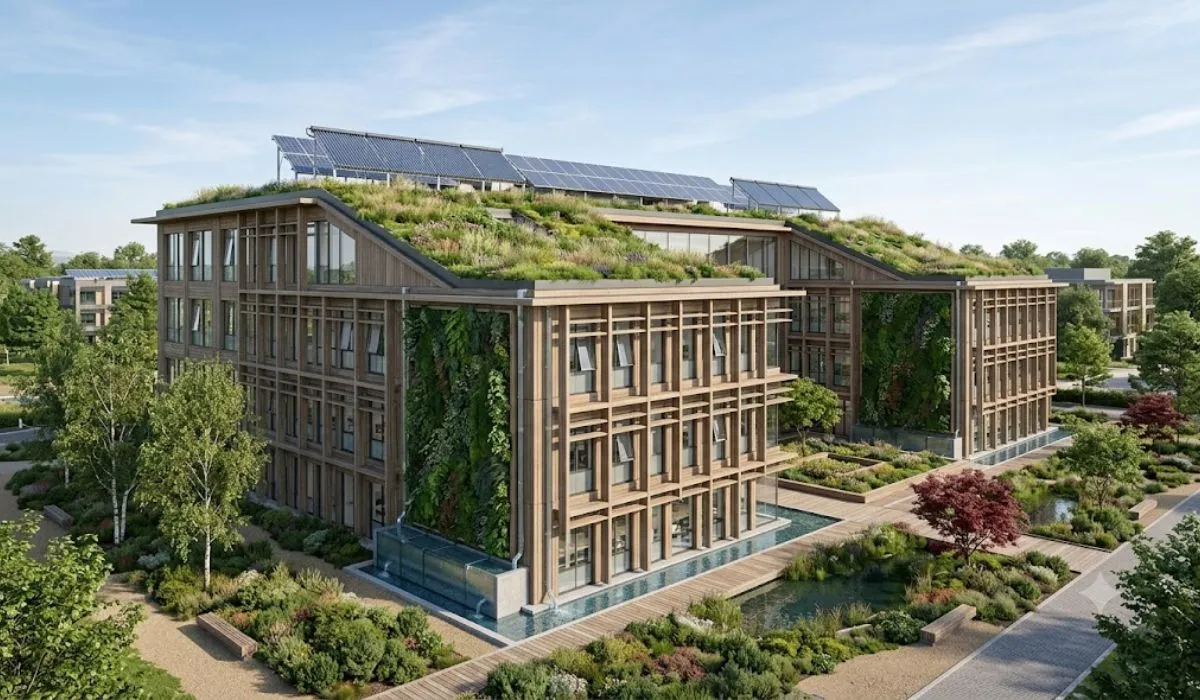
Effective green architecture rests on several interconnected pillars that guide decision-making from site selection to material specification.
Energy Efficiency and Passive Design: The first priority is reducing energy demand before generating renewable energy. Passive design—building orientation, shading, natural ventilation, and high-performance envelopes—minimizes reliance on mechanical systems. A well-oriented building with deep-set windows and thermal mass reduces cooling and heating loads.
Resource Conservation and Material Selection: This involves specifying materials with low embodied carbon, recycled content, or rapidly renewable sources like bamboo. It also demands reducing construction waste through design for disassembly, enabling future reuse of building components. Local sourcing reduces transportation emissions and supports regional economies.
Water Stewardship: Water conservation strategies are fundamental, including rainwater harvesting, greywater recycling for irrigation and toilet flushing, and water-efficient fixtures. These reduce freshwater demand and lessen the burden on municipal systems.
Healthy Indoor Environments: Green architecture prioritizes occupant health through superior indoor air quality, abundant natural light, and views of nature. This means specifying non-toxic materials that limit volatile organic compounds (VOCs) and designing for effective ventilation.
Site and Ecosystem Integration: A building is not an isolated object but part of a larger ecosystem. Green architecture respects the site's natural features, preserves biodiversity, minimizes disruption to habitats, and manages stormwater through green infrastructure.
Green Building Technologies
Design principles are brought to life through technologies that enhance building performance and generate clean energy.
High-Performance Building Envelopes: Advanced insulation materials, high-efficiency glazing, and airtight construction dramatically reduce heating and cooling loads. Technologies like vacuum-insulated panels or aerogel offer exceptional thermal performance.
Renewable Energy Systems: Solar photovoltaic panels, building-integrated photovoltaics (BIPV), wind turbines, and geothermal heat pumps generate clean energy and reduce reliance on fossil fuels. BIPV, for instance, integrates solar panels directly into building materials like roofing or facades, generating electricity while serving dual functions.
Building-Integrated Photovoltaics (BIPV): BIPV is an emerging technology with immense potential. Research shows that BIPV systems can offset up to 106% of CO₂ emissions through on-site electricity generation, but performance is context-dependent and requires careful climate-conscious planning.
Vertical Greenery Systems and Green Roofs: Vegetated walls and roofs provide multiple benefits: insulation, stormwater management, urban biodiversity enhancement, and reduced heat island effect. Studies show they can lower pedestrian-level air temperatures by approximately 0.6°C.
Smart Building Systems and IoT: Intelligent building management systems use sensors and data analytics to optimize energy and water use in real-time. IoT-enabled utilities achieve 20–30% savings in energy and water consumption in successful implementations.
Benefits of Green Architecture
The business case for green architecture is compelling, with measurable returns across environmental, economic, and social dimensions.
Environmental Performance: Building performance metrics demonstrate the impact. Green buildings can reduce energy use by up to 50% and emissions by 30–50%. Water consumption drops significantly through conservation measures. Construction waste is drastically minimized through recycling and reuse.
Economic Value: While upfront costs can be 2–10% higher, life-cycle cost analysis reveals substantial savings. Operational expenses are significantly lower due to reduced energy and water bills. Green buildings also command higher property values and attract premium tenants.
Human Health and Productivity: Perhaps the most profound benefit is to occupant health. Superior indoor environmental quality—daylighting, ventilation, and non-toxic materials—has been linked to increased productivity, reduced absenteeism, and improved well-being. Co-benefits for occupant health and comfort are substantial when indoor environmental quality is explicitly targeted.
Applications Across Building Types
Green architecture applies across all scales, from single-family homes to large-scale urban developments.
Residential: Sustainable housing innovations include passive design, net-zero energy buildings, and prefabricated construction using sustainable materials. These solutions promote renewable energy use and water conservation.
Commercial and Institutional: LEED and WELL certifications are common benchmarks for commercial projects. High-performance office buildings with smart systems, green roofs, and BIPV reduce operational costs and create healthier workplaces.
Urban Scale: On a community scale, the approach integrates climate-responsive planning and high-performance building strategies. Urban A&O's Hudson Valley Scalable Climate Cluster exemplifies this approach, demonstrating how climate-responsive planning, renewable energy integration, and high-performance building strategies can be applied at a community scale to enhance resilience.
Challenges Facing Adoption
Despite clear benefits, widespread adoption faces obstacles: high upfront costs (though life-cycle savings offset them), regulatory inconsistencies across jurisdictions, technological limitations in some contexts, and affordability concerns for low-income communities. Governments can accelerate adoption through incentive programs and standardized frameworks.
Future Trends
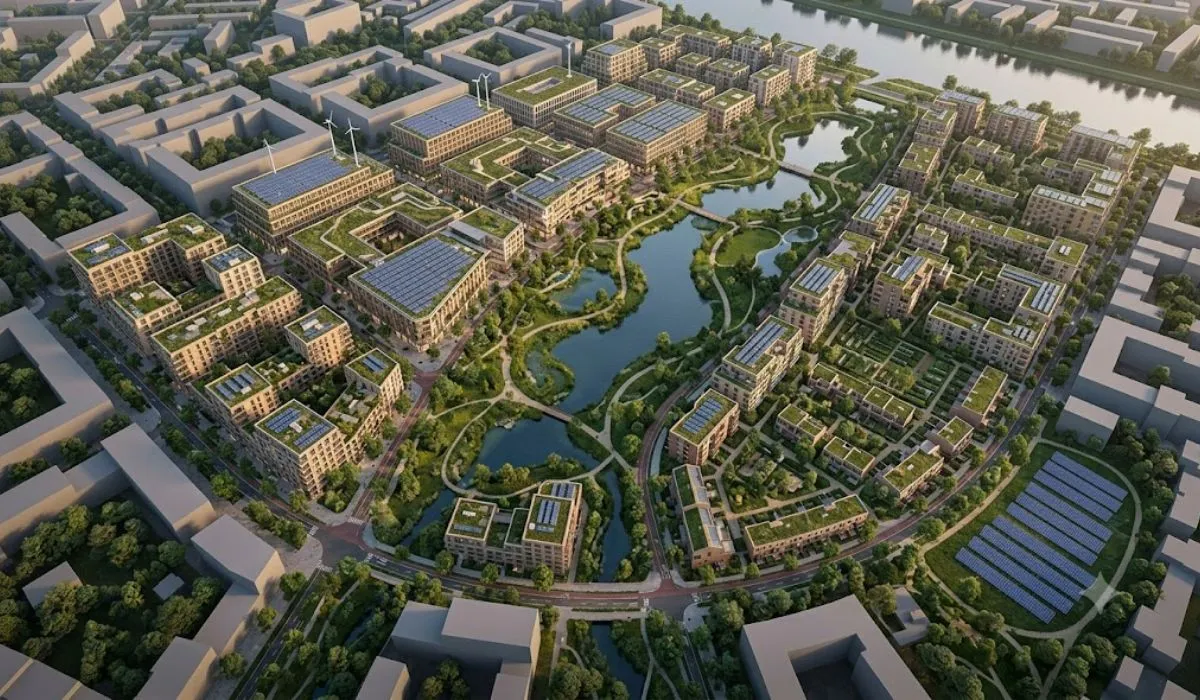
Regenerative and Net-Zero Buildings: The goal of net zero buildings—generating as much energy as they consume—is becoming increasingly achievable. Future buildings will go further, becoming regenerative, producing surplus energy, purifying water, and supporting biodiversity.
Zero-Carbon Concrete and Carbon-Negative Materials: Innovations in low-carbon building materials could revolutionize the sector. Carbon-negative materials store more CO₂ than they emit during production.
Climate-Responsive and Adaptive Facades: Building facades will become dynamic systems that respond to weather conditions, optimizing energy performance and occupant comfort.
Integration of Nature-Based Solutions: This includes designing buildings that actively support local ecosystems, from green roofs and walls to wildlife corridors integrated into urban structures.
Industry Perspective
From my experience as a sustainability consultant, the most successful green projects prioritize performance from the outset. We use energy modeling and life-cycle assessment to inform design decisions, ensuring that passive strategies come before active systems. The "performance gap"—the difference between projected and actual building performance—remains a challenge, which is why rigorous commissioning and post-occupancy evaluation are essential.
Collaboration is key. Green architecture demands integrated design processes where architects, engineers, contractors, and clients work together from the beginning.
FAQs
What is the difference between green architecture and sustainable architecture?
Sustainable architecture is the broader concept balancing environmental, social, and economic factors. Green architecture is a more focused subset prioritizing environmental performance and resource efficiency.
What is the main goal of green architecture?
To minimize a building's environmental footprint across its entire lifecycle while creating healthy, efficient spaces that enhance occupant well-being.
Is green architecture expensive?
While upfront costs may be slightly higher, life-cycle savings from reduced energy, water, and maintenance costs typically offset the initial investment.
Conclusion
Green architecture is an evolution in how we conceive, construct, and inhabit our built environment. It offers a practical, performance-driven pathway to create buildings that reduce their environmental footprint while enriching human life. As the urgency of the climate crisis intensifies, green architecture is not an option but a necessity.
The tools, technologies, and strategies are available. We must now commit to building a regenerative future where architecture contributes positively to ecological and human health. For those ready to embrace this responsibility, the rewards—financial, environmental, and social—are profound.






















Sign in to leave a comment.