

The Viking axe is one of the most iconic symbols of the Viking Age, representing both the everyday life and the warrior culture of the Norse people. While often associated with battle and conquest, Viking axe did not originally begin as a weapon. Instead, it evolved from a simple and practical tool into a highly effective instrument of war.
In early Scandinavian societies, axes were essential tools used for daily survival. Vikings relied on them for chopping wood, building ships, constructing homes, and crafting other tools. These early axes were designed for efficiency and durability rather than combat. They typically had small, sturdy heads and were easy to handle, making them ideal for routine tasks. Because iron was relatively scarce and valuable, most axes were carefully made and maintained, often passed down through generations.
As Viking society developed and expanded, so did the need for more specialized tools. With the rise of raids and territorial conflicts during the Viking Age (roughly 8th to 11th centuries), Norse axe gradually transformed into a weapon. Unlike swords, which were expensive and usually reserved for wealthy warriors, axes were more affordable and accessible. This made them a common choice among Viking fighters.
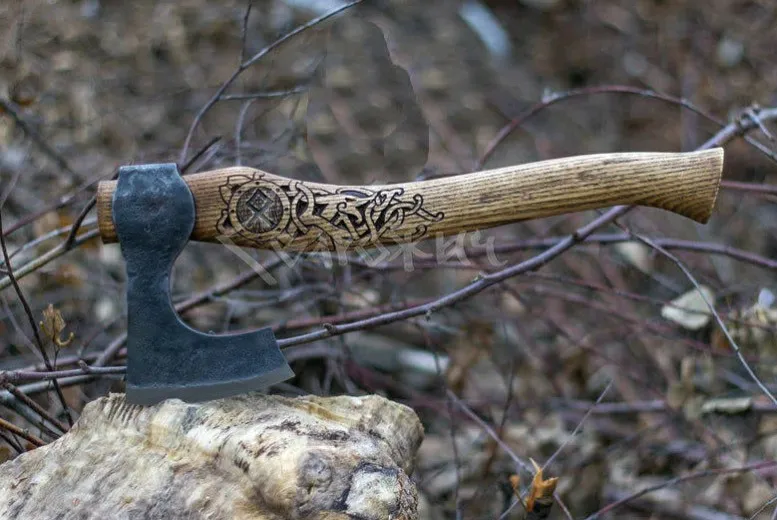
The design of the axe began to change to suit its new purpose. Blacksmiths started crafting larger, thinner blades that could deliver powerful, cutting blows. One of the most notable developments was the “bearded axe,” characterized by its extended lower blade. This design not only reduced weight but also allowed warriors to hook shields or weapons during combat. Over time, even more specialized forms appeared, such as the Danish axe, which featured a long handle and a broad blade, making it especially effective in battle.
The evolution of the Viking axe also reflects the ingenuity of Viking craftsmanship. Despite limited resources, blacksmiths developed advanced forging techniques, combining iron with steel edges to create stronger and sharper blades. These improvements enhanced both the durability and lethality of the weapon.
Beyond its practical uses, the axe held symbolic significance in Viking culture. It represented strength, independence, and readiness for battle. Many warriors were buried with their axes, highlighting the importance of the weapon in both life and death.
In conclusion, Viking axe for sale journey from a simple tool to a formidable weapon illustrates the adaptability and resourcefulness of the Viking people. What began as an everyday necessity became a defining element of their identity, leaving a lasting mark on history.



























Sign in to leave a comment.