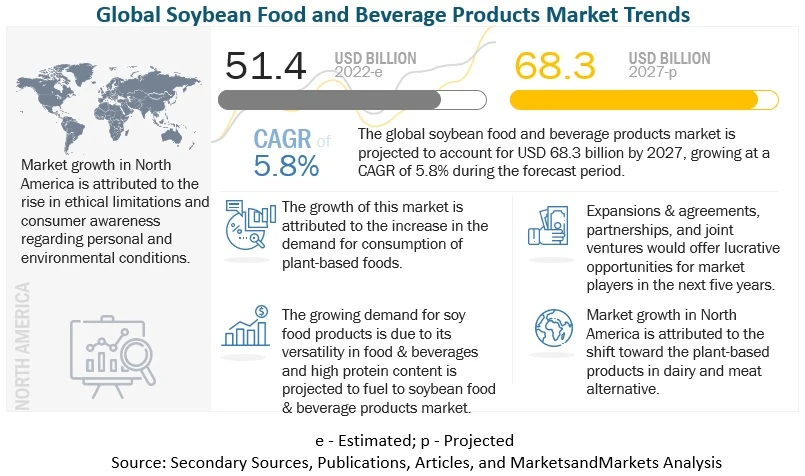

The global soybean food and beverage products market is estimated to be valued at USD 51.4 billion in 2022. It is projected to reach USD 68.3 billion by 2027, recording a CAGR of 5.8% during the forecast period. The global soybean food and beverage products market has been influenced by some of the macroeconomic and microeconomic factors witnessed in some key countries. This would prove strong enough to drive the market significantly in terms of value sales during the forecast period. The inclination of consumers toward soy-based protein has grown from its base applications as meat and dairy alternatives and has witnessed abundant usage in other segments, such as performance nutrition and infant nutrition. The awareness of soy-based protein as food with functional benefits has bolstered the acceptance among consumers.
Opportunities: Soy used for customization of food & beverage to create versatile products
Manufacturers have been using the functional properties of soy protein ingredients to develop versatile food products. Several new products, such as nut butter, cheese, burgers, and instant oatmeal’s have been launched by the manufacturers of soy protein ingredients. New sectors, such as healthcare foods and sports beverages, can provide a better market opportunity for soy proteins. These sectors can boost the growth of soy protein production if they are manufactured in a customized way.
With advancements in technology, such as reverse micellar, enzyme-assisted, and membrane ultrafiltration technologies, soy proteins can be isolated and functional properties can be enhanced to provide a wider scope of application. There have been various food products awaiting market introduction that requires consumer appeal. The products are designed with the help of soy proteins to attract consumers based on their nutritive content and palatability. Examples of food product categories featuring plant-based alternatives are refrigerated dips; refrigerated whipped toppings, refrigerated salad dressings, refrigerated desserts, and frozen novelties. Though soy proteins have an uncharacteristic flavor, these limitations have been researched to be overcome by suitable changes in product formulation.
Asia-pacific is projected to reach USD 35.2 billion during the forecast period.
A growing number of customers now believe that plant-based meals are healthier than animal-based foods, which has caused a movement away from traditional dairy products like cow milk and toward plant-based alternatives. Additionally, an increasing number of consumers are being persuaded by worries about animal welfare to pick plant-based beverages and other consumables over those made from animals. The key players in this market include Kikkoman Group (Japan), Vitasoy (Hong Kong), Patanjali Foods Limited (India), and Foodchem International Limited (China).



























Sign in to leave a comment.