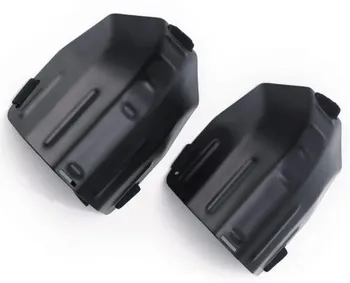

Anyone who has worn protective gear in a high-movement environment knows the tradeoff all too well. The more coverage you add, the more your mobility suffers. Shoulders are where this tension shows up most acutely. They're one of the most exposed and vulnerable areas of the upper body, but they're also responsible for nearly every physical action a person takes in the field. Protecting them without restricting their function is one of the more challenging problems in personal protective equipment design.
Getting that balance right matters. Whether you're a law enforcement officer, a military operator, or someone working in a high-risk civilian environment, compromised movement isn't just uncomfortable. It can be genuinely dangerous.
Why Shoulder Protection Is So Difficult to Get Right
The shoulder joint has an extraordinary range of motion compared to almost any other joint in the body. It rotates, lifts, reaches, and extends in ways that flat or rigid plates simply cannot accommodate without creating friction, binding, or outright blocking certain movements. Traditional approaches to shoulder armor often erred too far on the side of coverage, leaving wearers unable to raise their arms fully, operate a weapon comfortably, or react quickly in dynamic situations.
Modern designs have moved away from that approach. Articulated panels, segmented construction, and materials that offer ballistic resistance without excessive rigidity have all contributed to gear that can actually move with the body rather than against it. The key engineering challenge is maintaining meaningful protection across the deltoid and upper arm while allowing the full arc of motion the shoulder needs to function under stress.
Choosing Protection That Moves With You
When evaluating shoulder armor, fit and mobility testing should carry as much weight as the protection rating itself. Gear that restricts your ability to respond effectively defeats part of its own purpose. Put it on, raise your arms, reach across your body, and simulate the movements you'd actually perform under pressure.
Protection that costs you your range of motion is a compromise you shouldn't have to make. The right design gives you both.
Author Resource:-
Jeson Clarke advises people about body armor, offering insights on protective gear and advanced safety solutions. You can find his thoughts at safety materials blog.


























Sign in to leave a comment.