

Understanding Gumline Cavities and Why They Matter
A healthy smile depends on strong teeth and healthy gums, yet many people overlook the area where the tooth meets the gum. Cavities can develop along this sensitive region, often progressing quietly until noticeable symptoms appear. A gumline cavity forms when bacteria and plaque accumulate near the gum edge, gradually eroding the tooth’s protective layers and creating decay. If left untreated, the damage can spread deeper into the tooth and lead to more serious dental problems.
At Dedicated Smiles, patient education is a key part of maintaining long-term oral health. Understanding how gumline cavities develop, recognizing their symptoms early, and seeking proper treatment can help protect your smile and prevent complications.
What Causes Cavities Along the Gumline?
Several everyday factors contribute to gumline cavities. The most common cause is plaque buildup—a sticky layer of bacteria that forms when sugars and food particles remain on the teeth. Over time, bacteria in plaque produce acids that wear down enamel and create small holes or decay.
Common contributing factors include:
- Poor oral hygiene, allowing plaque and bacteria to accumulate
- Gum recession, which exposes the softer root surface of the tooth
- Frequent consumption of sugary or acidic foods and drinks
- Dry mouth, reducing the protective effects of saliva
- Aggressive brushing or aging enamel
Because the gumline area can be harder to clean, plaque often collects there more easily than on other parts of the tooth.
Signs and Symptoms to Watch For
Gumline cavities often begin with subtle symptoms, making early detection important. As tooth decay progresses, individuals may experience increasing discomfort or visible changes in their teeth.
Some common symptoms include:
- Tooth sensitivity to hot, cold, or sweet foods
- Persistent toothache or mild discomfort
- Dark spots or stains near the gumline
- Visible pits or small holes in the tooth surface
- Pain when biting or chewing
Ignoring these signs can allow decay to spread deeper into the tooth structure, which may require more advanced dental treatments.
Treatment and Prevention
Treatment for gumline cavities depends on how advanced the decay has become. Early-stage cavities may be treated with dental fillings, while deeper decay near the root may require procedures such as root canal therapy or protective crowns to restore the tooth.
Maintaining good oral hygiene—brushing twice daily, flossing, limiting sugary foods, and visiting your dentist regularly—can significantly reduce the risk of gumline cavities and other dental issues.
Dedicated Smiles focuses on preventive care and advanced treatment solutions to help patients maintain healthy teeth and gums for years to come.
Read the full blog: What Is a Gumline Cavity? Causes, Symptoms, and Treatment
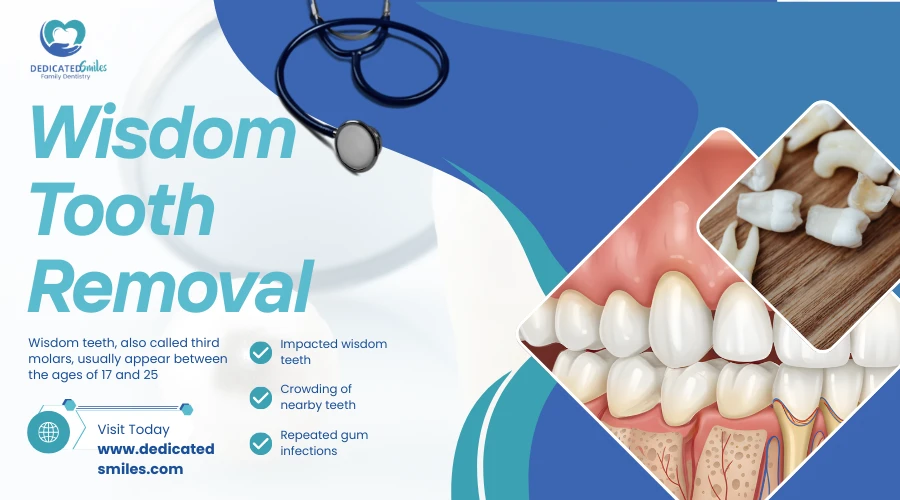
If you are experiencing discomfort or need guidance about Wisdom Tooth Removal, the team at Dedicated Smiles is ready to help. Our dental professionals provide careful evaluations and patient-focused care to protect your long-term oral health. Visit our Google Business Profile to learn more about our services, read patient reviews, view clinic updates, or reach out to request an appointment with our team.




























Sign in to leave a comment.