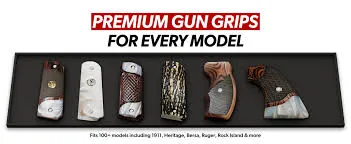

Most people don't think twice about the grips on their gun until something goes wrong. A shot pulls left under recoil. Hands start sweating halfway through a range session and the gun starts to slip. Or you just look down one day and realize the factory panels on your pistol look exactly like everyone else's.
That's usually the moment someone starts looking into aftermarket grips. And it's worth doing properly, because the grip is the one part of any firearm that's in contact with your hand on every single shot. Get it right and shooting feels natural. Get it wrong and you're fighting the gun instead of working with it.
This guide walks through everything worth knowing what grips actually are, the types available, the materials, how to pick the right one, and what real shooters say after making the switch.
Understanding Gun Grips: What Are They?
A gun grip is the part of the firearm your hand wraps around to hold and control it. On revolvers, the grip is usually a single piece that slides onto the frame from the bottom. On semi-automatics like the 1911 grips come as two separate panels, one bolted onto each side of the frame with small screws.
Factory grips are built to a price point. Manufacturers need something that works for the widest range of hand sizes at the lowest possible cost, which means the panels you get out of the box are rarely fitted to anyone in particular. They function. They're not tailored to your hand, your grip strength, or how you actually shoot.
That's the entire reason the aftermarket grip industry exists. A grip panel changes texture, thickness, contour, and material all of which affect how the gun sits in your hand, how it responds to recoil, and how comfortable it is to shoot for an extended session. None of that changes how the gun fires. It changes how well you can control it while it does.
Types of Gun Grips: A Comprehensive Overview
Grips break down a few different ways, and it helps to think about them by shape, by frame fit, and by purpose.
By frame size, most pistols fall into full size and compact categories. A full size grip 1911, like the Government model, has a longer grip frame that fills the hand completely. A compact frame, like the Officer's model, is shorter and built with concealment in mind. The two are not interchangeable the screw spacing and panel dimensions differ enough that a full size panel won't seat correctly on a compact frame.
By texture, you've got smooth, checkered, and aggressively textured options. Smooth panels look clean and classic but can get slippery once your hands start sweating. Checkered panels cut a crosshatch or diamond pattern into the surface, giving your hand something to grip onto without feeling rough.
The "double diamond" pattern is the most recognizable checkering style and shows up across both wood and synthetic panels. Aggressive textures, usually found on G10 or rubber, go a step further with deeper cuts designed for maximum traction in wet or high-stress conditions.
By purpose, grips split into collector pieces and working pieces. Collector grips focus on visual appeal carved wood, inlaid medallions, pearl finishes, engraved patterns. Working grips focus on performance texture that holds up under recoil, material that doesn't degrade with regular handling, and a profile that doesn't interfere with a fast draw.
Most shooters end up somewhere in between, wanting a grip that looks good and performs well. The good news is that combination exists in plenty of options without forcing a tradeoff.
Materials Used in Gun Grips: Pros and Cons
This is where most of the actual decision-making happens, so it's worth going material by material.
Rosewood is dense, smooth-grained, and a deep reddish-brown that looks sharp against blued or stainless steel. It holds up well over years of regular handling without warping, and it's available smooth, checkered, or carved. The downside is that it's still wood, so it can show wear over a very long carry life, and it benefits from occasional care if it's exposed to a lot of moisture.
Walnut has a warmer, lighter grain than rosewood and takes carved detail beautifully. American flag designs, scrollwork, and floral patterns all look their best in walnut. It's a touch softer than rosewood, which means it can pick up small scratches faster with daily carry use. For a range gun or a display piece, that's rarely an issue.
G10 is a fiberglass laminate layers of woven glass pressed together with resin under heat. It doesn't absorb moisture, doesn't expand or contract with temperature swings, and holds its texture through years of heavy use. Competitive shooters and serious carry users lean on G10 because it performs the same wet or dry, hot or cold. The tradeoff is look. G10 reads as tactical, not traditional, so it won't have the same presence in a display case that carved rosewood does.
Acrylic pearl gives you a bright, polished look without the fragility of real mother of pearl. Real shell cracks under impact and chips at the edges. Acrylic pearl takes the same hit and keeps going. White pearl suits stainless or nickel frames. Black pearl, with its darker, shifting iridescent tone, suits blued or matte finishes better.
Faux ivory gives a period-correct, cream-white look for vintage-style pistols and revolvers, without the legal complications or cost of real ivory. It ages gracefully and doesn't yellow the way the real thing does over time.
Rubber trades looks for comfort. It absorbs recoil instead of transferring it straight into your palm, which matters a lot during high-round-count range days. It's also reliable in wet or cold conditions where other materials can become slick.
No material is universally "best." Each one solves a different problem, and the right pick depends entirely on how the gun gets used.
How to Choose the Right Gun Grip for Your Firearm
Start with fit, not looks. Confirm your exact frame size before browsing anything else. On a 1911, that means measuring the distance between your two grip screws full size frames measure around 3 and 1/16 inches between screws, while compact frames measure closer to 2 and 11/16 inches. On revolvers, confirm the model and frame designation, since even guns that look similar from the same manufacturer often use different grip dimensions.
Once fit is settled, think about how the gun is actually used day to day. A range gun that mostly sits in a case between trips can carry a beautiful wood panel without much concern for wear. A daily carry gun that lives in a holster needs something more durable G10 or a quality acrylic that won't degrade from holster friction and body heat.
Hand size matters too. Thinner panels suit smaller hands and improve trigger reach. Thicker panels with a palm swell give larger hands more surface area to work with. If you've ever felt like a pistol grip was "almost right" but not quite, this is usually the missing piece.
Lastly, think about texture honestly. If you sweat heavily during range sessions or carry in a humid climate, lean toward checkered or G10. If the gun stays dry and is handled occasionally, smooth or lightly textured wood will serve you just as well and look better doing it.
Installing and Maintaining Your Gun Grips
Installing new grips is genuinely one of the easiest upgrades in the firearms world. Unload the gun first, every time, no exceptions. On a 1911, remove the two grip screws, one on each side, and set the factory panels aside. Line up the new panels and reinstall the screws, snugging them down without overtightening.
Wood gun and acrylic gun panels can crack near the screw hole if you crank them down too hard, so snug is the goal, not as-tight-as-possible.
On revolvers, the process is usually even simpler a single grip screw at the base of the frame holds the panel in place.
Most aftermarket sets ship with the correct screws included, so there's rarely a separate hardware purchase needed. The whole process takes under ten minutes with a basic screwdriver.
Maintenance depends on material. Wood benefits from an occasional wipe down and, in dry climates, a light conditioning oil every few months to prevent cracking. G10, acrylic, and rubber need almost nothing a quick wipe with a damp cloth after a range day is plenty. Whatever the material, keeping grips out of direct, prolonged sun exposure helps preserve color and finish over time.
Enhancing Comfort and Control with Customized Gun Grips
This is the part that's easy to underestimate until you've felt it firsthand. A grip that actually fits your hand changes your relationship with the trigger. When your hand sits naturally on the panel without straining or overreaching, your trigger finger lands where it should, your sight picture stays steadier through the press, and recoil feels more manageable shot to shot.
Texture plays into this just as much as shape. A grip that locks your hand in place under recoil means less time spent recovering your grip between shots and more consistency across a full magazine. None of this requires an expensive custom build a properly fitted aftermarket panel in the right material gets you most of the way there.
Comfort matters for accuracy in a very practical way too. Shooters who experience hand fatigue or mild discomfort during a session tend to flinch or anticipate recoil, which throws shots low. A grip that fits well and absorbs recoil appropriately reduces that fatigue, which means more rounds on target later in a session, not just the first ten.
Top Brands and Products in the Gun Grip Market
The aftermarket grip space has a handful of well known names, and most shooters eventually try more than one before settling on a favorite. Some companies focus heavily on tactical G10 designs built for competition and duty use. Others lean into traditional wood craftsmanship, carved patterns, and collector grade finishes.
A smaller number of companies cover both ends, offering everything from rugged G10 to carved , rosewood with inlaid medallions under one roof, fitted to dozens of handgun brands rather than just one or two.
What separates a good grip company from an average one usually comes down to fitment accuracy. A grip that's marketed as "universal" rarely performs as well as one cut specifically for your exact frame and model. Companies that specify exact compatibility on every listing, and that have been doing this long enough to have real production history, tend to deliver a more reliable drop in fit than newer or more generic sellers.
Frequently Asked Questions About Gun Grips
Do aftermarket grips affect how a gun shoots? They don't change the mechanics of the firearm, but they do affect how well you control it. Better texture and a properly sized panel improve grip security and recoil management, which shows up in your accuracy and consistency.
Can I install new grips myself? Yes, in almost every case. Most pistol and revolver grips install with a basic screwdriver in under ten minutes. No gunsmith is required for a standard drop-in panel.
What's the difference between checkered and smooth grips? Checkered panels have a textured pattern cut into the surface for better traction, especially with sweaty or gloved hands. Smooth panels look more classic and traditional but can become slippery in the same conditions.
Is G10 better than wood? Better depends on use. G10 outperforms wood in wet, humid, or high volume shooting conditions because it doesn't absorb moisture or wear down. Wood, particularly rosewood and walnut, offers a classic look and feel that G10 doesn't replicate, and performs perfectly well for range use and collection pieces.
Do thicker grips help with recoil? Often, yes, especially for shooters with larger hands. A thicker panel with a palm swell gives more surface area to absorb and distribute recoil. For shooters with smaller hands, a thinner panel usually feels more controllable and improves trigger reach.
How do I know what size grip my gun needs? Measure the distance between your grip screws. On a 1911, full size frames measure close to 3 and 1/16 inches between screws, and compact frames measure closer to 2 and 11/16 inches.
For revolvers, confirm your exact model since grip dimensions vary by frame even within the same manufacturer's lineup.
Shooters who've made the switch tend to describe it the same way not as a dramatic transformation, but as the premium gun finally feeling like it was built for them specifically. One range regular put it simply after swapping factory polymer for checkered rosewood: the gun didn't shoot any differently on paper, but it felt steadier in hand, and that confidence translated into tighter groups by the end of the session.
Another shooter who moved from a smooth panel to G10 for daily carry noted that the biggest difference showed up on humid days, when the old grip would get slick within the first few minutes outside and the new one never budged.
That's really the whole case for paying attention to grips in the first place. The upgrade is small, the installation is simple, and the difference shows up exactly where it matters in your hand, every time you pick up the gun.
























Sign in to leave a comment.