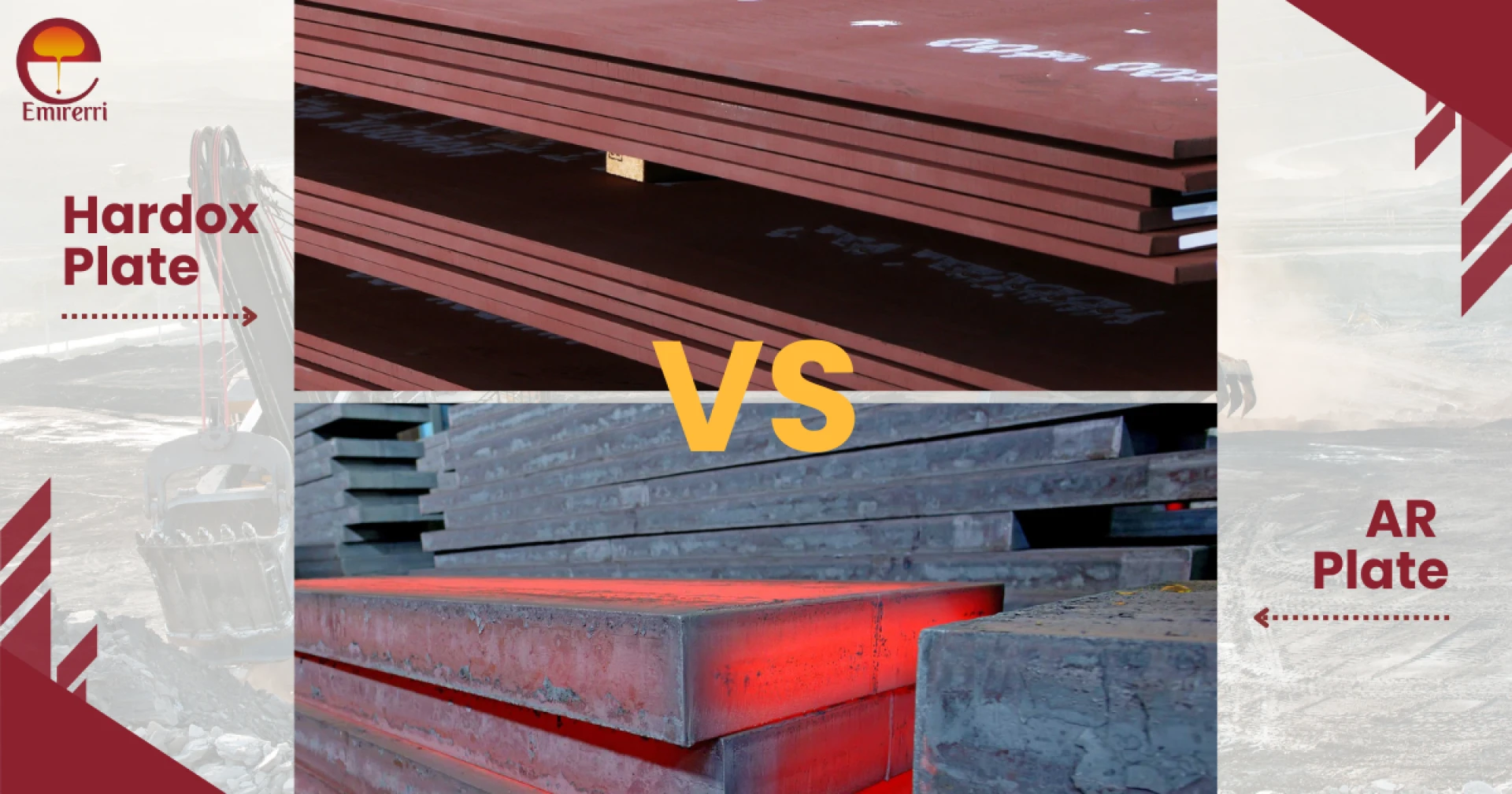

In the heavy-duty world of mining, construction, agriculture, and material handling, wear-resistant steel is essential. Two of the most commonly used wear-resistant steels are Hardox and AR Plate (Abrasion Resistant Plate). While these two materials serve similar purposes, there are crucial differences in terms of composition, performance, and applications. In this blog, we’ll compare Hardox vs AR Plate to help you understand which is the better option for your specific needs.
What is AR Plate?
AR Plate, short for Abrasion Resistant Plate, is a type of high-carbon alloy steel designed to resist wear and abrasion. It is not a brand, but a generic classification of steel plates that are often used in environments where high levels of wear and tear are expected.
Common AR Plate Grades:
- AR200 – Lower hardness, more ductile
- AR400 – Medium hardness and wear resistance
- AR500 – High hardness and superior wear resistance
The number associated with the AR plate (such as 400 or 500) generally refers to the Brinell Hardness Number (BHN). For instance, AR400 typically has a hardness of approximately 360–440 BHN.
What is Hardox?
Hardox is a brand-name wear-resistant steel produced by SSAB (Swedish Steel AB). It is not just a steel plate with high hardness, but a carefully engineered product with tight tolerances, superior toughness, and exceptional flatness. Hardox combines wear resistance with structural properties, making it suitable for both load-bearing and wear applications.
Common Hardox Grades:
- Hardox 400
- Hardox 450
- Hardox 500
- Hardox 550
- Hardox 600
- Hardox HiTuf (for extreme impact resistance)
- Hardox Extreme (one of the hardest wear plates in the world)
Hardox plates are engineered to deliver a consistent and precise hardness across the entire plate, often with a guaranteed minimum hardness level.
Key Differences: Hardox vs AR Plate
Let’s dive into the major differences between the two materials:
1. Brand vs Generic
- Hardox is a proprietary brand from SSAB, ensuring strict quality control and consistent performance.
- AR Plate is a generic category. Quality, performance, and specifications can vary greatly depending on the manufacturer.
2. Hardness & Wear Resistance
- Both materials offer high hardness, but Hardox grades typically have more precise and guaranteed hardness ranges.
- For example, Hardox 450 is guaranteed to have a hardness of 425–475 HBW, whereas AR450 may vary more in its hardness range, depending on the source.
3. Toughness
- Hardox is engineered for high impact resistance. Its toughness makes it ideal for applications involving high loading or repeated impact.
- Most AR plates may offer decent wear resistance but are often more brittle, especially in colder temperatures.
4. Formability & Weldability
- Hardox is known for superior formability, allowing bending, forming, and welding with minimal cracking.
- AR plates can be more difficult to weld or form, especially in higher hardness ranges, and may require preheating or special techniques.
5. Dimensional Tolerances & Surface Quality
- Hardox has tight flatness, thickness, and surface quality tolerances, which makes it reliable for precision applications.
- AR plate can vary in flatness and surface conditions, depending on the producer.
6. Structural Use
- Hardox is dual-certified as wear and structural steel, meaning it can be used in load-bearing designs.
- Most AR plates are not certified for structural use, which limits their applications in critical constructions.
Applications: Where Are They Used?
Hardox Applications:
- Mining truck beds and liners
- Bulldozer blades
- Excavator buckets
- Waste handling equipment
- Cement mixers
- Agricultural equipment
AR Plate Applications:
- Dump truck bodies
- Hopper liners
- Chutes and conveyors
- Earthmoving equipment
- Wear strips and guards
While both materials are suited for wear-prone environments, Hardox stands out in performance-critical and high-impact applications, especially where formability and structural strength are necessary.
Cost Considerations
- AR Plate is generally less expensive upfront compared to Hardox.
- However, Hardox offers longer service life, reducing downtime, maintenance, and replacement costs in the long run.
When making a cost decision, consider the total lifecycle cost, not just the initial material price.
Which One Should You Choose?
Choose AR Plate if:
- Budget is a key constraint.
- The application involves basic wear and doesn’t require structural load.
- Forming or welding requirements are minimal.
Choose Hardox if:
- You need superior wear resistance and toughness.
- The plate will undergo bending, welding, or forming.
- It will be used in structural or high-impact applications.
- You want to reduce downtime, repair frequency, and operating costs.
Conclusion
In the battle between Hardox vs AR Plate, both materials have their place depending on the specific application. AR plate can be a cost-effective solution for standard wear applications, while Hardox offers industry-leading performance and longevity in extreme conditions.
Ultimately, your choice should depend on:
- The intensity of wear and impact
- Forming and welding requirements
- Structural or non-structural usage
- Long-term operational cost savings
For mission-critical applications where performance and reliability matter most, Hardox is often the smarter investment.


























Sign in to leave a comment.