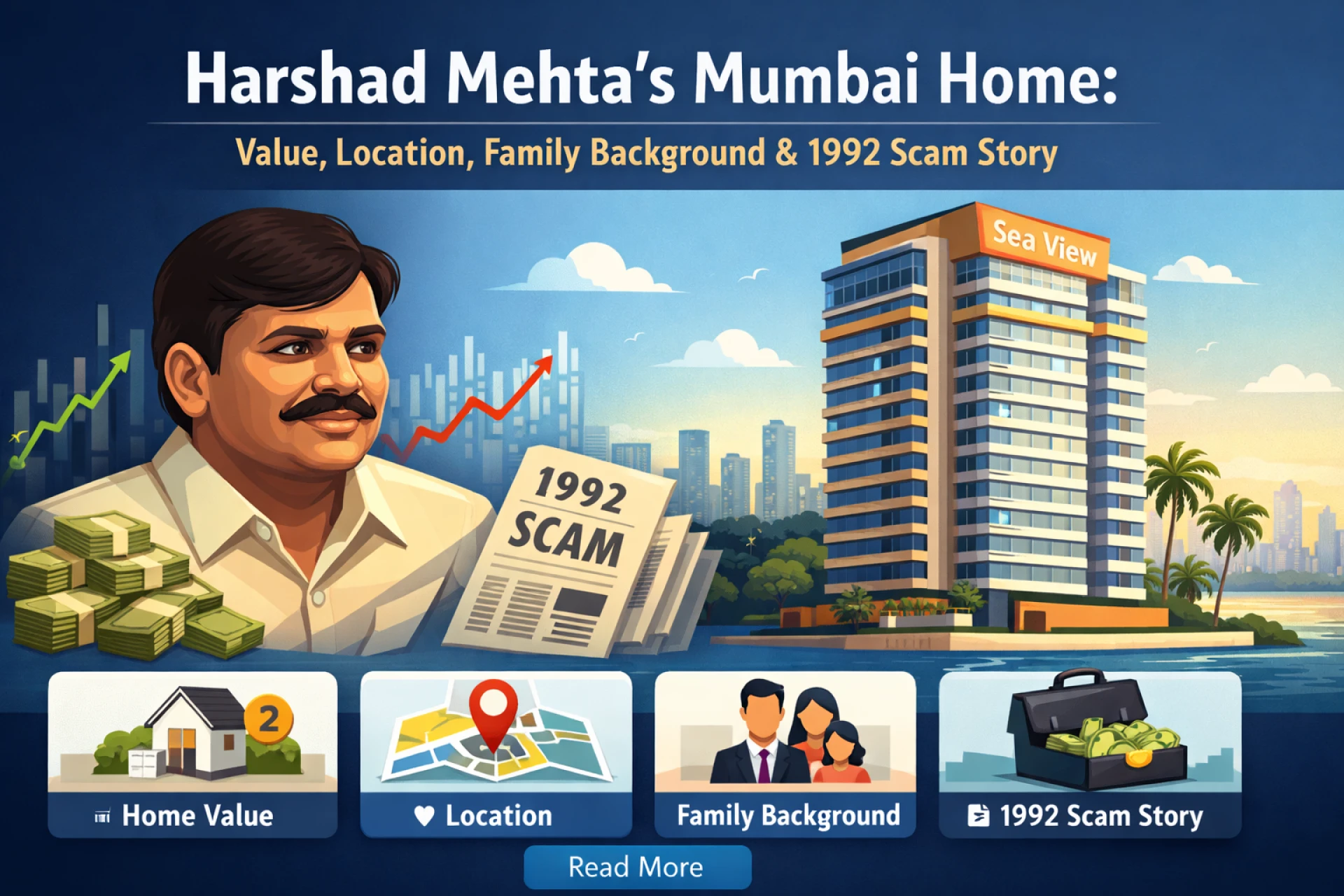

Mumbai has always been a city of extremes—towering ambition beside deep-rooted struggle, unimaginable wealth alongside relentless hustle. Few stories capture this contrast as powerfully as the rise and fall of stock market icon Harshad Mehta. Beyond balance sheets, trading floors, and headlines, one physical space came to symbolize his meteoric ascent: a lavish residence that reflected both extraordinary success and the controversy that followed. The story of this home is not just about real estate; it is about ambition, excess, public perception, and the lasting imprint of financial history on urban memory.
The Era That Shaped a Symbol
To understand why this residence became legendary, it is important to look at the period in which it emerged. The late 1980s and early 1990s marked a transformative phase for India’s financial markets. Liberalization was on the horizon, investor optimism was rising, and the stock market was becoming a stage for new-age financial heroes.
Harshad Mehta, often called the “Big Bull,” became the face of this transformation. His confident persona, aggressive trading strategies, and ability to move markets made him a household name. As his influence grew, so did public curiosity about his lifestyle. This dual identity is why the story of the Harshad Mehta house continues to attract attention today. It stands at the intersection of Indian stock market history, high-profile financial scandals, and the psychology of wealth.
Location and Prestige in Mumbai Real Estate
Mumbai’s real estate market has always been driven by location, exclusivity, and status. Sea-facing properties, especially in upscale areas, have long represented the pinnacle of urban luxury. The residence associated with Harshad Mehta was no exception. Positioned in a premium neighborhood, it reflected a deep understanding of how property functions as both an asset and a statement.
During that era, owning a sprawling home in such a location was rare even among industrialists. It signaled entry into an elite circle where wealth translated into visibility. This aspect is why discussions around Mumbai luxury homes of the 1990s often reference this residence as a benchmark for excess and aspiration.
Architecture as an Expression of Power
Luxury homes often tell stories through their design. From expansive living areas to panoramic views of the Arabian Sea, the residence was designed to impress. High ceilings, imported materials, and customized interiors reflected global tastes at a time when such choices were uncommon in India.
The architecture and interiors were not merely about comfort; they were about influence. Every detail conveyed success and control, reinforcing the image of a man who seemed to have mastered the financial system. For many aspiring investors, this home became visual proof that the stock market could unlock extraordinary rewards.
Media, Public Fascination, and Myth-Making
The media played a crucial role in transforming a private residence into a public symbol. Newspapers, magazines, and later television discussions frequently referenced the home when talking about Mehta’s wealth. Images and descriptions fueled public imagination, blurring the line between fact and myth.
This fascination intensified after the exposure of the 1992 stock market scam. The residence, once admired, became a focal point of scrutiny. It was no longer just a luxury property; it was seen as material evidence of excess tied to financial manipulation. This shift highlights how public narratives can dramatically change the meaning of physical spaces.
From Aspiration to Controversy
What makes this residence particularly compelling is how quickly its symbolism transformed. Before the scandal, it represented ambition fulfilled. Afterward, it became a reminder of unchecked power and systemic loopholes in India’s banking and financial systems.
For readers interested in how financial success can reshape personal identity and public perception, this residence offers powerful lessons.
Legal Battles and Aftermath
Following the scandal, legal proceedings and investigations brought further attention to Mehta’s assets. Properties linked to him were examined, frozen, or reassessed as authorities attempted to recover funds. The residence, once a personal sanctuary, became part of a complex legal narrative involving banks, regulators, and the judiciary.
This phase underscores an important reality: real estate, often seen as a safe store of wealth, is not immune to financial and legal risk. For modern investors, the story serves as a reminder to align asset acquisition with transparency and compliance.
Cultural Impact and Popular Memory
Decades later, the residence still occupies space in popular culture. Books, documentaries, and web series revisiting the 1992 scam often reference Mehta’s lifestyle to illustrate the scale of his rise. The home has become shorthand for an era when financial ambition outpaced regulation.
In Mumbai, where buildings are constantly redeveloped and skylines change rapidly, very few residences retain such narrative power. This one does, because it represents more than bricks and mortar—it embodies a moment in India’s economic evolution.
Lessons for Modern Investors and Homebuyers
The story of this legendary residence offers several actionable insights:
- Wealth and visibility are closely linked: High-profile assets amplify both success and scrutiny.
- Real estate reflects financial behavior: Property choices often reveal risk appetite and long-term thinking.
- Compliance matters: No asset is insulated from legal consequences if financial practices are flawed.
- Legacy is shaped by narrative: How wealth is earned ultimately defines how it is remembered.
For readers interested in luxury real estate in Mumbai, financial history, or the psychology of success, these lessons remain highly relevant.
Why the Story Still Resonates
Mumbai thrives on stories of ambition. From self-made entrepreneurs to market legends, the city celebrates those who dare big. Yet it also remembers cautionary tales. The residence linked to Harshad Mehta sits at this crossroads, reminding us that wealth without accountability can quickly turn from admiration to controversy.
As new generations explore Indian stock market history and evolving real estate trends, this story continues to resurface—not because of nostalgia, but because of its enduring relevance. It challenges readers to think critically about success, ethics, and the true cost of unchecked ambition.
Conclusion
“Where Wealth Met Controversy” is more than a headline—it is an accurate summary of how a single residence came to symbolize an entire financial era in India. Through its location, design, media portrayal, and eventual scrutiny, this legendary Mumbai home offers a compelling lens into the rise and fall of one of the country’s most talked-about market figures.
In the end, the real value of this story lies not in square footage or market price, but in the insights it provides. It reminds us that while wealth can build remarkable spaces, integrity is what ultimately determines how those spaces are remembered.





























Sign in to leave a comment.