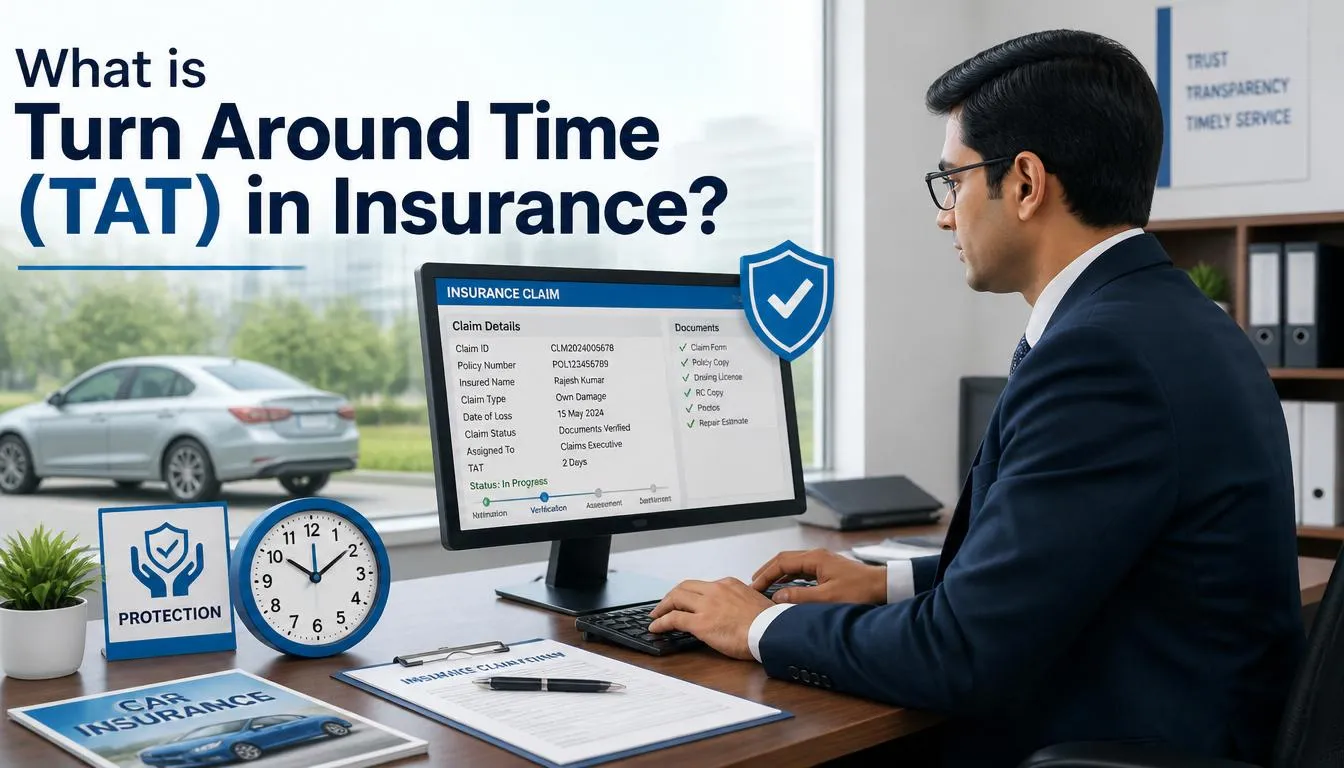

Whether you're buying a new insurance policy, renewing an existing one, or filing a claim, you've probably come across the term Turn Around Time (TAT). Insurance companies frequently use this term to indicate how long it takes to complete a specific service or process. Although it sounds technical, Turn Around Time is simply a measure of how quickly an insurer responds to customer requests.
A shorter TAT usually means faster policy issuance, quicker claim settlements, and better customer service. On the other hand, delays in Turn Around Time can lead to inconvenience, especially when you urgently need claim approval or policy documents.
In this guide, you'll learn what Turn Around Time in insurance means, why it is important, the factors that affect it, and how it impacts policyholders.
What is Turn Around Time (TAT) in Insurance?
Turn Around Time (TAT) in insurance refers to the total time an insurance company takes to complete a particular process after receiving a customer's request or required documents.
The process could include issuing a new policy, approving a claim, updating policy details, processing endorsements, or handling cancellations. The countdown usually starts once the insurer receives all the necessary information and ends when the requested service is completed.
For example, if an insurance company promises to issue a policy within two working days after receiving all documents, then the Turn Around Time for policy issuance is two working days.
Why is Turn Around Time Important?
Turn Around Time is one of the key indicators of an insurance company's service quality. Faster processing not only improves customer satisfaction but also helps policyholders receive timely support during emergencies.
A good TAT is important because it:
- Reduces waiting time for customers.
- Speeds up claim settlements.
- Ensures quicker policy issuance.
- Improves customer experience.
- Reflects the insurer's operational efficiency.
- Builds trust between the insurer and policyholder.
Choosing an insurer with a consistently good Turn Around Time can make the entire insurance experience much smoother.
Where is Turn Around Time Used in Insurance?
Turn Around Time applies to almost every service offered by an insurance company.
Some common examples include:
- New policy issuance
- Policy renewal
- Insurance claim processing
- Cashless claim approval
- Reimbursement claim settlement
- Policy cancellation
- Policy endorsement requests
- Name or address correction
- Duplicate policy issuance
- No Claim Bonus (NCB) updates
Each of these services may have a different expected Turn Around Time depending on the insurer's internal process.
Factors That Affect Turn Around Time
Several factors influence how quickly an insurance company can complete a request.
1. Complete Documentation
One of the biggest reasons for delays is incomplete or incorrect documentation. Missing documents often require additional verification, increasing the overall processing time.
2. Type of Insurance Request
Simple requests such as downloading a policy document are usually completed much faster than complex claim investigations involving surveys and damage assessments.
3. Claim Complexity
Large accident claims or claims involving legal disputes naturally require more verification than minor claims.
4. Verification Process
Insurance companies verify customer information, vehicle details, medical records, or supporting documents before approving many requests. The verification process directly affects Turn Around Time.
5. Public Holidays and Weekends
Many insurers calculate TAT based on working days rather than calendar days. As a result, weekends and public holidays may extend the completion time.
Average Turn Around Time for Common Insurance Services
Although every insurer has its own service standards, the following are typical processing timelines:
- Policy issuance – Usually within a few hours to 2 working days.
- Policy renewal – Often completed on the same day if payment is successful.
- Minor endorsement requests – Typically 1 to 3 working days.
- Cashless claim approval – Usually within a few hours after document verification.
- Reimbursement claim settlement – May take several working days depending on document verification.
- Policy cancellation and refund – Processing time varies depending on the insurer and policy terms.
The actual Turn Around Time depends on the insurer's procedures and whether all required documents have been submitted.
How Can You Reduce Turn Around Time?
While insurers control most of the process, policyholders can also help reduce delays by following a few simple practices.
- Submit complete and accurate documents.
- Provide correct contact information.
- Respond promptly to document requests.
- Report claims immediately after an incident.
- Keep copies of all submitted documents.
- Track your request regularly through the insurer's customer portal or support team.
Taking these steps can significantly speed up the processing of your request.
What Happens if the Turn Around Time Is Delayed?
Delays in Turn Around Time can occur due to missing documents, additional verification, technical issues, or a high volume of customer requests.
If your request takes longer than expected, you should:
- Contact the insurer's customer support.
- Ask for the current status of your request.
- Verify whether any additional documents are required.
- Keep your reference or claim number ready for faster assistance.
Regular follow-up helps resolve many delays quickly.
Tips for Faster Insurance Processing
A few good habits can help ensure your insurance requests are processed without unnecessary delays.
- Always provide accurate information.
- Keep your KYC documents updated.
- Renew policies before the expiry date.
- Save digital copies of important documents.
- Inform the insurer immediately after an accident or loss.
- Read the policy terms carefully before filing a claim.
These practices reduce the chances of your request being placed on hold.
FAQs
What is Turn Around Time in insurance?
Turn Around Time (TAT) is the time an insurance company takes to complete a service or process after receiving all the required information and documents.
Why is Turn Around Time important?
A shorter TAT means faster service, quicker claim settlements, and a better customer experience.
Does every insurance company have the same TAT?
No. Turn Around Time varies between insurers depending on their internal processes, service standards, and the type of request.
Can incomplete documents increase Turn Around Time?
Yes. Missing or incorrect documents are one of the most common reasons for delays in insurance processing.
How can I speed up my insurance request?
Submit complete documents, provide accurate information, respond quickly to insurer queries, and keep track of your request until it is completed.
Conclusion
Turn Around Time (TAT) is an important measure of how efficiently an insurance company handles customer requests. Whether you're purchasing a policy, updating your details, or filing a claim, a shorter TAT means less waiting and a smoother overall experience.
As a policyholder, you can also help reduce processing time by submitting accurate documents and responding promptly whenever additional information is requested. Understanding how Turn Around Time works allows you to set realistic expectations and choose insurers that deliver reliable and timely service.



























Sign in to leave a comment.