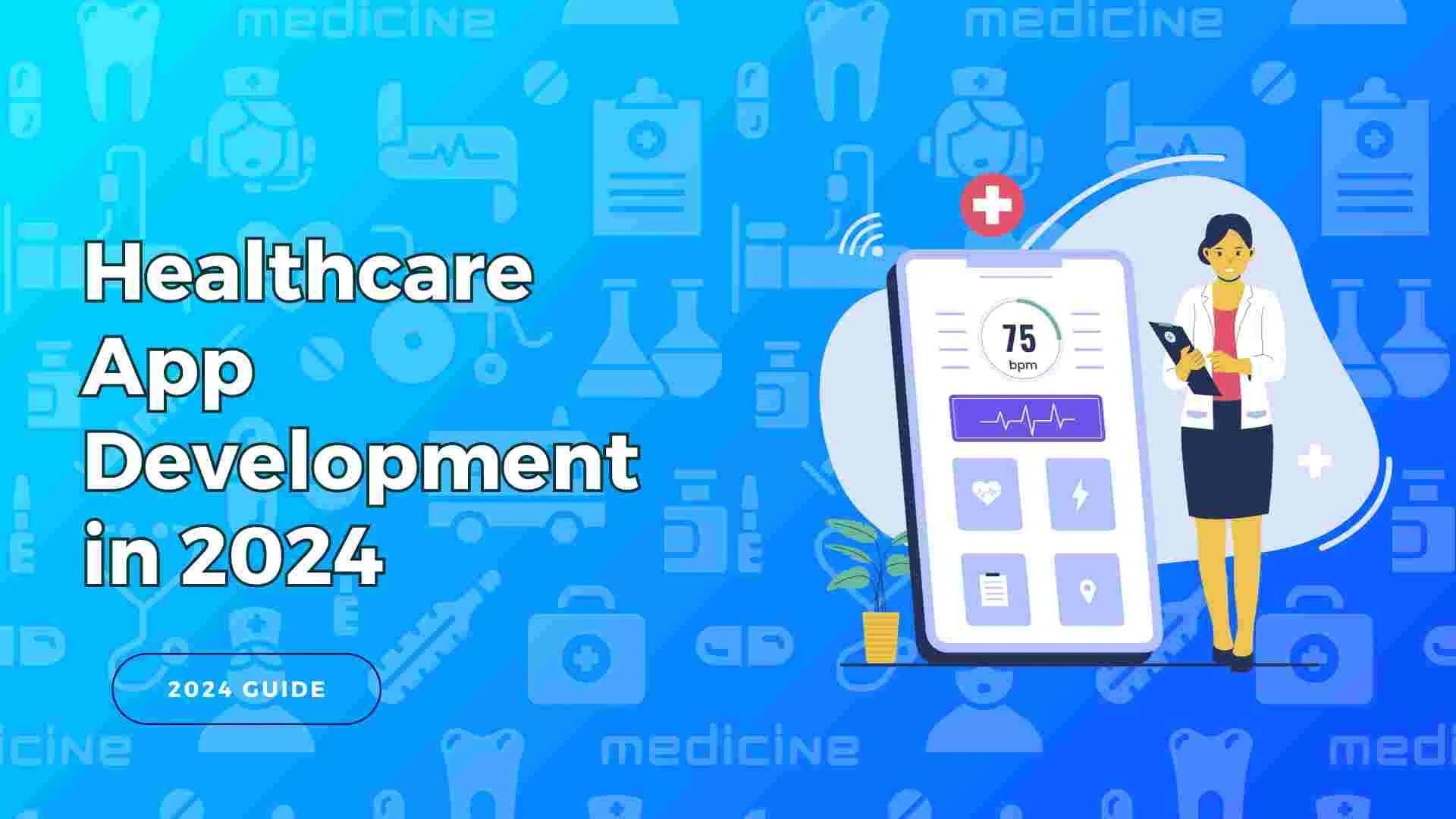

Healthcare apps are software applications that help users manage their health and wellness. They can provide various services, such as symptom checkers, telemedicine, reminders, nutrition and weight loss, meditation, women’s health trackers, prescription price comparison, and more.
The healthcare app market is booming, especially after the COVID-19 pandemic, which has increased the demand for remote and digital healthcare solutions. According to a report by Grand View Research, the global healthcare app market size is expected to reach $236.0 billion by 2026, growing at a compound annual growth rate (CAGR) of 21.9% from 2021 to 2026.
If you are an online business owner who wants to tap into this lucrative market, you might be wondering how to develop a healthcare app that can stand out from the competition and meet the needs and expectations of your target audience. In this blog post, we will guide you through the steps of healthcare app development, the types of healthcare apps, the benefits of healthcare app development, the challenges and opportunities, and the best practices and tips for healthcare app development. By the end of this post, you will clearly understand how to develop a healthcare app for your online business.
Steps of Healthcare App Development
Developing a healthcare app is not a simple task. It requires careful planning, designing, building, testing, launching, and maintaining your app, as well as complying with the regulations and standards of the healthcare industry. Here are the steps of healthcare app development that you should follow:
Step 1 : Define Your Target Audience and Goals
The first step of developing healthcare app is defining your target audience and goals. You should ask yourself questions such as:
Who are your ideal users? What are their demographics, behaviours, needs, preferences, and pain points?What are the objectives of your healthcare app? What problem does it solve, or what value does it provide to your users?How does your healthcare app differ from your competitors? What are your unique selling points or competitive advantages?Defining your target audience and goals will help you to:
Clarify your vision and scope for your healthcare appAlign your healthcare app with your business goals and user needsAvoid wasting time and money on unnecessary or irrelevant featuresSet realistic and measurable expectations and milestones for your healthcare appStep 2: Choose Your Healthcare App Type and Platform
The next healthcare app development step is choosing your healthcare app type and platform. You should decide:
What type of healthcare app do you want to create? Many healthcare apps include symptom checkers, telemedicine, reminders, nutrition and weight loss, meditation, women’s health trackers, prescription price comparison, and more. You should choose the type that best suits your target audience and goals.What platform do you want to develop your healthcare app for? There are two leading platforms for healthcare app development: iOS and Android. You should choose the platform with the most users in your target market, or you can develop a cross-platform app that works on both platforms.Choosing your healthcare app type and platform will help you to:
Create a healthcare app that meets the specific needs and expectations of your target audienceSelect the appropriate tools and technologies for your healthcare app developmentOptimize the performance and compatibility of your healthcare app across different devices and operating systemsStep 3: Design Your Healthcare App
The third step of healthcare app development is to design your healthcare app. This involves creating your healthcare app's visual and functional aspects, such as the layout, navigation, colour scheme, typography, images, icons, buttons, forms, etc. You should also consider the user experience (UX) and user interface (UI) design principles (UI UX Design), such as simplicity, consistency, clarity, feedback, etc.
Designing your healthcare app will help you to:
Create a professional and attractive look and feel for your healthcare appEnhance the usability and accessibility of your healthcare appImprove the customer satisfaction and retention rate of your healthcare appIncrease the conversion rate and revenue of your healthcare appStep 4: Develop Your Healthcare App
The fourth step of healthcare app development is to develop your healthcare app. This involves coding and programming your healthcare app, using the tools and technologies of your choice. You should also integrate your healthcare app with your backend systems, such as your database, server, APIs, etc.
Developing your healthcare app will help you to:
Bring your healthcare app design to lifeAdd functionality and interactivity to your healthcare appConnect your healthcare app with your business operations and processesEnsure the security and reliability of your healthcare appStep 5: Test Your Healthcare App
The fifth step of healthcare app development is to test your healthcare app. This involves checking and verifying the quality and performance of your healthcare app, such as the functionality, usability, compatibility, security, speed, etc. You should also gather feedback and suggestions from your potential users, stakeholders, and experts and improve based on their input.
Testing your healthcare app will help you to:
Identify and fix any errors or bugs in your healthcare appOptimize the user experience and customer satisfaction of your healthcare appEnsure the compatibility and responsiveness of your healthcare app across different devices and operating systemsBoost the credibility and trustworthiness of your healthcare appStep 6: Comply with the Regulations and Standards of the Healthcare Industry
The sixth step of healthcare app development is to comply with the regulations and standards of the healthcare industry. If your healthcare app uses, stores, or transmits any personal health information (PHI) or protected health information (PHI), you need to follow the rules and guidelines of the Health Insurance Portability and Accountability Act (HIPAA) in the US, the General Data Protection Regulation (GDPR) in the EU, or other relevant laws and regulations in your target market. You should also obtain the necessary certifications and permissions from the appropriate healthcare authorities, such as the US Food and Drug Administration (FDA), the European Medicines Agency (EMA) in the EU, or other relevant agencies in your target market.
Complying with the regulations and standards of the healthcare industry will help you to:
Protect the privacy and security of your users and their health dataAvoid any legal or financial penalties or lawsuitsProve the legality and credibility of your healthcare appBuild trust and loyalty with your users and partnersStep 7: Launch and Market Your Healthcare App
The seventh and final step of healthcare app development is to launch and market your healthcare app. This involves deploying and publishing your healthcare app to the web and app stores, respectively. You should also promote your healthcare app to your target audience using various marketing channels and strategies, such as social media, email, SEO, PPC, etc.
Launching and marketing your healthcare app will help you to:
Make your healthcare app available and accessible to your usersGenerate traffic and leads for your healthcare appIncrease the awareness and visibility of your healthcare appGrow your online sales and revenueTypes of Healthcare Apps
There are many types of healthcare apps that you can create for your online business. Here are some of the most popular and widely used types of healthcare apps:
Symptom Checkers
Symptom checkers are healthcare apps that allow users to check their symptoms and get possible diagnoses and treatment options. They can also provide users with information and advice on various health conditions and diseases. Symptom checkers can help users to:
Save time and money by avoiding unnecessary doctor visitsGet immediate and accurate medical guidance and supportLearn more about their health and wellnessSome examples of symptom checkers are Ada, WebMD, and K Health.
Telemedicine
Telemedicine is a healthcare app that allows users to consult with doctors and other healthcare professionals remotely via video, voice, or chat. They can also get prescriptions, referrals, and lab tests online. Telemedicine can help users to:
Access quality and affordable healthcare services anytime and anywhereReduce the risk of exposure to infections and diseasesImprove the continuity and coordination of careSome examples of telemedicine are Doctor on Demand, Teladoc, and Amwell.
Reminders
Reminders are healthcare apps that help users to remember and manage their medication, appointments, and other health-related tasks. They can also give users tips and notifications on various health topics and goals. Reminders can help users to:
Adhere to their treatment plans and improve their health outcomesAvoid missing or skipping their medication, appointments, and other health-related tasksStay motivated and informed about their health and wellnessSome examples of reminders are Medisafe, CareZone, and PillPack.
Nutrition and Weight Loss
Nutrition and weight loss are healthcare apps that help users to track and improve their nutrition and weight. They can also provide users personalized diet plans, recipes, calorie counters, food scanners, and more. Nutrition and weight loss can help users to:
Achieve and maintain their ideal weight and body shapePrevent and manage various health issues and diseases related to nutrition and weightEnhance their physical and mental well-beingSome nutrition and weight loss examples are My FitnessPal, Noom, and Lose It.
Meditation
Meditation is a healthcare app that helps users practice and improve their meditation and mindfulness. They can also provide users with guided sessions, music, sounds, breathing exercises, and more. Meditation can help users to:
Reduce stress and anxiety and improve their mental healthEnhance their focus and productivityBoost their happiness and well-beingSome examples of meditation are Headspace, Calm, and Insight Timer.
Women’s Health Trackers
Women’s health trackers are healthcare apps that help women to track and manage their menstrual cycles, fertility, pregnancy, and menopause. They can also provide women with information and advice on various women’s health topics and issues. Women’s health trackers can help women to:
Understand and optimize their reproductive health and wellnessPlan or prevent pregnancy and monitor their baby’s developmentCope with the changes and challenges of menopauseSome examples of women’s health trackers are Clue, Flo, and Glow.
Prescription Price Comparison
Prescription price comparisons are healthcare apps that help users to compare and save money on their prescription drugs. They can also provide users with coupons, discounts, and delivery options for their medications. Prescription price comparison can help users to:
Find the best and cheapest pharmacy for their prescription drugsSave money and time on their medication expensesAccess quality and affordable healthcare servicesSome examples of prescription price comparisons are GoodRx, RxSaver, and SingleCare.
Benefits of Healthcare App Development
Developing a healthcare app can bring many benefits to your online business, such as:
Increasing your customer base and reach by providing a convenient and accessible healthcare solution to your target audienceEnhancing your customer loyalty and retention by providing a personalized and engaging healthcare experience to your usersImproving your brand reputation and awareness by establishing yourself as a trusted and reliable healthcare provider in your nicheGenerating more revenue and profit by creating a new revenue stream or enhancing your existing revenue stream from your healthcare appChallenges and Opportunities of Healthcare App Development
Developing a healthcare app can also pose some challenges and opportunities to your online business, such as:
Complying with the regulations and standards of the healthcare industry, which can be complex and costly, but also ensures the quality and safety of your healthcare appCompeting with the existing and emerging healthcare apps, which can be fierce and crowded but also create a gap and demand for your healthcare appInnovating and improving your healthcare app, which can be difficult and time-consuming, but also provide a competitive edge and value proposition for your healthcare appBest Practices and Tips for Healthcare App Development
To develop a successful healthcare app for your online business, you should follow these best practices and tips:
Conduct a thorough market research and analysis to understand your target audience, competitors, and industry trendsChoose the right type and platform for your healthcare app based on your target audience and goalsDesign your healthcare app with a user-centric and intuitive approach, following the UX and UI design principlesDevelop your healthcare app with a secure and reliable technology stack using the appropriate tools and technologiesTest your healthcare app rigorously and regularly, using various methods and tools, and gather feedback and suggestions from your users, stakeholders, and experts.Comply with the regulations and standards of the healthcare industry, using the relevant laws and guidelines, and obtain the necessary certifications and permissions from the appropriate healthcare authorities.Launch and market your healthcare app effectively and efficiently, using various channels and strategies, and measure and monitor your healthcare app performance and results using multiple tools and metrics.Maintain and update your healthcare app frequently and consistently based on the changing needs and expectations of your users and the market.Conclusion
Healthcare app development is a great way to grow your online business and provide users a valuable and beneficial service. By following the steps, types, benefits, challenges, opportunities, and best practices of healthcare app development, you can create a healthcare app that can stand out from the competition and meet the needs and expectations of your target audience.
You can contact the Mobile App Development Company in Bangalore for more information, assistance, or healthcare app development services with your project.


























Sign in to leave a comment.