


Introduction
Heat Transfer Solutions play a vital role in keeping modern industrial processes efficient, reliable and financially sustainable. From refineries and petrochemical plants to LNG facilities and data centres, effective thermal management directly influences energy consumption, equipment life and operating performance.
Yet choosing a thermal system is rarely about achieving the highest possible heat transfer rate. Industrial buyers must consider pressure, temperature, fouling, maintenance, material compatibility, space, operating conditions and the total cost of ownership. A solution that performs exceptionally in one area may create additional costs elsewhere.
The real objective is therefore balance. Well-designed Heat Transfer Solutions should deliver the required thermal performance while remaining dependable throughout their operating life and providing sensible value for the investment.
Why Efficiency Alone Is Not Enough
Thermal efficiency is an important consideration, but it should not be viewed in isolation. Increasing heat transfer performance can sometimes involve greater pumping requirements, more complex equipment or tighter maintenance requirements.
For example, a heat exchanger with a very high heat transfer coefficient may require greater pressure drop. This can increase pumping or compression energy and potentially offset part of the thermal gain. The most suitable design is one that achieves the required duty without introducing unnecessary operating penalties.
This is where application-specific Heat Transfer Solutions become important. Instead of focusing on a single performance figure, engineers can evaluate the complete thermal system and understand how individual design choices affect energy, maintenance and reliability.
Reliability Protects Long-Term Performance
Industrial heat transfer equipment often operates under demanding conditions. High temperatures, high pressures, corrosive fluids, thermal cycling, vibration and deposits can gradually affect performance.
Fouling is a particularly important concern. Deposits on heat transfer surfaces act as an insulating layer, reducing thermal performance and potentially increasing pressure drop. If the problem becomes severe, cleaning or an unplanned shutdown may be required.
Reliable Heat Transfer Solutions therefore need to account for real operating conditions rather than ideal design conditions. Factors such as fluid properties, expected fouling rates, thermal expansion and accessibility for inspection can make a significant difference to equipment availability.
The Cost of a Heat Transfer System Goes Beyond Purchase Price
The initial equipment price is only one part of the financial picture. A lower-cost system may become expensive if it consumes more energy, requires frequent cleaning or has a shorter service life.
A more useful approach is to consider the total cost of ownership. This can include:
- Capital cost: The initial investment in equipment, installation and supporting systems.
- Energy consumption: Pumping, cooling, heating and compression requirements over the operating life.
- Maintenance: Cleaning, inspection, replacement parts and labour.
- Downtime: Production losses caused by equipment failure or maintenance.
- Equipment lifespan: How long the system can provide dependable service under actual conditions.
- Adaptability: The ability to accommodate changes in process conditions or production requirements.
Considering these factors helps industrial teams identify Heat Transfer Solutions that provide value over years of operation rather than simply offering an attractive purchase price.
Matching the Solution to the Process
There is no universal heat exchanger configuration that suits every application. The correct choice depends on the fluids, temperatures, pressures, flow rates, available space and required thermal duty.
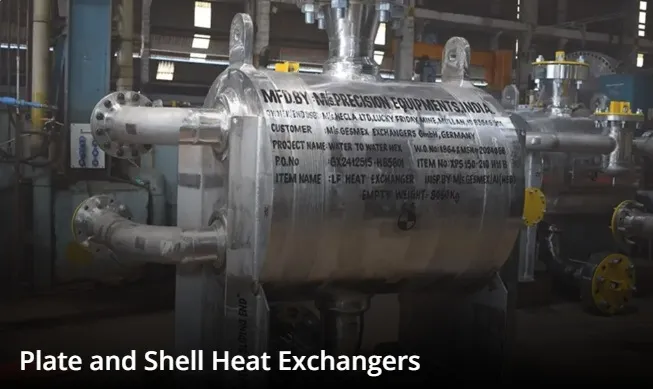
Shell and tube heat exchangers, for instance, are widely used where robust construction and dependable operation are important. They can be engineered for demanding applications across Oil & Gas, Petrochemicals, Fertilisers, Chemical processing and LNG facilities.
For compact applications, other heat exchanger configurations may offer advantages. The important point is that equipment selection should follow the process requirement rather than forcing the process to fit a predetermined solution.
This application-led approach also strengthens the keyword mapping logic around Heat Transfer Solutions. Related searches such as heat recovery, process cooling, thermal efficiency, fouling management and industrial heat exchangers can all sit naturally within the broader subject without unnecessary repetition.
Designing for Energy Efficiency and Sustainability
Energy efficiency has become increasingly important as industries seek to reduce operating costs and environmental impact. Heat recovery is one of the most practical opportunities because many industrial processes generate heat that would otherwise be rejected.
A carefully integrated heat transfer system can recover energy from hot process streams and use it to preheat feed streams, generate useful process heat or reduce the demand for external utilities.
This principle applies across several sectors. Refineries can recover heat from process streams, LNG facilities can optimise thermal duties around cryogenic processes, and chemical plants can improve energy integration between different stages of production.
In data centres, thermal management takes a different form. High-density computing creates substantial heat loads, increasing the importance of efficient liquid cooling and heat rejection systems. Here too, effective Heat Transfer Solutions can support both operational reliability and energy performance.
Balancing Performance Through Better Design
Good thermal design involves managing several competing requirements at the same time. Increasing heat transfer area may improve thermal performance but increase equipment size and capital cost. Reducing pressure drop can lower pumping energy but may require additional heat transfer area.
Material selection creates another important trade-off. More corrosion-resistant materials may involve higher upfront costs, but they can be appropriate when aggressive fluids would otherwise shorten equipment life.
Similarly, designing for easier inspection and cleaning may add some initial complexity while reducing maintenance-related downtime later.
The objective is not to maximise one parameter. It is to find an appropriate operating point where thermal performance, reliability, maintainability and lifecycle cost work together.
Where Better Heat Transfer Decisions Create Value
Across process industries, relatively small improvements in thermal management can have significant long-term effects.
Consider these practical priorities:
- Recover available waste heat: Reusing existing thermal energy can reduce demand for external heating.
- Control fouling: Maintaining clean heat transfer surfaces helps preserve designed performance.
- Manage pressure drop: Avoiding excessive resistance can reduce unnecessary pumping energy.
- Choose suitable materials: Compatibility with process fluids supports equipment longevity.
- Plan maintenance access: Easier inspection and cleaning can reduce avoidable downtime.
- Design for operating reality: Actual flow rates, temperature variations and process changes should be considered.
- Evaluate lifecycle costs: Capital expenditure should be assessed alongside energy, maintenance and downtime costs.
These principles can help transform Heat Transfer Solutions from a simple equipment-selection exercise into a broader process-efficiency strategy.
The Role of Monitoring and Predictive Maintenance
Modern industrial facilities increasingly use sensors and digital monitoring to track temperature differences, pressure drop, flow conditions and other indicators of equipment performance.
Changes in these parameters can provide early indications of fouling, reduced thermal performance or abnormal operating conditions. Identifying these changes before they become serious can help maintenance teams plan interventions more effectively.
Predictive maintenance does not replace sound equipment design. Instead, it complements it by providing greater visibility into how Heat Transfer Solutions are performing during actual operation.
Conclusion
Balancing efficiency, reliability and cost requires looking beyond the initial specification of a heat transfer system. The most useful approach considers the complete operating lifecycle, including energy consumption, maintenance, reliability, process changes and environmental objectives.
For industries facing demanding thermal conditions, the right Heat Transfer Solutions can contribute to more consistent production, better energy management and longer equipment service life. Careful design and appropriate equipment selection can also support sustainability goals without compromising practical operating requirements.
Precision Equipments has been a leading manufacturer and supplier of Shell and Tube Heat Exchangers and process equipment since 1981, serving key sectors such as Oil & Gas, Petrochemicals, Fertilizers, Power Plants, LNG and Nuclear Energy. Its long-standing industry experience reflects the importance of combining thermal performance with dependable engineering and practical lifecycle considerations.
Frequently Asked Questions(FAQs)
What are Heat Transfer Solutions?
Heat Transfer Solutions are engineered approaches and equipment used to move thermal energy between fluids, gases or surfaces. They can include heat exchangers, cooling systems, heat recovery arrangements and other thermal management technologies.
Why is reliability important in heat transfer equipment?
Reliable equipment can maintain required thermal performance for longer periods while reducing unexpected maintenance and production interruptions. This is particularly important in continuous process industries.
How can heat transfer improve energy efficiency?
Heat transfer systems can recover energy from hot process streams and reuse it elsewhere in a facility. This can reduce the requirement for additional heating or cooling utilities.
What factors affect heat exchanger selection?
Important factors include temperature, pressure, flow rate, fluid properties, fouling potential, corrosion risk, pressure drop, available space, maintenance requirements and lifecycle cost.
How does fouling affect heat transfer performance?
Fouling creates a layer of deposits on heat transfer surfaces, increasing thermal resistance. This can reduce heat transfer efficiency and may increase pressure drop and cleaning requirements.























Sign in to leave a comment.