
Introduction
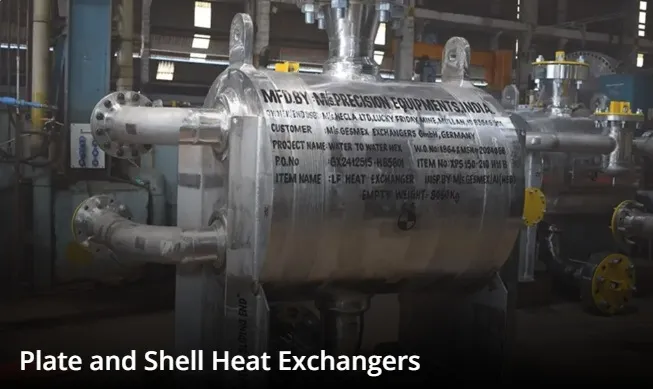
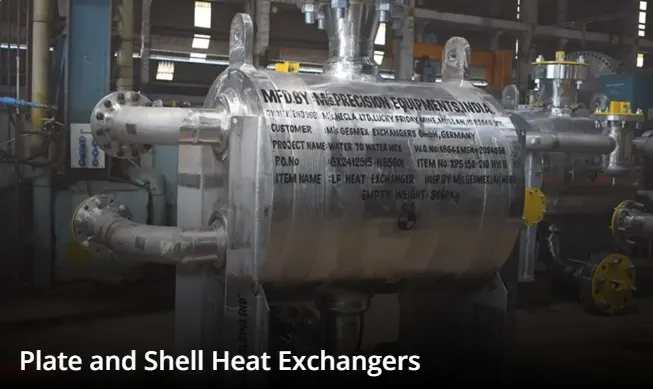
A Plate and Shell Heat Exchanger is designed to transfer heat efficiently between two fluids while maintaining the required process conditions. In applications across Oil & Gas, Petrochemicals, Fertilisers, Chemicals, LNG and other energy-intensive industries, thermal performance is only one part of the equation.
Pressure drop is equally important. When fluid flows through channels, nozzles and passages inside a Plate and Shell Heat Exchanger, resistance is created. This resistance results in a pressure difference between the inlet and outlet.
A carefully controlled pressure drop can promote effective heat transfer without placing excessive demands on pumps or compressors. However, an unnecessarily high pressure drop can increase energy consumption, reduce operating efficiency and create long-term process challenges.
Understanding this balance is therefore essential when selecting, designing or operating industrial heat exchange equipment.
What Is Pressure Drop in a Heat Exchanger?
Pressure drop is the reduction in fluid pressure as a stream travels through the heat exchanger. It occurs because of friction, changes in flow direction, internal geometry, fluid velocity and resistance created by the heat transfer surfaces.
In a Plate and Shell Heat Exchanger, the fluid must travel through relatively compact passages designed to maximise contact with the heat transfer surface. This arrangement can generate strong turbulence, which improves heat transfer but also creates resistance to flow.
The objective is not necessarily to achieve the lowest possible pressure drop. Instead, engineers need to establish an appropriate balance between pressure drop and thermal performance for the specific process.
Why Pressure Drop Matters for Efficiency
Pressure drop has a direct relationship with the energy required to move fluids through an industrial system. When resistance increases, pumps or compressors may need to work harder to maintain the required flow rate.
This additional energy demand can gradually become a significant operating cost, particularly in facilities that run continuously. Even a seemingly small increase in pressure drop can have consequences when multiplied across thousands of operating hours.
For a Plate and Shell Heat Exchanger, the challenge is therefore to achieve sufficient turbulence for effective heat transfer without creating excessive resistance.
The Efficiency Trade-Off
There is an important engineering relationship between flow velocity and heat transfer. Increasing velocity can improve turbulence and increase the heat transfer coefficient. However, higher velocity generally produces greater pressure loss.
This creates a practical trade-off:
- Higher velocity: Can improve heat transfer but may increase pumping energy.
- Lower velocity: Can reduce pressure drop but may weaken heat transfer and encourage fouling.
- Optimised velocity: Balances thermal performance, pressure requirements and operating cost.
A well-designed Plate and Shell Heat Exchanger considers these factors together rather than treating pressure drop and heat transfer as separate issues.
How Excessive Pressure Drop Affects Plant Operations
High pressure drop does more than increase pumping requirements. It can influence the performance of connected equipment and the stability of the wider process.
For example, if a process stream requires a particular pressure at the downstream equipment, excessive pressure loss through the heat exchanger may require additional upstream pressure. This can increase compressor or pump duties and affect the overall energy balance.
In larger installations, the impact can become more significant because multiple heat exchangers may operate within the same process network.
Key consequences of excessive pressure drop include:
- Higher pumping costs: Greater resistance requires additional hydraulic energy.
- Increased compressor demand: Gas systems may need more compression to overcome pressure losses.
- Reduced process flexibility: Operating margins can become narrower.
- Higher energy consumption: Additional utility demand can increase operating costs.
- Greater carbon impact: Higher electricity or fuel consumption can increase emissions.
- Potential equipment stress: Operating equipment outside its intended hydraulic conditions can affect reliability.
These effects explain why pressure drop should be considered during the initial thermal and mechanical design rather than addressed only after installation.
The Role of Heat Exchanger Design
The internal design of a Plate and Shell Heat Exchanger has a major influence on pressure drop. Channel geometry, plate arrangement, flow distribution, number of passes and heat transfer area all contribute to hydraulic resistance.
Engineers must also consider the physical properties of the process fluids. Viscosity, density, temperature and flow rate can significantly change pressure loss.
For instance, a highly viscous liquid may require a different configuration from a low-viscosity hydrocarbon. Similarly, gas and liquid applications can have very different pressure drop characteristics.
This is why selecting a heat exchanger based only on its nominal heat transfer capacity may not provide the best result. Hydraulic requirements must be considered alongside thermal requirements.
Pressure Drop and Fouling
Fouling can make pressure drop progressively worse during operation. Deposits, scale, corrosion products or other contaminants can restrict the available flow area and increase resistance.
At the same time, fouling reduces the effective heat transfer performance of the equipment. The result can be a double penalty: higher pressure drop and lower thermal efficiency.
Monitoring both temperature performance and pressure drop can therefore provide valuable information about equipment condition.
A gradual increase in differential pressure, particularly when combined with declining heat transfer performance, may indicate that cleaning or maintenance should be considered.
Finding the Right Balance
The ideal pressure drop depends on the application. There is no universal value that works for every industrial Plate and Shell Heat Exchanger.
Designers typically consider the available pressure budget, required heat duty, flow rates, fluid properties, operating temperatures and the energy cost associated with pumping or compression.
The economic picture is particularly important. A design with slightly greater heat transfer area may sometimes operate with a lower pressure drop, while another design may use a more compact configuration with higher velocity and stronger turbulence.
The best solution is the one that provides an appropriate lifecycle balance rather than simply the smallest equipment footprint or lowest initial purchase cost.
Pressure Drop in Energy-Intensive Industries
Pressure drop becomes particularly important in continuous-process industries where equipment operates for long periods.
In refineries and petrochemical plants, pumps and compressors can represent substantial energy consumers. Unnecessary hydraulic resistance across heat exchange equipment can therefore contribute to avoidable energy use.
In LNG and FSRU applications, pressure management is especially important because process conditions can be demanding and equipment performance can directly influence overall system efficiency.
For renewable energy systems and data centre cooling infrastructure, the same principle applies. Efficient fluid circulation can help reduce auxiliary energy consumption and support more sustainable operation.
How Engineers Can Manage Pressure Drop
Managing pressure drop begins with accurate process information. Incorrect assumptions about flow rate, fluid properties or operating conditions can lead to an unsuitable design.
Several approaches can help maintain an effective balance:
- Accurate process data: Reliable flow, temperature and pressure information supports better sizing.
- Appropriate channel configuration: Internal geometry should match the required hydraulic and thermal duties.
- Optimised flow velocity: Velocity should support heat transfer without creating unnecessary resistance.
- Fouling allowance: Expected operating conditions should be considered during design.
- Performance monitoring: Tracking pressure and temperature trends can identify changes over time.
- Lifecycle assessment: Energy consumption should be considered alongside initial equipment cost.
These considerations can make a significant difference to the long-term performance of a Plate and Shell Heat Exchanger.
Why Lower Pressure Drop Is Not Always Better
It may seem logical that the most efficient heat exchanger should always have the lowest possible pressure drop. In practice, this is not necessarily true.
Very low fluid velocity can reduce turbulence and weaken heat transfer. It may also increase the risk of fouling in some services. Reducing pressure drop at any cost can therefore result in a larger heat exchanger, greater capital expenditure or reduced thermal performance.
The goal is optimisation, not simply minimisation.
A properly engineered Plate and Shell Heat Exchanger should deliver the required heat duty while operating within the available pressure budget and maintaining reasonable energy consumption.
Conclusion
Pressure drop is one of the most important factors influencing the real-world efficiency of a Plate and Shell Heat Exchanger. When properly managed, it can support strong heat transfer while keeping pumping and compression requirements under control.
For industrial buyers and process engineers, evaluating pressure drop alongside heat duty, materials, fouling characteristics, maintenance requirements and lifecycle energy consumption can lead to more reliable decisions.
Precision Equipments has been a leading manufacturer and supplier of Shell and Tube Heat Exchangers and process equipment since 1981, serving key sectors such as Oil & Gas, Petrochemicals, Fertilizers, Power Plants, LNG and Nuclear Energy. This broader process equipment experience highlights the importance of considering thermal performance together with hydraulic efficiency when selecting critical heat transfer equipment.
Ultimately, the most effective Plate and Shell Heat Exchanger is not simply the one that transfers the most heat. It is the one that achieves the required thermal duty while maintaining an appropriate pressure drop, dependable operation and efficient lifecycle performance.
Frequently Asked Questions(FAQs)
1. What is pressure drop in a Plate and Shell Heat Exchanger?
Pressure drop is the reduction in fluid pressure between the inlet and outlet of the heat exchanger. It results from friction, flow velocity, internal geometry and changes in flow direction.
2. Does higher pressure drop improve heat transfer?
Higher pressure drop can be associated with greater fluid velocity and turbulence, which may improve heat transfer. However, excessive pressure drop can increase pumping or compression energy, so the design needs to balance both factors.
3. Why is pressure drop important when selecting a heat exchanger?
Pressure drop affects pumping requirements, operating costs, process conditions and overall system efficiency. It should therefore be assessed alongside thermal performance during equipment selection.
4. Can fouling increase pressure drop?
Yes. Deposits and scale can restrict flow passages, increasing resistance and pressure loss. Fouling can also reduce heat transfer performance at the same time.
5. Is a lower pressure drop always better?
No. Extremely low pressure drop can indicate low fluid velocity, which may reduce turbulence and heat transfer performance. The objective is to achieve an economically and technically appropriate pressure drop for the application.
6. How can pressure drop be reduced?
Pressure drop can be managed through appropriate exchanger sizing, channel configuration, flow arrangement and operating conditions. Regular monitoring and maintenance can also help prevent fouling-related increases in pressure loss.




















Sign in to leave a comment.