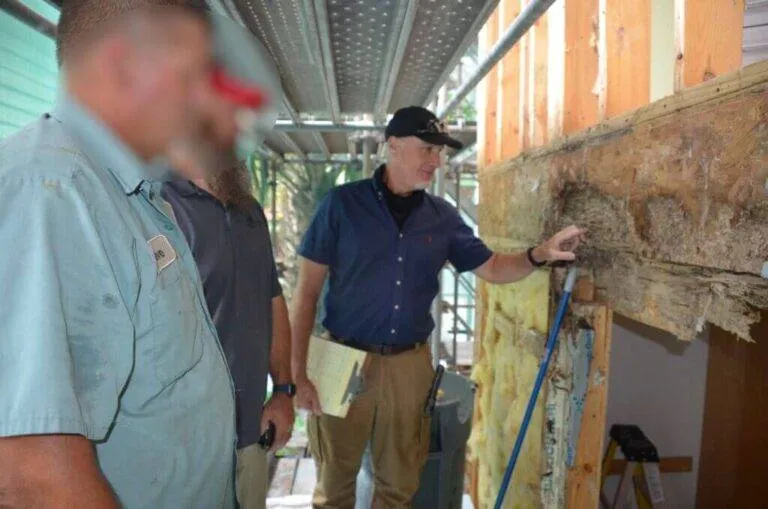

The property you own as a residential or business establishment represents your most important financial investment, but hidden biological processes gradually decrease its market worth. The combination of moisture problems and neglecting building maintenance creates a hidden decay process, which needs wood decaying fungi treatment.
The appearance of a building may improve through surface repairs, but these solutions fail to resolve hidden structural problems that lead to expensive conflicts. The actual threat emerges from concealed damage, which endangers people's safety and attracts legal examination.
Two main factors lead to this unrecognized destruction: tunneling activities behind wood damage from carpenter ants and the gradual deterioration process, which results from fungi.
Basic pest control methods prove insufficient when disputes emerge regarding who should take responsibility or how well repairs were done. The preservation of your rights and investment requires you to acquire detailed evaluations together with proof that meets legal standards.
Understanding the Primary Threat: Wood Decaying Fungi Treatment
Wood-decaying fungi exist as living organisms which decompose wood through their cellular growth. White rot and brown rot types digest structural materials, which cause gradual beam and support deterioration. The process remains hidden until it produces visible damage, which results in total structural collapse.
Successful wood decaying fungi treatment requires more than chemical application. The first step of moisture control establishes a foundation because fungi grow best in wet conditions. Treatments fail when the source of water remains present. Fungicides reduce growth, but structural remediation maintains building stability for an extended period.
The legal process faces disputes because these procedures remain unfinished. Moisture sources are sometimes overlooked, allowing decay to return. Contractors may apply treatments incorrectly or inadequately, leaving hidden risks behind. During property transactions, damaged wood may be presented as “repaired,” creating disputes later.
The key distinction lies in analysis. Applying treatment requires verification to determine its compliance with professional standards. The absence of measurable data and clear documentation creates challenges in demonstrating whether appropriate care practices were followed or not.
The Secondary Culprit: Wood Damage from Carpenter Ants
Carpenter ants demonstrate distinctive behavior patterns which separate them from all other insects that damage wooden structures. The pests do not eat wood materials but instead use their strength to create tunnels for their nesting needs. This behavior leaves behind smooth, hollowed tunnels that weaken structures from within.
The detection of wood damage from carpenter ants remains difficult during standard property inspections. During fast property turnovers, people tend to overlook or hide the main signs of wood damage, which include small openings, faint rustling sounds and fine debris. The concealed information creates danger for buyers who depend on basic property evaluations.
The process of forensic evaluation serves as an essential method for identifying various types of damage. The specialists use pattern analysis together with age assessment and spread examination to determine whether an infestation exists from recent times or has continued for an extended period.
This distinction becomes vital in disputes involving failure to disclose. The establishment of a timeline enables better control of responsibilities while supporting claims through factual evidence instead of relying on assumptions.
When Science Becomes Evidence: The Role of Expert Consulting
Biological damage transforms into a legal issue when accountability is questioned. At this stage, surface inspections and basic reports are no longer sufficient. The process requires detailed evaluation through scientific methods, which establishes its necessity.
The on-site assessment process requires the complete execution of moisture tests, wood density analysis and exact identification of all fungal and insect infestations. The assessment process provides data at each stage, which combine to create a complete understanding of the issue. The method examines specific evidence which can endure testing instead of using general observations.
Standard service reports often describe what is seen but lack depth and verification. In contrast, defensible analysis explains how and why damage occurs, linking it to specific conditions or actions. This level of detail establishes proof which can be provided in both legal and insurance situations.
The process of providing proof requires showing whether the required standards of care were followed or abandoned. The accurate assessment of consulting services creates a clear connection between the biological damage which occurred and the legal responsibilities, and gives you clarity in complicated scenarios.
Navigating the Legal Aspects of Wood-Destroying Organisms (WDO)
The process of preparing technical results requires effective communication when conflicts between parties reach their peak. Biological systems become simpler through expert witness testimony, which enables judges and jurors to understand them in courtroom environments. The system ensures that decisions proceed through factual information evaluation instead of misleading information.
Disputes arise between buyers and sellers, between homeowners and inspectors and between property owners and contractors. The parties involved in the case have different views about the damage, which results in disputes about who should take responsibility. The objective results which structured analysis generates help treat the existing problems.
The process of achieving compliance functions as an essential element. The industry standards and regulations control all wood decaying fungi treatment. Incorrect protocol execution leads to responsibility transfer, which affects the judicial process. Your case gains strength when you demonstrate that your previous work followed established industry standards.
Conclusion: Protecting Your Rights, Not Just Your Roof
Wood deterioration is never just a maintenance issue; it quickly becomes a financial and legal challenge. Hidden biological threats weaken structures while creating uncertainty about responsibility. Addressing these risks requires more than surface fixes—it demands accurate evaluation and clear documentation.
When facing disputes or potential claims, relying on guesswork creates unnecessary risk. Your property condition assessment uses proper wood decaying fungi treatment together with a complete property analysis. The assessment delivers complete clarity, which safeguards both your financial assets and your legal entitlements, enabling you to make decisions with certainty.




























Sign in to leave a comment.