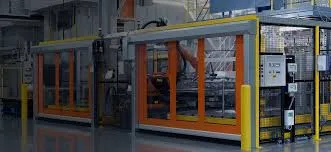

Modern manufacturing facilities often have machines working at remarkable speed. Automated presses, machining centers, robotic systems, conveyors, and other equipment can perform demanding tasks continuously, but their speed also creates potential risks. Moving components, flying particles, heat, noise, and unexpected machine activity can make the area around industrial equipment hazardous.
This is where High-Speed Machine Protection Doors can make a significant difference. These specialized doors create a physical barrier around machinery while allowing employees, materials, and equipment to move through the workspace efficiently.
Unlike a traditional door that may take several seconds to open and close, a high-speed door is designed for frequent, rapid operation. Think of it like an automatic gate that responds quickly whenever access is needed. When properly selected and integrated into a facility's safety system, it can help separate people from dangerous machinery without unnecessarily slowing production.
This guide explains what these doors are, how they work, where they are useful, and what businesses should consider before choosing one.
What Are High-Speed Machine Protection Doors?
High-Speed Machine Protection Doors are industrial doors designed to provide quick, controlled access around machinery and automated work areas.
Their primary purpose is to create separation. A machine may need to operate inside a defined area while employees or materials occasionally need to pass through it. Instead of leaving the opening permanently exposed, a high-speed door can remain closed during machine operation and open rapidly when authorized access is required.
These doors are different from ordinary commercial doors. They are built for demanding industrial environments where opening and closing may happen many times throughout the working day.
For example, imagine a robotic welding cell. The robot needs to operate without people entering its working zone. A protective door can keep the cell enclosed during operation. When an employee needs to enter for an approved task, the door can open quickly through the appropriate control system.
The basic idea is simple: keep hazardous machinery separated from people while maintaining efficient access.

Why Machine Protection Matters
Industrial machines can perform tasks much faster and with considerably more force than a person can. That is useful for production, but it also means that workers need clearly defined boundaries around equipment.
A physical barrier provides an obvious separation between an operator and a machine's working area. It can also help prevent accidental access while equipment is running.
Consider a large automated cutting machine. Without a suitable barrier, someone walking through the area could potentially come too close to moving components. With a protective door and appropriate safety controls, access can be restricted when the machine is active.
The door itself is not a substitute for a complete machine-safety program. Instead, it can be one part of a broader approach that may include guarding, interlocks, sensors, emergency stops, warning systems, procedures, and employee training.
How High-Speed Doors Work Around Machinery
Although designs vary, the operating principle is straightforward.
The door remains in a closed position when the protected area needs to be isolated. When an authorized opening signal is received, the door moves upward, sideways, or in another designed direction. Once access is complete, it closes again.
The control system can be connected to equipment and safety devices depending on the application. For instance, a machine may be prevented from operating unless the protective door is properly closed.
Sensors can also play an important role. They may detect a person, vehicle, or object in an opening and prevent the door from closing when something is in its path.
The exact arrangement depends on the machine, workplace layout, risk assessment, and applicable safety requirements. A qualified professional should determine how the door should interact with the machinery and other safety systems.
Faster Access Without Leaving the Area Open
One of the biggest advantages of a high-speed door is the balance between protection and productivity.
A slow door can become an inconvenience in a busy factory. If employees have to wait every time they enter or leave an enclosed machine area, those small delays can accumulate throughout a shift.
A high-speed design reduces the amount of time an opening remains exposed.
For example, imagine a production area where workers need to move components through a machine enclosure dozens of times each hour. A conventional door could become a bottleneck. A faster system can allow controlled access while helping the workflow continue smoothly.
This does not mean speed should come before safety. The goal is to provide rapid access without compromising the protective function of the enclosure.
Supporting Safer Separation Between People and Machines
A machine protection door can help establish a clear boundary between human activity and automated equipment.
That physical separation can be particularly useful where machines have moving parts, rotating components, cutting tools, hot surfaces, sparks, or other hazards.
A closed door sends a simple visual message: this area is separated from the surrounding workspace.
When combined with appropriate controls, the barrier can become part of a more comprehensive safety arrangement. Depending on the application, the system may be designed so that machinery cannot operate normally when the protected opening is accessible.
This type of approach is especially important in automated production environments, where machines may continue working with little direct human involvement.
Common Applications for Machine Protection Doors
High-Speed Machine Protection Doors can be used in many industrial settings. Their suitability depends on the particular machine and the hazards involved.
Robotic Work Cells
Robotic equipment is increasingly common in manufacturing. Robots can move quickly and may repeat the same operation continuously.
A high-speed protective door can help separate the robot's operating zone from nearby workers while still providing controlled access for maintenance or other approved activities.
CNC and Machining Areas
Machining equipment may produce chips, debris, noise, and other hazards. Enclosing the working area can provide an additional physical barrier between the machine and the surrounding workspace.
The door can also make it easier to control who enters the area and when.
Automated Production Lines
Production lines often depend on continuous movement. Employees may need access to certain sections for inspection, material handling, or servicing.
A rapidly operating door can help maintain separation while minimizing unnecessary interruptions to the production process.
Press and Forming Equipment
Industrial presses can generate significant force. Protecting access points around this type of machinery is therefore important.
A suitable door can form part of the guarding arrangement and help restrict access to the operating zone.
Packaging and Material Handling Systems
Automated packaging equipment and conveyors may contain moving mechanisms that require controlled access. High-speed doors can be incorporated into enclosed areas where frequent movement of products or personnel occurs.
Benefits Beyond Basic Protection
Safety is the central reason for installing these doors, but businesses may also gain operational benefits.
Improved Workflow
Quick opening and closing can make repeated movement through a protected area less disruptive.
Better Control of Access
The door can help establish when an area is open for access and when it should remain isolated.
Reduced Exposure Time
Because the door operates quickly, the opening may remain accessible for less time than it would with a slower conventional door.
Cleaner Work Areas
In certain facilities, an enclosed machine area can help contain dust, particles, sparks, or other materials generated during production. The exact level of containment depends on the door design and the overall enclosure.
More Organized Workspaces
A dedicated protective barrier can make machine zones easier to define. Clearly separated work areas can support better traffic management and help employees understand where they are permitted to enter.
Choosing the Right Door for the Application
There is no single high-speed machine door that works perfectly for every factory.
The first step is understanding the machine and the environment where the door will operate.
Consider how frequently the door will open and close. A door used hundreds of times per day may require different construction and components from one used only occasionally.
The available space matters as well. Some facilities have limited room above or beside the opening, which can influence the appropriate door configuration.
The operating environment is another important consideration. Temperature, dust, moisture, chemicals, cleaning methods, airborne particles, and physical impacts can all affect equipment selection.
Businesses should also consider how employees and materials will interact with the opening. A pedestrian entrance has different requirements from an opening used by forklifts or automated vehicles.
Safety Features to Consider
The exact safety features should be selected according to the application and professional risk assessment.
Potential features can include sensing devices, protective edges, emergency release mechanisms, warning indicators, access controls, and connections to machine-control systems.
An important feature in many applications is an interlocking arrangement. In simple terms, an interlock can help coordinate the door with the machine so that certain machine functions are restricted when the protective barrier is not in the required position.
However, safety requirements vary significantly from one application to another. A qualified safety professional should determine what safeguards are necessary rather than treating a standard list of features as sufficient for every installation.
Installation Is Just as Important as the Door
Even a well-designed door cannot provide its intended protection if it is incorrectly installed.
The door needs to fit the opening and work properly with the surrounding machine guarding. Controls, sensors, and other safety devices must also be positioned and configured correctly.
The installation process should take into account how employees approach the machine, how materials move through the area, and what happens if the door loses power or encounters an obstruction.
This is why machine protection should be viewed as a complete system rather than simply a piece of equipment.
Businesses such as Newport Company can help organizations evaluate industrial door solutions suited to demanding operating environments and specific facility requirements.
Maintenance Keeps the System Reliable
A protective door is expected to work when it is needed. Regular maintenance therefore matters.
Frequent inspections can identify worn components, unusual movement, damaged seals, sensor problems, or other issues before they become larger problems.
Employees should also know how to recognize signs that something is wrong. Unusual sounds, inconsistent movement, delayed operation, or repeated sensor faults should not simply be ignored.
The maintenance schedule should reflect the door's usage and operating environment. A heavily used door in a demanding factory may require more frequent attention than a lightly used system.
Keeping maintenance records can also make it easier to identify recurring problems and plan repairs.
How These Doors Can Support Productivity
Safety and productivity are sometimes treated as competing priorities, but good machine guarding can support both.
A well-designed protective door allows a hazardous area to remain controlled without forcing employees to work around a permanently closed barrier.
The faster the system can provide authorized access, the less disruption there may be to routine operations. This is particularly valuable in highly automated facilities where even small interruptions can affect production flow.
For example, if an operator needs to inspect a machine several times during a shift, an efficiently designed access system can make those inspections easier without requiring the machine area to remain exposed.
The key is thoughtful integration. The door should work with the production process rather than being added as an afterthought.
Questions to Ask Before Installation
Before choosing a High-Speed Machine Protection Door, facility managers should examine the application carefully.
Important considerations include:
- What hazards need to be separated from personnel?
- How often will the door operate?
- How large does the opening need to be?
- Will people, forklifts, products, or automated vehicles pass through?
- What environmental conditions will the door face?
- How should the door interact with the machine's controls?
- What happens during a power interruption?
- What maintenance access will be required?
- Which safety standards and workplace requirements apply?
- Who will inspect and maintain the completed system?
Answering these questions early can prevent expensive changes later.
Making the Most of a Machine Protection System
The best results come when the door is considered during the design of the machine area rather than after everything else has been installed.
The location of the door, direction of movement, sensor placement, access routes, and machine controls can all influence how effective the final system will be.
Employee behavior also matters. Workers should understand why the barrier exists and when entry is permitted. A sophisticated door cannot compensate for unsafe work practices or deliberate bypassing of safety measures.
Regular training, inspections, maintenance, and appropriate procedures should therefore accompany the physical protection system.
Conclusion
High-Speed Machine Protection Doors provide a practical way to create controlled separation around industrial machinery while keeping access efficient. Their rapid operation can be especially valuable in facilities where employees, products, and automated systems move frequently throughout the day.
From robotic work cells and machining areas to automated production and packaging systems, these doors can form an important part of a broader machine-safety strategy. They can help define restricted zones, control access, and reduce unnecessary delays without turning every protected area into a difficult-to-use workspace.
The most important point is that door selection should begin with the actual hazards, workflow, machine configuration, and operating environment. When the door, safety controls, machine guarding, and workplace procedures are designed to work together, businesses can create a more organized and controlled production environment.
A high-speed door is more than an opening that moves quickly. When properly selected and integrated, it becomes part of the system that helps people and machines work in closer proximity with greater control.
























Sign in to leave a comment.