
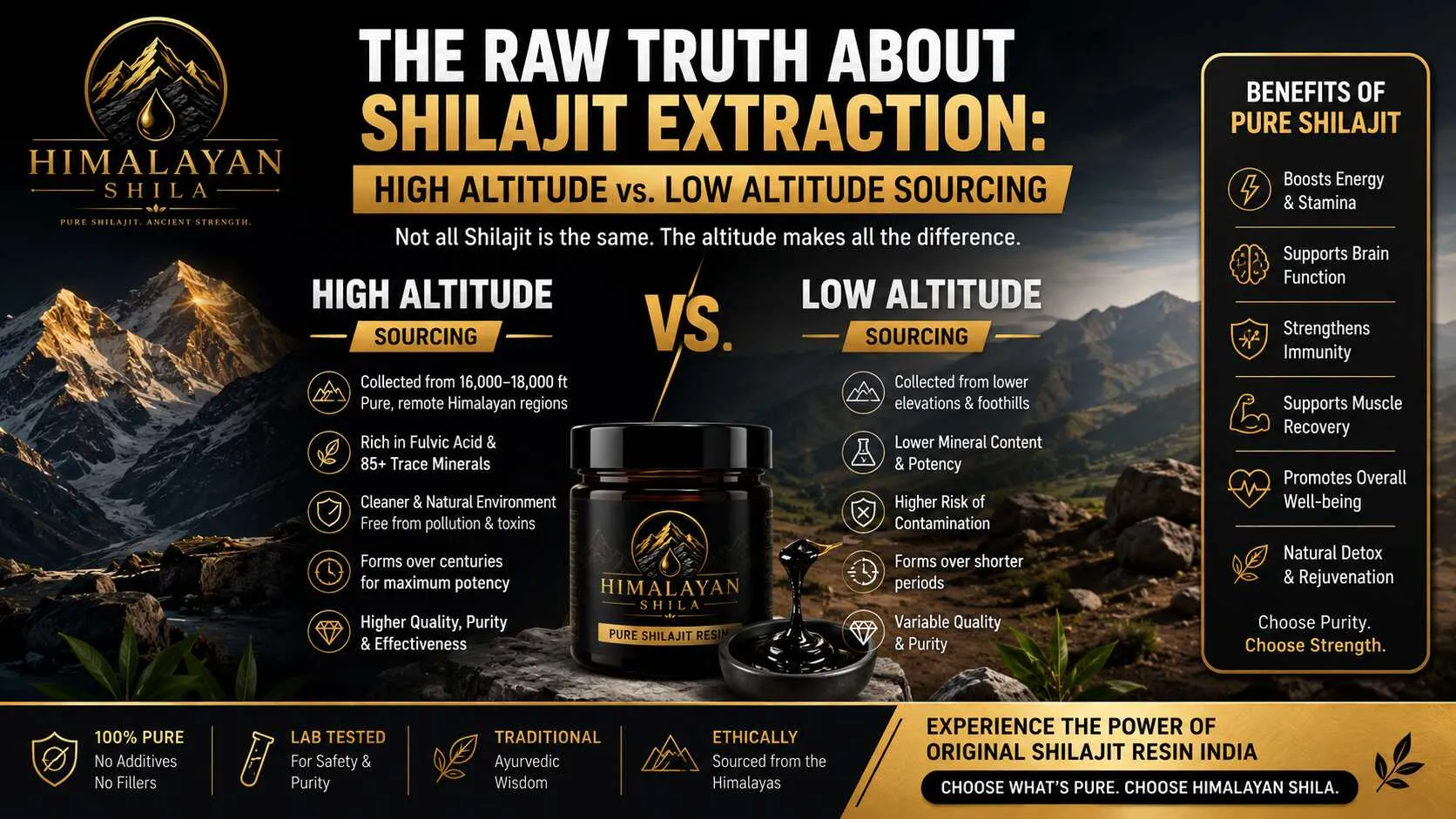
Not all shilajit is the same. That's not a marketing line - it's a sourcing and chemistry reality that has real implications for both safety and effectiveness.
The origin matters. The altitude matters. The purification process matters. And the form - resin, powder, or capsule - matters more than most product descriptions let on.
This guide covers all of it: what Himalayan shilajit resin actually is, how it forms, what it contains, what the research supports, and how to find a product that meets a basic standard of purity. It's written to be useful whether you're considering it for the first time or trying to make a more informed choice after a previous experience.
What Is Himalayan Shilajit Resin?
Shilajit is a dense, resinous substance found in the rock layers of several mountain ranges worldwide - the Himalayas, the Altai, the Caucasus, and the Tibetan Plateau among them. Of these, Himalayan shilajit is the most widely studied and the most prized in traditional Ayurvedic medicine, where it has been used for over 3,000 years under the name silajatu or shilajatu.
The word itself loosely translates from Sanskrit as "conqueror of mountains" or "destroyer of weakness" - which says something about how seriously traditional practitioners regarded it, even if modern use requires a more measured perspective.
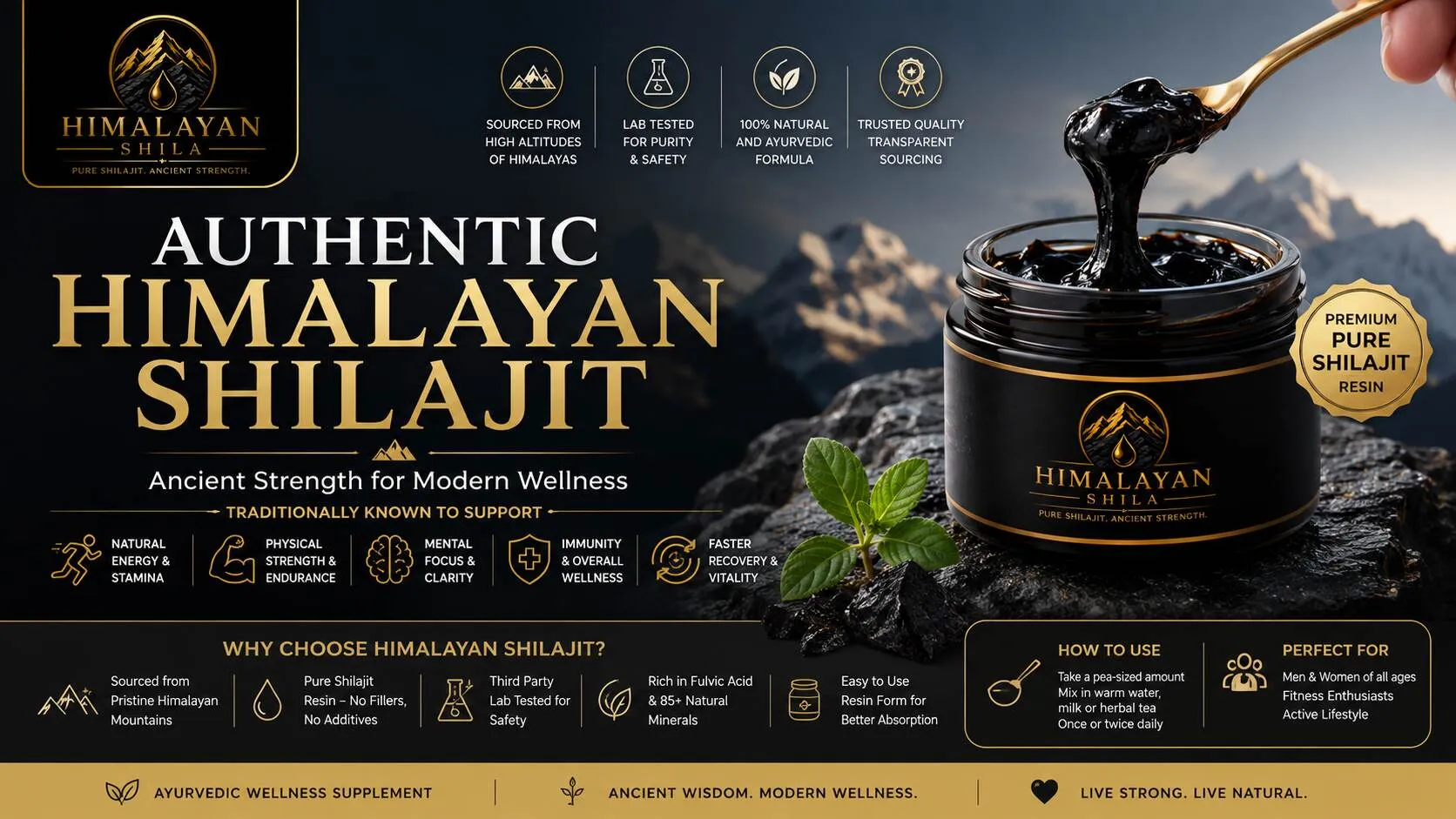
In physical terms: Himalayan shilajit resin is a thick, dark brown to black substance with a texture somewhere between tar and dense wax. At room temperature it holds its shape; in warm water or slightly heated conditions, it softens and dissolves readily. The smell is earthy and mineral-forward - not particularly pleasant, but not offensive either.
Resin specifically refers to the minimally processed form of shilajit - as close to the natural exudate as possible while still being purified for human consumption. This distinguishes it from shilajit powder (dried and ground), standardized extract (processed further to concentrate specific compounds), and capsules (which may contain any of the above, often with added fillers).
How Himalayan Shilajit Resin Forms - and Why Altitude Matters
The formation process is slow by any standard - we're talking centuries, not years.
At high altitudes in the Himalayan range (typically 1,000–5,000 meters), layers of organic matter - decomposed plants, microbial material, and humic substances - become compressed between rock strata over geological timescales. The pressure, temperature variations, and microbial activity transform this organic material into a complex matrix of minerals, fulvic acids, humic acids, and bioactive compounds.
During warmer months, this substance slowly seeps from cracks and fissures in the rock face, where it's collected by harvesters who know which formations to look for. In colder months, it solidifies back into the rock.
This is why reputable brands specify not just "Himalayan" origin but the approximate altitude and region of collection. Vague sourcing claims are worth scrutinizing.
Resin vs. Powder vs. Capsules: An Honest Comparison
This is one of the most practically useful comparisons to make, and it gets glossed over in most product guides.
| Form | Processing Level | Bioavailability | Convenience | Purity Risk | Cost |
|---|---|---|---|---|---|
| Resin | Lowest | Highest | Low | Low (if tested) | Higher |
| Powder | Moderate | Moderate | Moderate | Moderate | Moderate |
| Capsules | Highest | Variable | High | Higher (fillers, dilution) | Variable |
| Liquid drops | Variable | Variable | High | Moderate–High | Variable |
Resin is the form most closely aligned with what traditional Ayurvedic practitioners used and the form most studied in modern clinical trials. Because it's minimally processed, the mineral matrix and fulvic acid content are better preserved. The trade-off is convenience - dissolving a pea-sized amount in warm water takes more effort than swallowing a capsule.
Capsules are convenient, but the market is saturated with underdosed, low-fulvic-acid products that use shilajit powder at negligible concentrations alongside a lot of filler. The effective dose of actual shilajit in many capsule products is far below what was used in clinical trials. That's not always the case - some capsule products are properly dosed - but the risk of being misled is higher in this format.
Powder sits in between: more concentrated than most capsules, easier to handle than resin, but lacking the full bioactive matrix of unprocessed resin.
What's Inside: The Molecular Profile
Himalayan shilajit resin's bioactive composition includes:
Fulvic acid - the primary active compound, typically 60–80% of high-quality purified resin. Fulvic acid acts as a carrier molecule, transporting minerals and nutrients across cell membranes and improving their intracellular availability. It also has antioxidant properties and may influence mitochondrial function directly.
Humic acid - a closely related compound with its own antioxidant and anti-inflammatory activity, typically present at lower concentrations than fulvic acid.
Dibenzo-alpha-pyrones (DBPs) - compounds formed during the humification process that appear to support mitochondrial electron transport. Some researchers consider these among the most pharmacologically interesting components of shilajit.
Trace minerals - over 80 have been identified, including zinc, magnesium, iron, copper, manganese, and selenium. The mineral profile varies by geological origin.
Amino acids and plant-based phytochemicals - present in smaller concentrations, contributing to the overall bioactive complexity.
What Himalayan Shilajit Resin Is Used For
Traditional Ayurvedic applications for shilajit cover a wide range - energy, fertility, cognitive function, immunity, wound healing, and more. Modern evidence has converged on a narrower but more credible set of applications:
Energy and physical stamina - the most common reason people use it today. The mitochondrial mechanism provides a plausible basis for improved cellular energy production over time.
Natural testosterone support - backed by the strongest direct clinical evidence. Replicated human trials show modest but real increases in total and free testosterone in men, particularly those in the 40–55 age range.
Male fertility - the same 2015 Andrologia study that showed testosterone increases also documented significant improvements in sperm count, motility, and morphology in infertile men over 90 days.
Recovery from physical training - reduced delayed onset muscle soreness (DOMS) and faster muscular recovery are among the most commonly reported experiences. The mechanism likely involves both anti-inflammatory activity and improved mitochondrial repair signaling.
Cognitive clarity - anecdotally reported frequently; research on fulvic acid's effects on neuroinflammation and tau protein aggregation is early but interesting.
Altitude adaptation - traditional use for high-altitude fatigue has some mechanistic support through improved red blood cell production and oxygen utilization, though clinical trials in humans at altitude are limited.
Iron absorption support - relevant for individuals with iron-deficiency anemia; fulvic acid's mineral transport mechanism makes this biologically plausible and some preliminary data supports it.
The Evidence: What Research Actually Supports
Being specific here matters, because claims about shilajit range from the well-supported to the completely unsubstantiated.
Well-supported:
- Testosterone and sperm quality improvements in clinical trials (Pandit et al., 2015, Andrologia; Biswas et al., 2010, Andrologia)
- Mitochondrial function support via fulvic acid and DBP mechanisms (Bhattacharyya et al., 2009; Stohs, 2014)
- Antioxidant activity (multiple in vitro and animal studies)
Emerging / preliminary:
- Cognitive and neuroprotective effects (Carrasco-Gallardo et al., 2012, International Journal of Alzheimer's Disease)
- Exercise performance and VO2 max (Keller et al., 2019 - small sample)
- Iron absorption and anemia (mechanistic support, limited direct human trials)
Traditional but not yet clinically validated:
- Immune modulation
- Anti-aging effects
- Blood sugar regulation
- Wound healing acceleration
How to Take Himalayan Shilajit Resin Correctly
Standard dose: A pea-sized amount of resin - approximately 300–500 mg - once or twice daily. This aligns with the doses used in the most relevant human clinical trials.
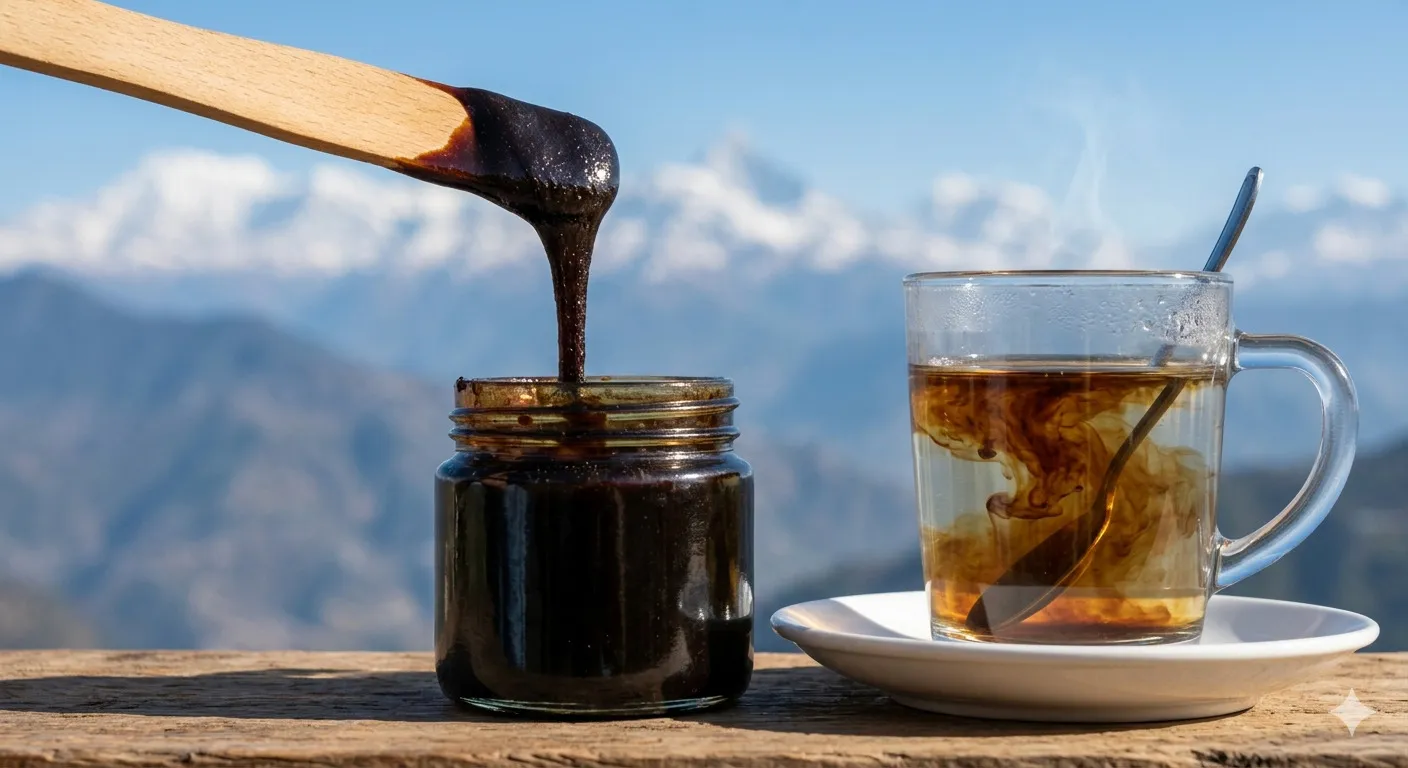
Preparation: Dissolve in warm (not boiling) water, milk, or a warm herbal tea. Boiling temperatures may degrade some bioactive compounds, particularly fulvic acid. The resin dissolves within 30–60 seconds with gentle stirring.
It can also be dissolved directly in a protein shake or taken sublingually (under the tongue) for slightly faster absorption, though the latter takes some getting used to given the taste.
Timing: There's no strong pharmacological requirement for a specific time of day. Morning use is common because adaptogens tend to support daytime energy rhythm. Post-workout timing makes sense for recovery goals. Some practitioners suggest splitting the dose - morning and evening - for more consistent systemic levels.
Consistency over duration: The effects of shilajit are cumulative, not acute. Expect a meaningful assessment window of 8–12 weeks. Tracking energy, sleep quality, and workout recovery over this period gives a more accurate read than expecting change in the first two weeks.
With food or without: Either works. On an empty stomach, absorption may be slightly faster. With food, digestive discomfort (which some users experience at first) is reduced. Experiment to find what works for you.
Side Effects and Safety
In purified, properly tested resin from a verified source, Himalayan shilajit resin has a relatively mild side effect profile for most healthy adults.
Reported side effects include:
- Digestive discomfort or loose stools, particularly at higher doses or when first starting (usually resolves within 1–2 weeks)
- Mild dizziness in some individuals, especially when taken on an empty stomach
- Rare allergic reactions: itching, rash, or rapid heartbeat - discontinue immediately if these occur
- Potential uric acid elevation - relevant for those with gout or kidney stone history
The Heavy Metal Problem: What Most Brands Don't Tell You
This section deserves frank treatment.
Raw, unprocessed shilajit contains naturally occurring heavy metals - including lead, mercury, arsenic, and cadmium - because it forms in mineral-rich geological environments. This isn't a sign of contamination; it's the nature of the source material.
The problem is that inadequate purification leaves these metals at concentrations that can cause harm with regular use. The FDA has issued warning letters to specific shilajit brands for heavy metal levels exceeding safe thresholds. Consumer lab testing services have identified multiple commercially available products with concerning lead and arsenic levels.
This is not a fringe concern. It's a documented, recurring safety issue in the shilajit market - one that most brand websites understate or don't mention at all.
What safe purification looks like: Reputable manufacturers use multi-stage purification processes - often involving water purification, sun-drying, and filtration - that reduce heavy metals to within safety thresholds established by bodies like the US Pharmacopeia (USP) or European Food Safety Authority (EFSA). The result is tested against these thresholds by independent third-party laboratories.
What you should demand from any brand:
- A publicly accessible Certificate of Analysis (COA) from a third-party laboratory
- Heavy metal panel results for lead, arsenic, mercury, and cadmium - with comparison to USP or EFSA limits
- Stated fulvic acid percentage
- Batch-specific testing (not a single historical test that covers all products indefinitely)
Himalayan Shila publishes batch-specific third-party COAs for its shilajit resin. This is the standard - not an exceptional feature, but the minimum acceptable baseline.
How to Verify a Product Is Genuinely Pure
A practical checklist:
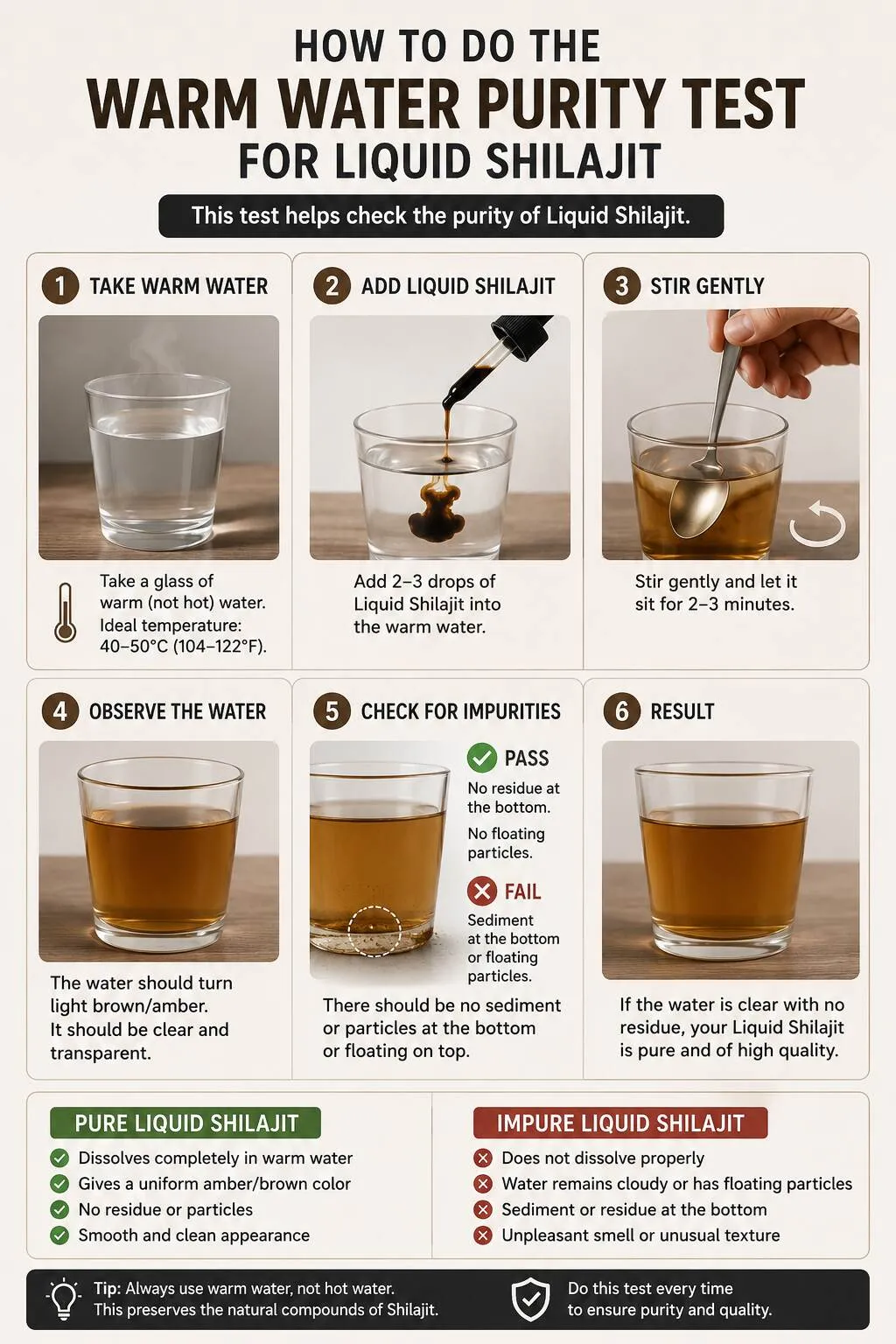
- Request or find the COA. If a brand won't provide one, that's your answer.
- Check the testing lab. It should be an accredited third-party facility - not the brand's own internal lab.
- Look for the heavy metal panel. A COA that only lists microbial counts or doesn't include lead, arsenic, mercury, and cadmium is incomplete.
- Verify the fulvic acid percentage. Anything below 50% in a "premium" resin product warrants skepticism. Most quality resins run 60–80%.
- Check the batch number. The COA should match the batch number on the product you're buying, not be a generic document from a previous lot.
- Be skeptical of extremely low prices. Quality purification, third-party testing, and Himalayan sourcing are not cheap processes. Products priced significantly below market rate almost always reflect compromises somewhere in the supply chain.
Who Should Avoid Himalayan Shilajit Resin
- Pregnant or breastfeeding women - no adequate safety data
- Children - no pediatric dosing or safety research
- People with gout or kidney stones - potential uric acid elevation
- Those with hemochromatosis, sickle cell anemia, or thalassemia - shilajit may increase iron absorption
- Anyone on thyroid medication - possible interaction with hormone levels
- People with hormone-sensitive cancers - testosterone-supporting activity is contraindicated
- Those with active autoimmune conditions - immune-modulating effects may be counterproductive
Conclusion
Himalayan shilajit resin has earned its reputation through centuries of traditional use and, increasingly, through modern research that validates specific mechanisms and outcomes. It's not a miracle compound. But it is one of the more interesting and evidence-supported natural supplements available today - when it comes from the right place and has been properly purified.
























Sign in to leave a comment.