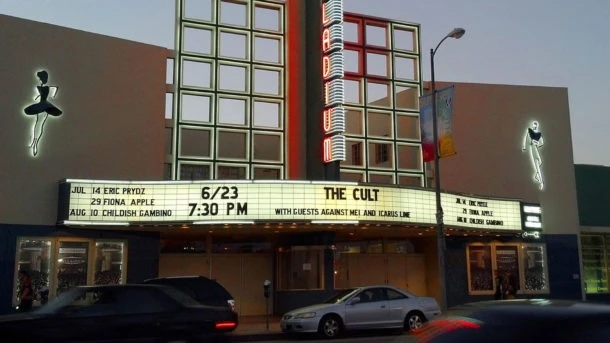
The Hollywood Palladium is more than just a music venue; it is a living monument to the history of Los Angeles entertainment. Opened on October 31, 1940, with a grand Halloween themed party, the venue was the brainchild of Norman Chandler, the publisher of the Los Angeles Times. Designed by the acclaimed architect Gordon B. Kaufmann who also lent his genius to landmarks like the Hoover Dam and the Santa Anita Racetrack the hollywood palladium was an architectural marvel of its time. It was built on the former site of the Famous Players Lasky Corporation movie studio, cementing its place in the rich tapestry of Hollywood history from its very beginning.
Kaufmann's design was a striking example of the Streamline Moderne style, an evolution of Art Deco that embraced sleek, curved lines and a sense of dynamic movement. This "machine-age utopia" was a perfect fit for a city obsessed with the future. The interior was equally impressive, boasting a massive 11,200 square foot hardwood dance floor, two elegant foyers, and a domed ceiling. The opening night was a star-studded affair, with Hollywood luminaries like Judy Garland and Bob Hope in attendance. The ribbon was cut by actress Dorothy Lamour, and the inaugural performance was delivered by Tommy Dorsey and his Orchestra, featuring a then-unknown young vocalist named Frank Sinatra. This single night set the stage for the Palladium's legendary future as a premier destination for music and culture.
The Soundtrack of a City
From its inception, the Hollywood Palladium was the epicenter of the Big Band era on the West Coast. The 1940s were defined by the swinging sounds of Glenn Miller, Harry James, and The Andrews Sisters, who all graced the Palladium's stage. The venue was a morale booster during World War II, filled to capacity with soldiers and civilians seeking a night of dancing and escape.
As musical tastes evolved, so did the Palladium. The 1950s saw the venue host everything from political rallies—including speeches by Presidents Dwight Eisenhower and John F. Kennedy—to charity balls and auto shows. A significant moment in its history occurred in 1950, when it opened its doors to an interracial audience for a performance by the "King of Vibes," Lionel Hampton. Throughout the 1950s and 60s, it became a home for Latin music and was famously the location where The Lawrence Welk Show was filmed, broadcast into homes across America.
The 1970s and beyond witnessed the Palladium's transformation into a haven for rock, punk, and hip-hop. The venue embraced the counterculture, hosting legendary acts from The Rolling Stones and The Grateful Dead to punk pioneers like The Clash and The Ramones. The 1990s and early 2000s saw a continued shift, with artists from all genres, including hip-hop, heavy metal, and electronic music, adding their names to the venue's storied history. A particularly memorable night in 1991 featured a lineup that now seems impossible: Soundgarden, Pearl Jam, Alice In Chains, and Temple of the Dog all on the same bill.
A Modern Revival
By the early 2000s, the Hollywood Palladium had weathered decades of change and was in need of a significant update. In 2007, a long-term lease was secured by Live Nation, a move that would lead to a comprehensive $20 million renovation. The restoration project, completed in 2008, was a meticulous effort to restore the venue's Streamline Moderne splendor while modernizing its infrastructure. The iconic neon blade sign was reconstructed, the facade's dancing figures were restored, and the interior was brought back to its former glory.
The renovations added modern amenities, including state-of-the-art acoustics, lighting, and a new stage, ensuring the venue could compete with contemporary concert halls while preserving its historic character. The grand reopening in 2008 featured a concert by Jay-Z, signaling that the Palladium was ready to continue its legacy as a top-tier live music venue for a new generation.
Conclusion
The Hollywood Palladium has stood as a cultural touchstone for over eight decades. From the golden age of Big Bands to the raw energy of punk rock and the global sounds of today's touring artists, it has been the stage for a diverse array of musical history. Its striking architecture, storied past, and continuous evolution have secured its place not just as a building, but as an essential part of Hollywood's identity. As an officially designated Los Angeles Historic-Cultural Monument, the Palladium stands as a testament to the enduring power of live performance and the timeless appeal of a truly classic venue. Visit the official website of douglaswilson.com


























Sign in to leave a comment.