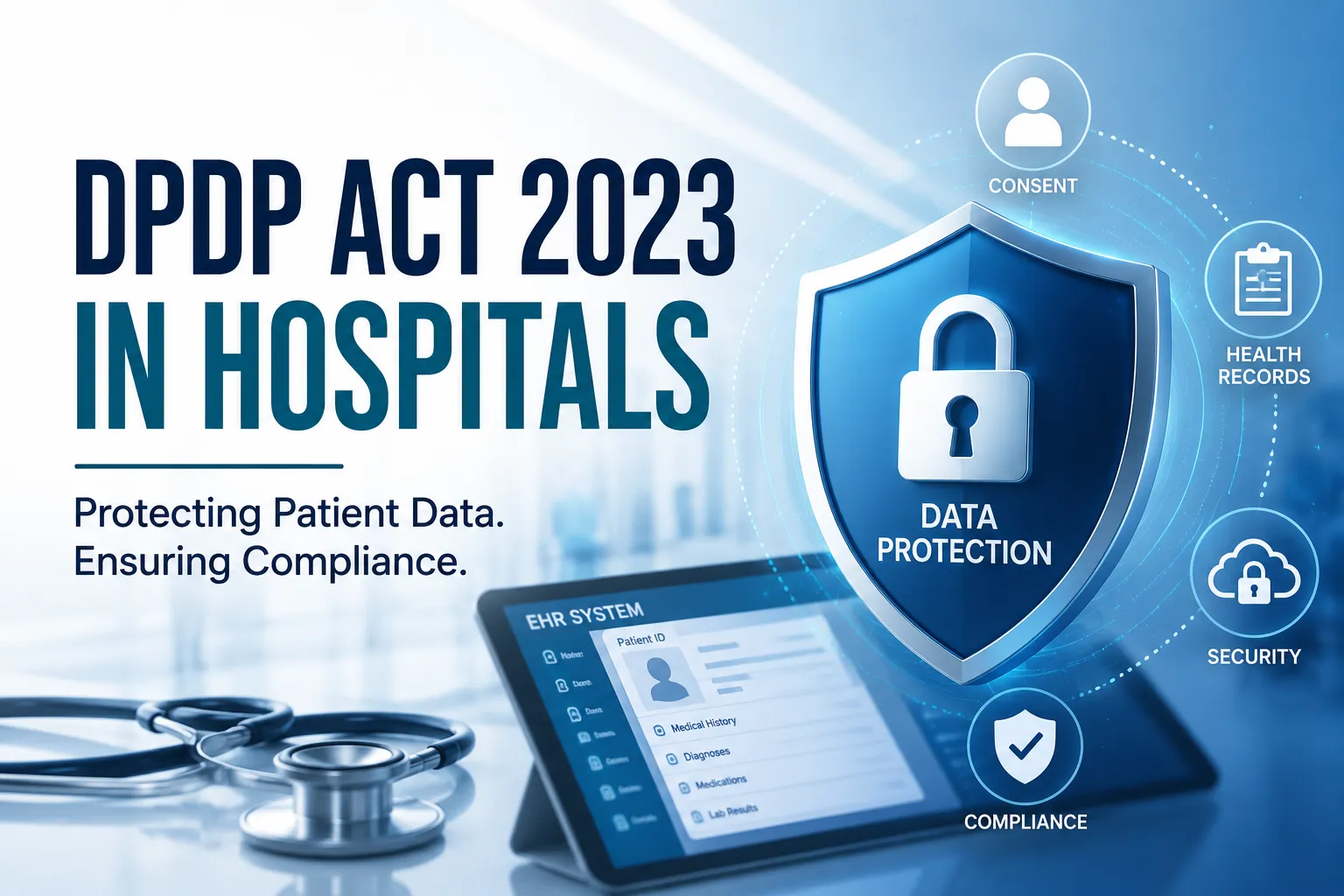

Most hospital boards still think of data protection as an IT department line item. Under the DPDP Act, that's a dangerous assumption — this is a governance issue now, and it sits with leadership, not just the systems team.
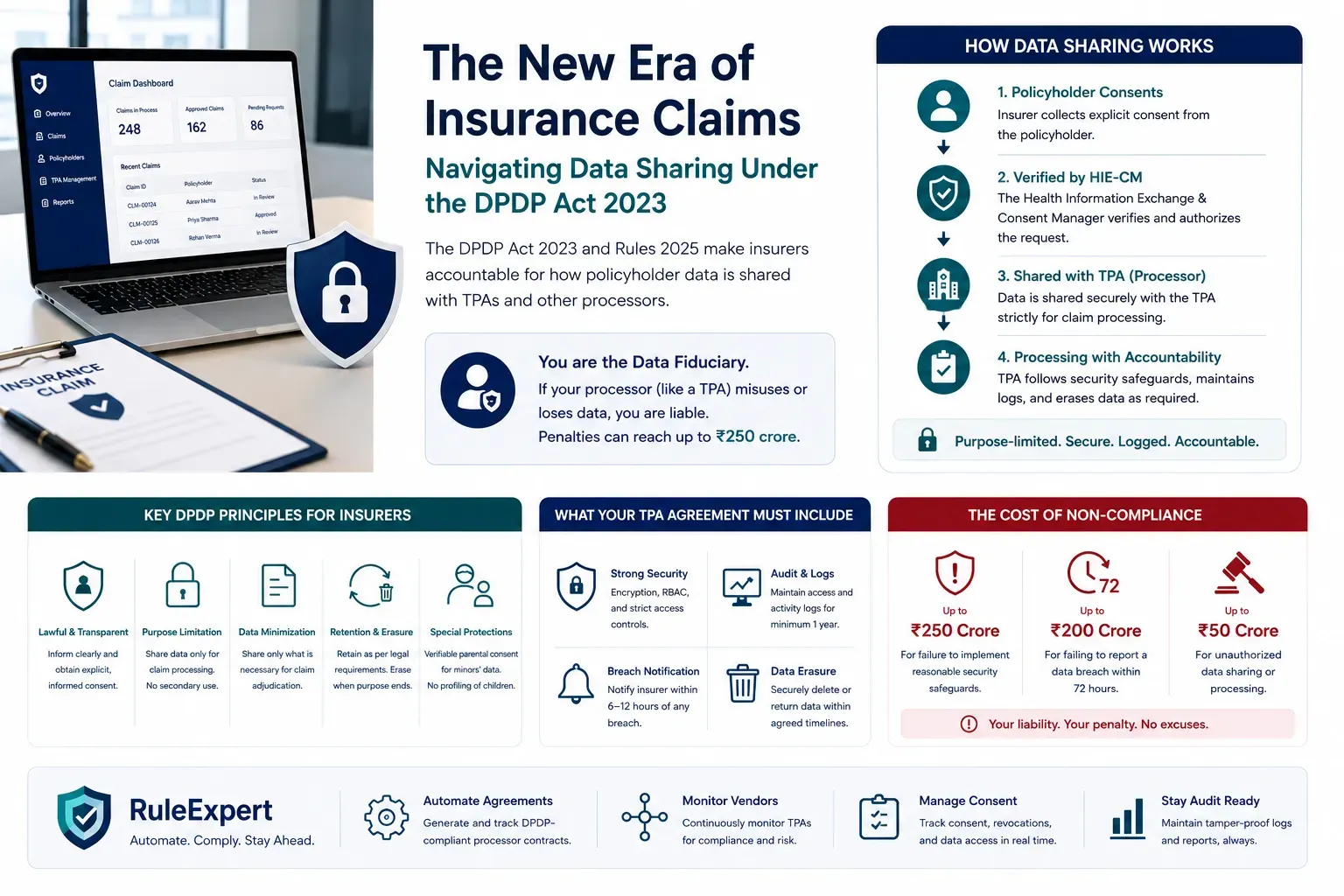
It starts with roles, not tools. The hospital is legally the "Data Fiduciary" — the party accountable for why and how patient data is used. Every lab, cloud vendor, and billing platform the hospital works with is a "Data Processor" acting on its instructions. That distinction matters because outsourcing your infrastructure does not outsource your liability. If a vendor mishandles data, the accountability trail leads back to the hospital board.
Consent can't stay generic. Blanket forms that bundle treatment, research, and marketing consent into one signature don't meet the Act's standard of "freely given, specific, informed, unconditional, and unambiguous." Hospitals need granular consent structures and a way for patients to withdraw consent digitally, not by filing a written request and waiting.
Vendor contracts need real teeth. Confidentiality clauses, security standard adherence, and mandatory breach notification protocols all need to be explicit and enforceable in every third-party agreement — not assumed as implied terms.
Legacy data silos are a structural problem, not a technical inconvenience. Pharmacy logs, diagnostic servers, and billing systems that don't talk to each other make it functionally impossible to honor a patient's consent withdrawal consistently across the hospital. A unified data registry isn't optional infrastructure at this point.
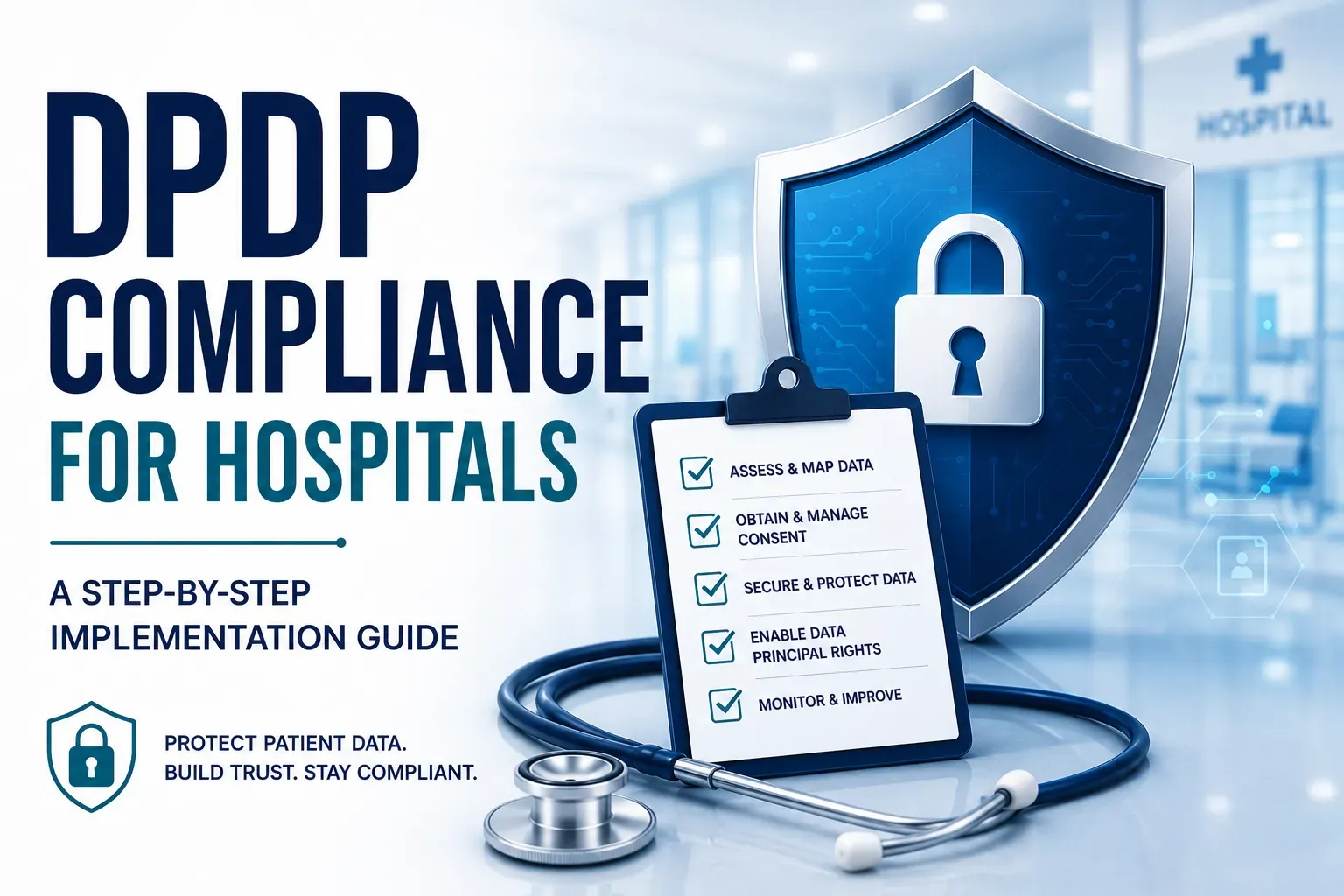
The deadline pressure is real. Full substantive enforcement lands in May 2027, and boards that treat 2026 as prep time have room to build this properly. Boards that wait are building under pressure. There's a more complete breakdown of what leadership specifically needs to prioritize in this guide to DPDP Act compliance in hospitals.





























Sign in to leave a comment.