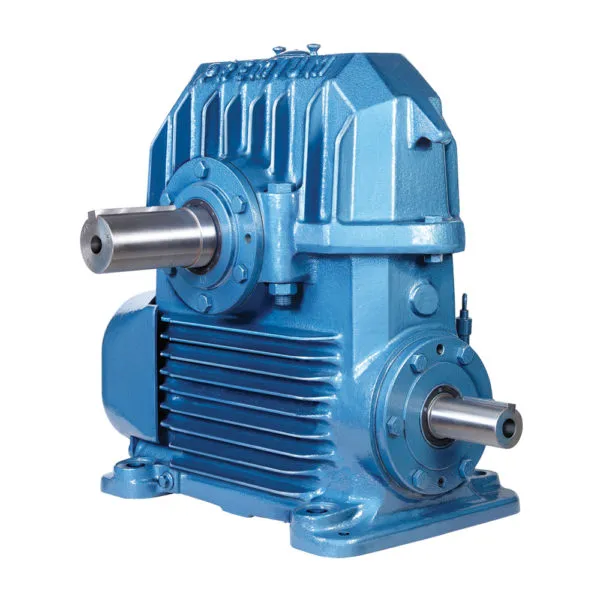

In the world of industrial machinery, power transmission is everything. The ability to move heavy loads, control speed precisely, and maintain consistent performance under demanding conditions separates productive operations from inefficient ones. Among the many mechanical solutions available today, the worm gearbox stands out as one of the most reliable and effective devices for achieving high torque output, smooth motion control, and long-term operational dependability.
Whether you are running a conveyor system, a packaging line, a lifting mechanism, or a mixing unit, understanding how a worm gearbox works and why it matters can help you make smarter engineering and procurement decisions.
What Is a Worm Gearbox?
A worm gearbox is a type of gear system that uses a worm — a screw-like gear — meshing with a worm wheel to transmit motion between non-intersecting, perpendicular shafts. The worm is typically the driving component, while the worm wheel is the driven component. This unique configuration allows for a significant reduction in speed alongside a dramatic increase in torque, making it ideal for applications where controlled, powerful movement is required.
The compact design of a worm gearbox makes it particularly attractive in environments where space is limited but performance cannot be compromised. Unlike spur or helical gearboxes, the worm variant offers a naturally self-locking feature in many configurations, which adds an extra layer of safety in vertical or load-holding applications.
How a Worm Gearbox Enhances Torque
One of the primary reasons industries choose a worm gearbox is its exceptional torque multiplication capability. Torque is the rotational force that drives machinery, and when a motor alone cannot produce sufficient torque to move a load, a gearbox bridges that gap.
In a worm gear system, the gear ratio can range from as low as 5:1 to as high as 100:1 or more. This means the output shaft rotates significantly slower than the input shaft, but with considerably more force. For heavy-duty applications like material handling, agitators, and winches, this torque amplification is not just useful — it is essential.
The helical thread of the worm engages multiple teeth on the worm wheel simultaneously, distributing the load across a larger contact area. This reduces stress on individual teeth and allows the gearbox to handle higher torque levels without premature wear or failure. The result is a robust drive system capable of sustaining high loads over extended operating periods.
Efficiency Considerations in Worm Gearboxes
Efficiency is often a topic of conversation when discussing worm gearboxes, as they are traditionally associated with higher friction losses compared to other gear types. However, modern engineering advancements have significantly improved their efficiency profiles.
The efficiency of a worm gearbox largely depends on the lead angle of the worm, the materials used, the quality of lubrication, and the precision of manufacturing. Contemporary worm gearboxes manufactured with high-lead angles, phosphor bronze worm wheels, and hardened steel worms can achieve efficiency ratings of 70% to 90%, making them highly competitive in a wide range of applications.
Furthermore, when the application demands low speed, high torque, and compactness, the slight trade-off in mechanical efficiency is often outweighed by the design advantages the worm gearbox provides. In scenarios where continuous self-locking is required — such as in lifting platforms or gate mechanisms — no additional braking component is needed, which indirectly contributes to overall system efficiency.
Proper lubrication is the cornerstone of maintaining efficiency. Using the right grade of gear oil, maintaining adequate oil levels, and scheduling timely oil changes significantly reduce heat generation and friction losses, ensuring the gearbox performs at its best throughout its service life.
Reliability: Built for Industrial Demands
Reliability is non-negotiable in industrial operations. Unplanned downtime translates directly into lost productivity and revenue. Worm gearboxes are engineered to deliver consistent, dependable performance even in harsh operating environments.
The enclosed design of most worm gearboxes protects internal components from dust, moisture, and contaminants — common enemies in manufacturing and processing plants. The gear mesh operates within a sealed housing filled with lubricant, minimizing external interference and reducing the risk of corrosion or abrasive damage.
The self-locking property of worm gearboxes also contributes to operational safety and reliability. When the gear ratio is high enough, the worm gearbox prevents back-driving — meaning the load cannot reverse-drive the motor. This is a critical safety feature in conveyors, elevators, and other load-sustaining systems where unexpected reversal could cause equipment damage or personnel injury.
Additionally, worm gearboxes have fewer moving parts compared to multi-stage gear systems. Fewer components mean fewer potential failure points, simpler maintenance requirements, and lower lifecycle costs. With proper installation, regular lubrication, and periodic inspection, a well-built worm gearbox can serve reliably for many years with minimal intervention.
Key Industrial Applications
The versatility of the worm gearbox makes it suitable across a wide spectrum of industries:
Material Handling: Conveyors, palletizers, and sorting systems rely on worm gearboxes to move goods smoothly and consistently at controlled speeds.
Food and Beverage Processing: Mixing, blending, and filling equipment demand hygienic, precise, and reliable drive systems — all of which the worm gearbox provides.
Construction and Mining: Hoists, cranes, and drilling equipment require extreme torque and dependability, both hallmarks of worm gear technology.
Wastewater Treatment: Slow-speed, high-torque applications like sludge mixers and screw presses are ideally matched with worm gearbox technology.
Packaging Machinery: High-cycle, consistent-speed applications benefit from the smooth output and low backlash characteristics of worm gearboxes.
Textile Industry: Winding machines and looms require the kind of precise speed control that worm gearboxes deliver effectively.
Choosing the Right Worm Gearbox for Your Operation
Selecting the correct worm gearbox requires careful evaluation of several parameters including input power, required gear ratio, output torque, operating speed, duty cycle, mounting orientation, and environmental conditions.
It is important to work with experienced manufacturers and suppliers who understand the nuances of industrial power transmission. Santram Engineers is one such trusted name in the industry, known for providing precision-engineered gearbox solutions tailored to diverse industrial needs, ensuring customers receive the right product for their specific application requirements.
When evaluating options, always consider the thermal rating of the gearbox alongside its mechanical rating. In continuous-duty applications, thermal limits can be more restrictive than mechanical ones. Adequate ventilation, oil cooling, or the use of synthetic lubricants can help manage heat buildup and extend operational life.
For demanding environments, look for gearboxes with robust housing materials such as cast iron or ductile iron, reinforced bearing arrangements, and high-quality sealing systems. These features ensure the gearbox maintains its integrity and performance even under challenging conditions.
Maintenance Best Practices
A worm gearbox is a long-term investment, and protecting that investment requires a disciplined maintenance approach:
Regular Oil Changes: Lubricant degrades over time due to heat, moisture, and contamination. Follow the manufacturer's recommended oil change intervals to maintain optimal lubrication performance.
Temperature Monitoring: Excessive heat is often an early indicator of lubrication failure, overloading, or misalignment. Regular temperature checks help identify problems before they become failures.
Seal Inspection: Worn or damaged seals allow lubricant to escape and contaminants to enter. Inspecting seals periodically and replacing them when necessary prevents costly damage.
Vibration Analysis: Unusual vibrations can signal gear wear, bearing deterioration, or mounting issues. Periodic vibration monitoring enables predictive maintenance strategies.
Alignment Checks: Misalignment between the motor and gearbox increases stress on bearings and gears. Ensure proper alignment during installation and recheck after any significant maintenance activity.
Frequently Asked Questions (FAQs)
Q1: What makes a worm gearbox self-locking, and is this feature always present?
The self-locking characteristic occurs when the friction angle of the worm gear exceeds the lead angle, preventing the output load from back-driving the input. However, this feature is not universal — it depends on the gear ratio and lead angle. Generally, gear ratios above 20:1 tend to be self-locking, while lower ratios may not provide this property. It is essential to confirm self-locking behavior with the manufacturer before relying on it for safety-critical applications.
Q2: How do I know when to replace a worm gearbox rather than repair it?
Replacement is typically more cost-effective than repair when the gearbox has suffered significant gear tooth wear, housing cracks, or severe bearing damage, or when the repair cost exceeds 60–70% of the replacement cost. Additionally, if the gearbox is an outdated model with limited spare part availability, upgrading to a newer unit with improved efficiency and reliability is the more prudent choice.
Q3: Can a worm gearbox be used in both horizontal and vertical mounting orientations?
Yes, worm gearboxes can be configured for horizontal, vertical, and even wall-mounted orientations. However, the lubrication arrangement must be appropriate for the mounting position. Oil levels, fill and drain plug positions, and breather locations vary by orientation. Always specify the intended mounting position when ordering, and verify the lubrication setup with the manufacturer to ensure adequate oil coverage of the gear mesh in your chosen orientation.
Conclusion
The worm gearbox remains one of the most valuable components in the industrial engineer's toolkit. Its ability to deliver high torque multiplication, compact form factor, built-in self-locking capability, and dependable long-term performance makes it an ideal solution for a vast range of demanding applications. With advancements in materials, manufacturing precision, and lubrication technology, modern worm gearboxes offer improved efficiency and reliability that meet the rigorous standards of today's industrial operations.
Understanding the correct selection, installation, and maintenance of an industrial gearbox is key to unlocking the full potential of your machinery — and ensuring your operations run smoothly, safely, and profitably for years to come.

























Sign in to leave a comment.