
The conversation around cannabis has changed dramatically over the past decade.
Not long ago, discussions often centered on potency, trends, or simply finding whatever product was available. Today, many adult consumers are taking a much more thoughtful approach. They're asking questions, researching products, understanding regulations, and focusing on responsible decision-making before making a purchase.
In many ways, the modern cannabis experience is less about chasing the strongest product and more about understanding what fits an individual's preferences, comfort level, and lifestyle.
Responsible cannabis exploration isn't complicated—but it does require awareness, patience, and a willingness to learn.
The Most Important Step: Start with Information
One of the biggest differences between experienced consumers and first-time shoppers isn't necessarily how much cannabis they've used—it's how much they understand about the products they're considering.
Today's cannabis market offers a wide variety of options, including:
- Flower
- Pre-rolls
- Edibles
- Vape products
- Concentrates
- Topicals
- CBD-focused products
- Lower-dose alternatives
Each product category can differ significantly in terms of onset time, duration, and overall consumer experience.
That's why informed consumers often spend time learning about products before making purchasing decisions rather than relying solely on recommendations from friends or social media.
Understanding product information can help adult consumers make more informed purchasing decisions.
Understanding That Everyone's Experience Is Different
One of the most common misconceptions about cannabis is the belief that everyone will have the same experience with the same product.
In reality, individual experiences can vary considerably.
Factors that may influence a person's experience include:
- Product type
- Cannabinoid content
- Terpene profile
- Personal tolerance
- Environment
- Individual body chemistry
This is why responsible consumers avoid making assumptions based solely on someone else's experience.
What feels comfortable for one adult may not feel the same for another.
Approaching cannabis with realistic expectations may help consumers better understand product information and individual variability.
Why "Start Low and Go Slow" Remains Popular Advice
Among adult consumers, one phrase continues to appear in educational conversations:
Start low and go slow.
This approach isn't about limiting experiences—it's about understanding personal responses before increasing consumption.
Many adults prefer beginning with lower-dose products, especially when trying a new product category or exploring cannabis after a long break.
Consumers should carefully review product information and understand that individual responses may vary.
Rushing the process rarely improves the experience.
Reading Labels Matters More Than Ever
Modern cannabis packaging contains far more information than many people realize.
Responsible consumers often review:
- THC content
- CBD content
- Serving information
- Ingredient lists
- Product testing details
- Usage instructions
- Regulatory warnings
Reading labels carefully can help consumers make informed decisions and avoid misunderstandings about product potency or serving sizes.
In today's regulated market, labels are valuable educational tools—not just packaging.
The Growing Importance of Terpenes
Cannabis education has expanded well beyond THC percentages.
Many adult consumers now pay attention to terpenes, the naturally occurring aromatic compounds found in cannabis and numerous other plants.
Terpenes contribute to the aroma and flavor characteristics commonly associated with cannabis products.
Common examples include:
- Myrcene
- Limonene
- Pinene
- Caryophyllene
- Linalool
While terpene discussions have become increasingly popular, responsible consumers understand that individual experiences vary and that no specific terpene guarantees a particular outcome.
Education is useful. Expectations should remain realistic.
Responsible Consumers Respect Local Laws
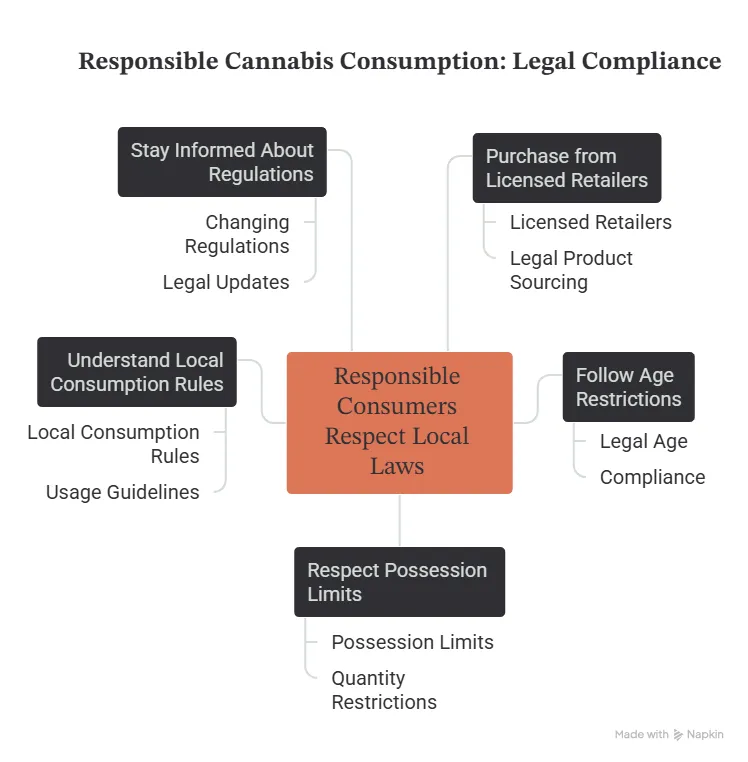
One of the clearest signs of responsible cannabis use is understanding the legal framework surrounding it.
Cannabis laws can vary significantly depending on location.
Responsible adult consumers typically make a point to:
- Purchase only from licensed retailers where permitted
- Follow age restrictions
- Respect possession limits
- Understand local consumption rules
- Stay informed about changing regulations
Legal access comes with responsibilities, and informed consumers recognize that compliance matters just as much as product selection.
Safe Storage Is Often Overlooked
When people talk about responsible cannabis use, storage doesn't always get enough attention.
Proper storage helps maintain product quality while also reducing the risk of unintended access.
Consumers are generally encouraged to:
- Store products securely
- Keep products in original packaging when possible
- Follow label instructions
- Keep products away from minors and pets
Simple storage habits contribute to overall responsible use practices.
Why Education Has Become Part of the Shopping Experience
Modern cannabis retail environments often place a strong emphasis on education.
Many adult consumers appreciate being able to ask questions about:
- Product categories
- Consumption methods
- Label information
- Dosage considerations
- Cannabinoid content
- Terpene profiles
At a regulated cannabis dispensary, educational conversations frequently play an important role in helping consumers better understand available options.
Many regulated cannabis retailers provide educational materials and product information as part of the consumer experience.
Taking a Long-Term Perspective
Interestingly, many experienced cannabis consumers eventually move away from the idea that stronger automatically means better.
Instead, they often focus on:
- Product consistency
- Personal comfort
- Responsible use
- Product transparency
- Informed purchasing decisions
Consumers often consider factors such as product information, potency, and personal preferences when evaluating legal cannabis products.
Cannabis exploration doesn't need to be rushed.
In many cases, learning gradually leads to a better understanding of products and personal preferences over time.
The Value of Asking Questions
There is no advantage in pretending to know everything about cannabis.
In fact, responsible consumers are often the people asking the most questions.
Questions such as:
- What type of product is this?
- How is it typically used?
- What information should I understand before purchasing?
- How should it be stored?
- What do the label details mean?
Educational resources can provide additional information about product categories, labeling, and legal requirements.
At locations such as Levels Cannabis Niles, educational resources and product information can help adult consumers better understand the modern cannabis marketplace.
Avoiding Common Misconceptions
Responsible cannabis exploration also means avoiding some of the most common myths.
For example:
- Higher THC does not automatically mean a better product.
- Popular products are not necessarily the best fit for everyone.
- Online opinions should not replace product education.
- Individual experiences can vary widely.
Understanding these realities helps consumers approach cannabis more thoughtfully and with fewer unrealistic expectations.
A More Informed Future
The cannabis industry continues to evolve, but one trend remains clear: consumers have more information available than ever before.
Access to educational resources, product testing information, transparent labeling, and knowledgeable retail staff has helped create a more informed marketplace.
That benefits everyone.
When consumers understand what they're purchasing, how products differ, and what responsibilities come with legal cannabis access, they're better equipped to make decisions that fit their needs and circumstances.
Final Thoughts
Responsible cannabis exploration isn't about knowing everything. It's about being willing to learn.
Today's adult consumers have access to more information, more product transparency, and more educational resources than any generation before them. That creates an opportunity to approach cannabis thoughtfully rather than impulsively.
Whether someone is completely new to cannabis or simply exploring new product categories, the same principles continue to apply: stay informed, read labels carefully, understand local regulations, ask questions, and make decisions based on reliable information rather than assumptions.
Because responsible cannabis use starts long before a purchase is made—it starts with understanding.



























Sign in to leave a comment.