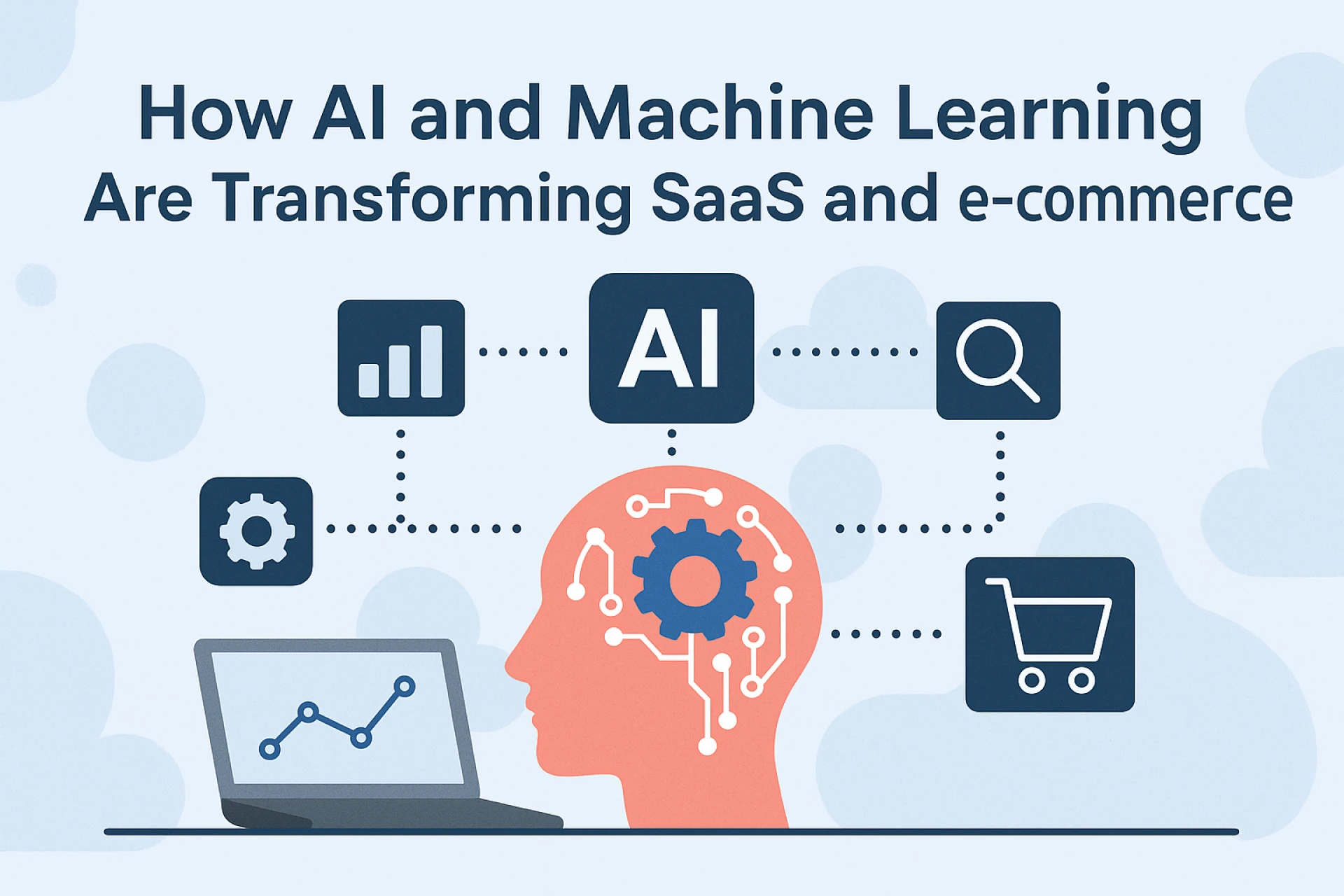

Artificial Intelligence (AI) and Machine Learning (ML) are the technologies of the current world. You will find them deeply integrated into everyday business operations, specially in SaaS and e-commerce industries. AI/ML tools offer everything from personalized recommendations to automated customer service, and enable businesses to become smarter and more profitable.
If your business operates in the SaaS or e-commerce industry, implementing AI/ML will make all the difference between staying competitive and falling behind. Our blog explores the most impactful real-world applications of AI/ML that will help elevate the digital presence of your digital product or store, and outshine as the best eCommerce platform.
1. Personalized Product Recommendations
The most common application of AI in custom eCommerce solutions is offering personalized product recommendations. With the help of ML algorithms, businesses get to analyze user behavior, browsing history, and purchase patterns of users to offer tailored results.
The best example of an AI/ML application is the “You may also like” section of Amazon or the viewing recommendation of Netflix. SaaS companies also benefit by offering personalized dashboards or tools based on usage data. These features increase user engagement, drive conversions, and improve the customer experience.
2. Dynamic Pricing
AI enables changing the pricing strategy of an eCommerce store based on factors like market demand, competitor pricing, customer behavior, and inventory levels. Dynamic pricing allows online stores to stay competitive without manually updating prices.
Similar dynamic pricing model will work for SaaS platforms too. SaaS adjust subscription tiers or offer discounts to users who show interest but don't turn up. ML models track trends and consumer behavior before suggesting the best pricing strategy for each customer segment.
3. Virtual Assistants and Chatbots
Natural language processing (NLP) powered Chatbots are revolutionizing customer support. AI chatbots can handle thousands of consumers asking questions, at the same time. They offer 24/7 assistance, and keep learning from interactions to enhance customer experience.
End-to-end e-commerce solutions company integrates chatbots to help stores handle product queries, order tracking, and returns. SaaS platforms can leverage chatbots for onboarding, FAQs, and technical support, and enhance customer satisfaction by responding to queries instantly.
4. Voice Commerce
The rise of voice assistants and smart speakers is the new trend. AI systems take voice commands and offer users with navigation, customer support and also placing online orders.
This innovation can be integrated into both e-commerce platforms and SaaS products, providing a hands-free and efficient user experience.
5. Customer Behavior Predictive Analysis
Predictive analytics helps businesses predict customer behavior through powerful ML applications. It helps e-commerce businesses forecast which products will hit the market and become popular. In addition to it, the timeframe when customers are likely to make purchases, and what results in cart abandonment.
SaaS companies use these tools to anticipate churn, identify opportunities to upsell, and improve user engagement. This data-driven insight enables businesses to make better decisions and proactive strategies.
6. Optimizing User Experience
AI can track how users interact with your platform, through heatmaps, bounce rates and click paths. It identifies pain points and recommends any improvements required in the design.
This helps e-commerce and SaaS platforms offer a smoother user experience that keeps visitors engaged and converts them into customers.
7. Image Recognition
Visual search powered by AI lets customers upload an image of the product they want to buy and find similar products instantly. This feature enhances user experience and helps reduce to and fro between interest and purchase.
In SaaS, image recognition techniques are applied to industries like healthcare, manufacturing, or security software. It adds a layer of automation and insight that boosts the overall value of the product.
8. Inventory and Supply Chain Management
ML algorithms help identify demand trends, supplier performance, and inventory turnover to optimize stock levels. It is of great help as it reduces overstocking and understocking, saving money and increasing efficiency.
SaaS businesses who need to manage inventory or logistics should integrate these ML features for best results and efficiency. It offers clients smarter tools for managing resources and planning operations.
9. Fraud Detection and Prevention
AI helps detect unusual patterns and prevent fraud. Machine learning models can flag suspicious activities, such as multiple failed login attempts, account takeovers or unusual transactions.
E-commerce businesses build trust and protect consumer data with its help. For SaaS platforms, it strengthens the security framework and helps comply with data protection regulations.
10. Personalized User Onboarding
First impressions matter. Through AI a business can tailor the onboarding process depending on their objective, business types and also purchasing behaviour.
SaaS platforms use this to help users identify and understand the most helpful features. Based on the browsing behaviour of consumers, online stores can recommend them products or suitable content.
11. Analysing Customer Sentiments
It is critical to understand how consumers feel about your brand. There are several AI tools that analyze reviews, social media mentions, and support tickets to comprehend sentiment.
This allows businesses to respond to negative feedback quickly and make improvements. SaaS companies often use sentiment analysis to develop new features or also work on the recurring issues faced by consumers in their application.
12. Automating Emails and Marketing
AI helps with marketing automation through optimized send times, targeting the right consumer set and content strategies. ML tools segment customers accurately and send personalized messages for best results.
These tools help online stores send custom emails for cart abandonment or the news of launching a new product. SaaS businesses benefit by nurturing leads and reducing bounce rates through targeted content.
13. Content Generation and SEO Optimization
Content is king, and AI tools like NLP assists businesses with product descriptions, blogs, and ad copies. They also help optimize content for SEO by analyzing keywords and competition.
E-commerce businesses get help through automated product listing creation. Whereas, AI helps SaaS companies produce support documents or marketing content efficiently.
14. Predicting Lifetime Customer Value
Machine learning models enable businesses to predict the lifetime value of a customer through different factors. This enables businesses to focus on high-value and lasting consumers, and allocate resources wisely.
SaaS companies use this to improve retention strategies. E-commerce brands build loyalty programs to retain consumers with its help.
15. Forecasting Revenue
Forecasting sales is also possible with AI. For projections it considers past data, market signals or signal trends. As a result, businesses get help with staffing, budget and also inventory.
Both SaaS and e-commerce platforms attain benefits from such sales insights, and work toward opportunity maximization.
Conclusion
AI and ML are no longer optional tools—they're mandatory assets that help with strategizing. SaaS and e-commerce businesses can apply them across all aspects of operations, from marketing and support to security and sales. These technologies help brands scale, offer custom solutions, and stay competitive in the digital world.
Choosing a custom eCommerce solution provider offering AI and ML Development service will make you future-ready.
























Sign in to leave a comment.