How AI App Builders Are Changing Software Development


Software development is entering a new phase as artificial intelligence makes application creation faster and more accessible. The growing interest in tools such as Lovable vs Claude Code reflects a major shift in how developers approach coding, application design, and product development. Instead of writing every component manually, developers can now use AI-powered platforms to generate applications, build features, identify errors, and improve existing projects with natural language instructions.
AI app builders are changing more than the speed of development. They are also changing who can build software, how teams manage projects, and how businesses turn ideas into working products. From startups to established technology companies, organizations are exploring new ways to use AI throughout the software development process.
The Growing Role of AI in Software Development
Traditional software development often requires extensive planning, coding, testing, and debugging. Each stage requires technical knowledge, development resources, and time. AI-powered tools are helping simplify several of these activities.
Modern AI app builders can understand written instructions and turn them into application layouts, user interfaces, and functional features. Some platforms can also connect databases, configure authentication, and help developers manage application workflows.
This approach allows developers to spend less time on repetitive tasks and more time solving important technical problems.
The growing adoption of generative AI supports this shift. According to McKinsey's 2024 global survey, 65% of respondents reported that their organizations were regularly using generative AI, nearly double the percentage reported in its previous survey.
Software development is one of the areas where this technology has significant potential because much of the work involves structured instructions, reusable patterns, and logical problem-solving.
How AI App Builders Make Development Faster
AI app builders reduce the amount of manual work involved in creating applications. Developers can describe their requirements in everyday language and use AI to generate an initial version of the product.
Several capabilities are driving this change.
Faster Application Prototyping
Creating a working prototype traditionally requires developers to design interfaces, write code, configure components, and connect different application features.
AI-powered builders can generate initial application structures from simple descriptions. A developer can explain the purpose of an application, describe its main features, and receive an initial version that can be reviewed and improved.
This makes it easier for startups and product teams to test ideas before investing heavily in development.
Reduced Repetitive Coding
Many software projects involve repetitive activities, including creating standard components, writing basic functions, preparing documentation, and fixing common errors.
AI coding assistants can handle parts of this work. Developers can use natural language instructions to generate code suggestions, explain unfamiliar functions, and make changes to existing projects.
The result is a development process that places greater emphasis on reviewing and improving generated work rather than manually creating every component.
Easier Interface Development
User interface development involves creating layouts, forms, navigation menus, dashboards, and interactive elements.
AI app builders can generate these components based on written descriptions. Developers can then adjust layouts, refine design choices, and improve the user experience.
This capability is especially useful for early-stage products where teams need to test multiple design ideas quickly.
Popular Types of AI App Builders
Different AI development tools serve different purposes. Some focus on creating complete applications, while others help developers write, understand, and maintain code.
Natural Language App Builders
These platforms allow users to create applications by describing what they want. Users can explain the purpose of a website or application, request specific features, and make design changes through written instructions.
This approach makes application development more accessible to entrepreneurs, business owners, and people with limited programming experience.
AI Coding Assistants
AI coding assistants work alongside developers during the development process. They help generate code, explain technical concepts, identify potential errors, and suggest improvements.
These tools are particularly useful for experienced developers who want to improve their workflow without giving up control over the underlying code.
Autonomous Development Agents
AI development agents can handle more complex tasks across multiple stages of a project. Depending on their capabilities and permissions, they can inspect project files, modify code, run tests, and help resolve technical issues.
This represents an important move from simple code suggestions toward AI systems that can complete larger development tasks.
What Industry Data Says About AI Development
The adoption of AI development tools is supported by growing industry research.
According to the 2025 Stack Overflow Developer Survey, 84% of respondents were using or planning to use AI tools in their development process. Additionally, 51% of professional developers reported using these tools daily.
McKinsey also reported in its November 2025 software development research that more than 90% of surveyed software teams used AI for activities such as writing, reviewing, and working with code. These activities saved an average of six hours per week.
These findings highlight an important trend. AI is becoming a regular part of software development rather than an experimental technology used by a small group of developers.
However, adoption does not mean every development task can be automated. Developers still need to review generated code, test applications, and make important technical decisions.
Benefits of AI App Builders for Businesses
AI-powered development offers several advantages for businesses that want to create digital products or improve existing software.
Lower Initial Development Costs
Building an application from scratch can require a significant investment in developers, designers, project managers, and testing resources.
AI app builders can reduce some of this workload by generating initial designs, application components, and basic functionality. Small businesses can use these capabilities to explore product ideas without immediately building a large development team.
However, complex applications still require experienced professionals, infrastructure, and ongoing maintenance.
Faster Product Launches
Businesses often need to test new ideas before competitors enter the market. AI-powered platforms can help teams create prototypes and early product versions more quickly.
For example, a startup planning a customer management application can use AI to generate an initial dashboard, customer forms, and basic workflows. The team can then collect feedback and improve the product before launching a more complete version.
Better Collaboration Between Teams
AI app builders can also improve communication between technical and nontechnical employees.
Business owners can describe product requirements without needing to understand every technical detail. Designers can experiment with interface concepts, while developers can focus on architecture, integrations, and application performance.
This creates opportunities for closer collaboration throughout the development process.
Challenges of Using AI for Application Development
Despite the advantages, AI-powered development comes with limitations. Businesses should understand these challenges before making AI tools a central part of their software strategy.
Code Quality and Accuracy
AI-generated code is not always correct. A tool may produce functionality that appears to work but contains errors, security weaknesses, or inefficient processes.
Developers must review generated code and test important application features before deployment.
The 2025 Stack Overflow Developer Survey found that 46% of respondents actively distrusted the accuracy of AI tools, compared with 33% who trusted them. This highlights the importance of human review.
Security and Data Privacy
Applications often process customer information, payment details, business records, and other sensitive data.
Developers must ensure that AI-generated functionality follows appropriate security practices. Database permissions, authentication systems, data handling, and third-party integrations require careful review.
Businesses should also understand how their selected platforms handle project data and confidential information.
Limitations With Complex Applications
AI app builders are useful for prototypes, smaller applications, and common development tasks. However, enterprise software may require complex architecture, custom integrations, advanced permissions, and specialized performance requirements.
AI-generated solutions may not always handle these requirements correctly without significant developer involvement.
How AI Is Changing the Role of Software Developers
AI app builders are not simply replacing traditional development tools. They are changing the responsibilities of software developers.
Developers are spending more time describing requirements, reviewing generated solutions, testing functionality, and managing application architecture.
Technical knowledge remains important because someone must understand whether the generated application meets business and engineering requirements.
The ability to communicate clearly with AI systems is also becoming a useful development skill. Developers who can provide detailed instructions, identify errors, and evaluate generated results can make better use of these technologies.
As AI capabilities improve, software engineers may spend less time on repetitive implementation work and more time on system design, security, product decisions, and complex problem-solving.
The Future of AI-Powered Software Development
The next stage of software development will likely involve deeper integration between AI app builders, coding assistants, and autonomous development agents.
Several trends are worth watching.
More advanced application generation: AI platforms will continue improving their ability to create complete application structures from detailed requirements.
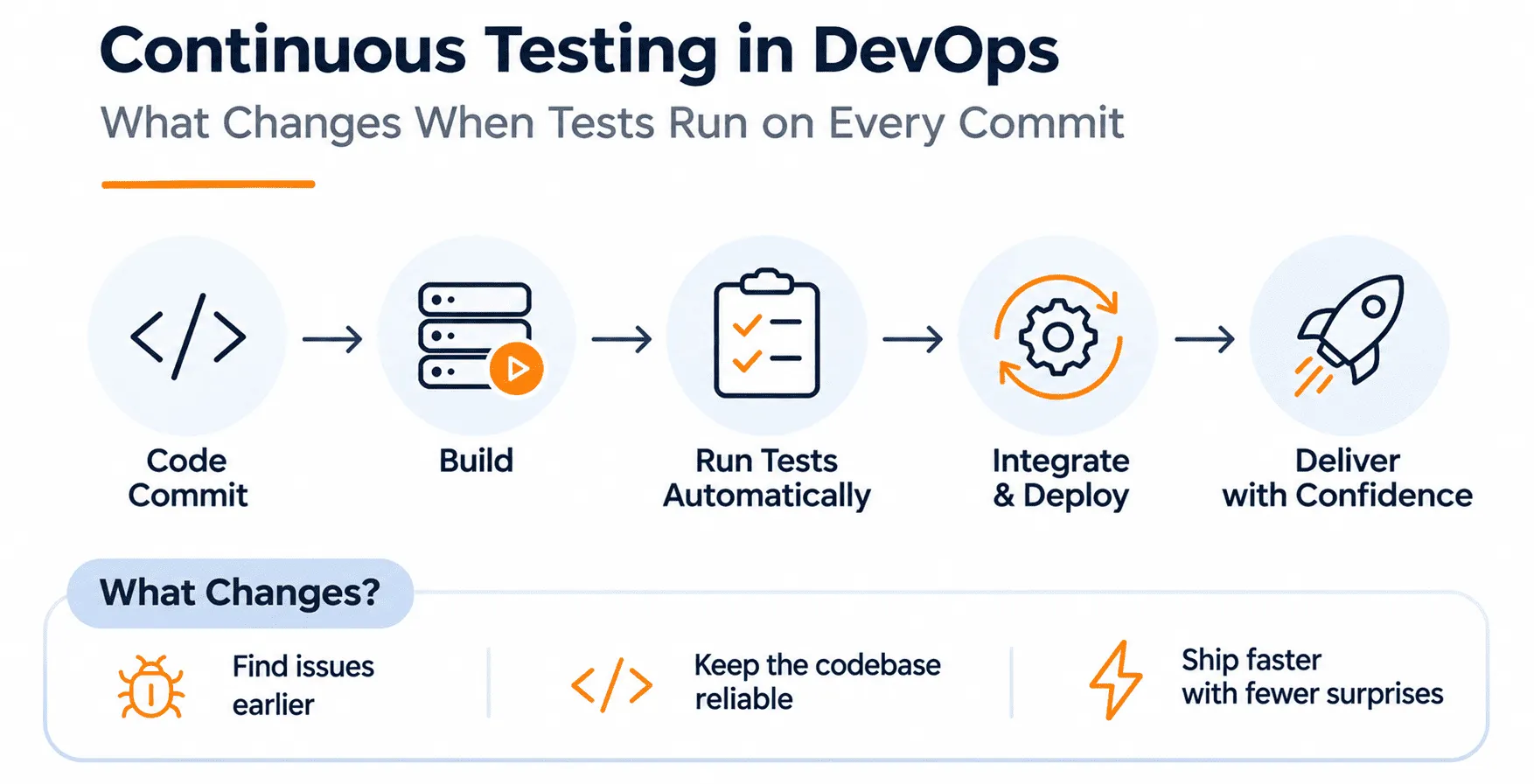
Greater automation of testing: AI systems will help identify bugs, generate test cases, and review application behavior before release.
Improved integration capabilities: Connecting databases, APIs, authentication systems, and third-party services will become an increasingly important part of AI-assisted development.
More accessible software creation: Entrepreneurs, small businesses, and nontechnical professionals will have more opportunities to turn ideas into functional digital products.
Human oversight will remain important: Developers will continue reviewing code, managing security, and making architectural decisions that require technical judgment.
These developments suggest that AI will become a standard part of software development workflows. However, successful implementation will depend on combining automation with human expertise.
Final Thoughts
AI app builders are changing software development by making application creation faster, reducing repetitive work, and expanding access to development tools. Businesses can use these platforms to test ideas, build prototypes, and improve product development workflows.
At the same time, AI-generated applications still require proper testing, security reviews, and technical oversight. The best results come from treating AI as a development partner rather than a complete replacement for engineering expertise.
As these technologies continue to improve, developers and businesses that learn how to combine AI capabilities with strong technical foundations will be better positioned to build useful, reliable, and scalable software.



Sign in to leave a comment.