

A diagnostic shift that is already visible in the clinic
On a busy Monday morning, a radiologist may review hundreds of images, a pathologist may face trays of tissue slides, and an emergency physician may need to make a triage decision in minutes. That pressure is exactly where artificial intelligence has moved from pilot project to operational tool. In healthcare diagnostics, AI is no longer only a research headline from Silicon Valley. It is becoming part of the production workflow, embedded into image analysis, risk scoring, clinical documentation, and decision support. The transformation is not abstract. It is measurable in faster reads, more structured prioritization, and earlier detection of disease patterns that human teams can miss when fatigue, time constraints, or fragmented data begin to interfere.
The strongest use case remains pattern recognition. Modern deep learning systems excel when fed large volumes of labeled medical images, waveform data, pathology scans, and electronic health record signals. A chest CT, a mammogram, a retinal image, or an ECG contains subtle mathematical structure. AI models can surface anomalies, quantify change over time, and rank cases by urgency. According to industry reporting and specialist commentary, this has become especially relevant in radiology, oncology, cardiology, ophthalmology, and neurology. A useful companion read on this theme is Why and How AI Is Transforming Healthcare Diagnostics, which outlines how workflow automation and clinical support are increasingly converging.
Yet the real story is not that machines are replacing clinicians. It is that diagnostics is becoming a layered system. AI handles triage, segmentation, anomaly detection, and probability ranking. Clinicians handle context, uncertainty, communication, and accountability. That division matters because diagnosis is never only about spotting a lesion. It is also about deciding what the lesion means for a person with a history, symptoms, and social constraints.
AI in diagnostics works best not as an oracle, but as a second set of eyes that never gets tired and can process data modalities at machine speed.
That is why the current wave feels different from earlier hype cycles. Hospitals are asking less whether AI is impressive and more whether it reduces turnaround time, lowers missed findings, integrates with PACS and EHR systems, and survives regulatory scrutiny. Those are grown-up questions. They suggest the market has moved from fascination to procurement.
How healthcare diagnostics reached this moment
The path to today’s systems began with digitization. Once hospitals started storing scans, pathology slides, and clinical notes in digital form at scale, machine learning became feasible. Radiology was an early favorite because imaging data is comparatively structured and often standardized. Pathology followed as whole-slide imaging improved. Cardiology, with its ECG and echocardiography datasets, also proved fertile ground. Over time, cloud infrastructure, cheaper compute, and better GPUs reduced the cost of training large models. More recently, transformer architectures and multimodal systems expanded what diagnostic AI could do across text, image, and time-series data.
Regulation also matured. In the United States, the Food and Drug Administration has steadily cleared or authorized AI-enabled medical devices over recent years, many of them in imaging. Europe and other jurisdictions have taken their own routes, often emphasizing risk classification and post-market monitoring. The point is not that regulation solved every issue. It did not. But it created a more legible path for vendors and providers. Instead of vague innovation theater, companies now had to show validation data, intended use, and clinical performance claims.
Meanwhile, the economics of healthcare pushed adoption. Diagnostic backlogs are expensive. Shortages of radiologists and specialists in many regions are persistent. India, where digital health infrastructure has expanded rapidly, illustrates the pressure clearly: tertiary hospitals in major cities can be overwhelmed, while smaller centers may lack specialist coverage altogether. AI becomes attractive in such settings because it can standardize first-pass analysis and support remote interpretation. For readers tracking related perspectives, How AI Is Transforming Healthcare Diagnostics gives a complementary overview of how these systems are being framed for mainstream healthcare operations.
Another ingredient was data interoperability, though this remains uneven. FHIR-based integration, better APIs, and more mature vendor ecosystems made it easier to insert AI into workflows rather than forcing clinicians into separate dashboards. That sounds technical, but it is decisive. A model that requires five extra clicks and a new login rarely gets used, no matter how accurate it is in a paper.
As adoption widened, the conversation shifted from raw accuracy to clinical utility. Sensitivity and specificity still matter, of course. But hospitals also ask whether the model reduces report turnaround, improves cancer staging consistency, or flags stroke cases in time to alter treatment. Those operational endpoints are what distinguish a promising algorithm from a useful diagnostic product.
Where AI is delivering the clearest diagnostic value
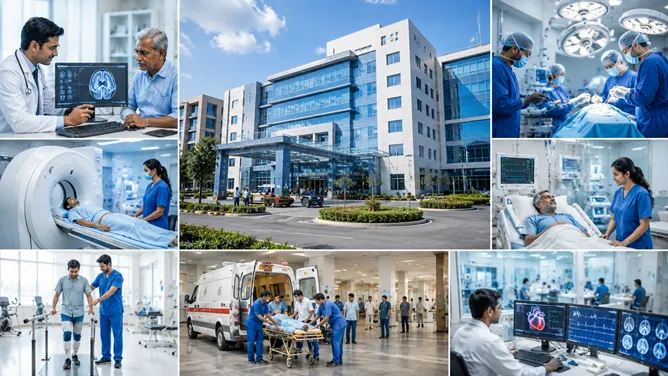
Medical imaging remains the most commercially mature domain. AI systems can detect lung nodules, intracranial hemorrhage, breast lesions, fractures, diabetic retinopathy, and other abnormalities with increasing sophistication. According to DATAQUEST, AI is transforming medical imaging, but caution must keep pace. That caution is important because imaging models can look excellent in controlled datasets and then underperform when scanner types, patient populations, or acquisition protocols change. Even so, the productivity case is compelling. AI can pre-screen studies, prioritize urgent findings, automate measurements, and help standardize reports.
Pathology is the next frontier with serious momentum. Whole-slide image analysis can identify suspicious regions, count mitotic figures, estimate tumor burden, and support biomarker assessment. In oncology, this matters because treatment decisions often depend on nuanced tissue characteristics. Digital pathology platforms combined with AI are reducing some of the manual burden and improving consistency across sites. Large cancer centers are especially interested because pathology bottlenecks can delay treatment starts.
Cardiology offers a different pattern. Here AI is not only classifying static images. It is also interpreting dynamic signals such as ECG traces and wearable data. Models can detect arrhythmias, estimate heart failure risk, and identify patterns suggestive of structural disease. Some systems can flag patients who need echocardiography or closer follow-up. This is where diagnostics begins to blend into prediction, and that raises both promise and governance questions.
- Radiology: triage of urgent scans, lesion detection, automated measurements, structured reporting support
- Pathology: slide screening, region-of-interest detection, tumor quantification, grading assistance
- Cardiology: ECG interpretation, risk stratification, remote monitoring alerts, imaging support
- Ophthalmology: diabetic retinopathy screening, retinal image classification, referral prioritization
- Neurology: stroke detection, hemorrhage alerts, neurodegenerative pattern analysis
Primary care and emergency medicine are also beginning to benefit through multimodal decision support. A model can combine symptoms, lab values, medication history, and prior encounters to suggest differential diagnoses or identify sepsis risk. These systems are usually less deterministic than image classifiers, which means they require especially careful human oversight. But they can still be valuable as triage accelerators.
The most effective diagnostic AI products do not ask clinicians to trust a black box blindly; they present ranked probabilities, visual evidence, and workflow-aware recommendations.
Consumer-facing diagnostics should also be watched. Smartphone-enabled screening, AI-assisted symptom intake, and remote retinal or dermatology analysis are widening access. The quality varies, and regulators remain cautious, but the direction is clear. Diagnostics is moving closer to the patient, not only staying inside the hospital.
The numbers, companies, and workflow changes behind the hype
To understand the transformation properly, one must separate research excitement from operational deployment. The market now includes large incumbents, specialist medical AI vendors, cloud providers, and health systems building internal tools. Companies such as GE HealthCare, Siemens Healthineers, Philips, Aidoc, Qure.ai, Viz.ai, Tempus, and PathAI are frequently part of the conversation, though their focus areas differ substantially. Some sell imaging workflow tools. Others emphasize oncology, pathology, or clinical data intelligence. Indian innovators have also become more visible, especially in imaging and screening workflows designed for high-volume settings.
Recent reporting gives a useful cross-section of sentiment. An ALot.com report on MSN described how AI is quietly transforming healthcare across surgery, diagnostics, and tissue engineering. A Yahoo News Canada feature focused on how AI is reshaping healthcare from diagnosis to data governance, while also raising ethical questions. Those two themes belong together. Diagnostic throughput may improve, but only if hospitals can trust the underlying data pipelines, security controls, and performance monitoring.
The workflow gains typically appear in several layers:
- Case prioritization: urgent findings are surfaced sooner, reducing dangerous delays in stroke, hemorrhage, or pulmonary embolism pathways.
- Measurement automation: repetitive tasks such as lesion sizing, chamber quantification, or nodule tracking consume less clinician time.
- Consistency: structured outputs reduce variability between readers, especially in high-volume departments.
- Capacity extension: smaller hospitals can access specialist-grade support, sometimes through hub-and-spoke models.
- Retrospective surveillance: health systems can re-analyze historical data to find missed patterns or identify high-risk cohorts.
Still, healthcare buyers are more skeptical than general enterprise software buyers, and rightly so. A diagnostic model may show headline accuracy in validation studies, but procurement committees ask harder questions. Was the model tested across multiple geographies? Did it include women, older adults, pediatric cases, or underrepresented ethnic groups in sufficient numbers? How often does it drift? What is the false-positive burden? If the model flags too many benign findings, clinicians can become slower, not faster.
Reimbursement remains another gating factor. In some specialties, adoption is easier when a workflow or screening pathway has a reimbursement rationale. In others, the value is indirect, such as reduced readmissions or better staff utilization. That means the business case often depends on local economics rather than universal logic. A tertiary academic center in Boston, a district hospital in Karnataka, and a private diagnostic chain in Dubai may all evaluate the same product very differently.
What changed recently and why 2026 feels different
The 2026 environment is defined by convergence. Earlier healthcare AI tools were often narrow, single-task systems. Today, multimodal architectures are beginning to connect imaging, pathology, genomics, laboratory data, and clinical notes. That does not mean one model can diagnose everything. It means vendors are trying to create more context-aware systems that can reduce fragmentation. Oncology is a prime example. A modern workflow may combine radiology findings, pathology features, molecular markers, and prior treatment response to support a more refined diagnostic picture.
Another recent shift is the rise of ambient and generative AI around diagnostics. Generative models are not replacing image classifiers directly, but they are changing how findings are documented, summarized, and communicated. They can draft radiology impressions, convert free text into structured reports, and synthesize prior records before a specialist review. This is valuable because diagnostic delay often comes from administrative friction as much as from image interpretation itself. When documentation overhead drops, clinicians recover time for higher-value judgment.
Entrepreneurship in the sector also remains vibrant. A recent Morningstar report on the Bayer Foundation Women Entrepreneurs Award highlighted innovators working in AI diagnostics and broader health systems transformation. That is notable because the next wave of diagnostic AI may not come only from giant US platforms. It may also come from focused startups building for specific disease burdens, low-resource settings, and public health screening gaps.
At the policy level, 2026 discussions are sharper around liability, safety, and insurance. The Tech Edvocate has explored how AI could upend medical malpractice insurance, a reminder that diagnostic responsibility does not disappear when software enters the room. If an AI system misses a lesion, who is accountable: the vendor, the hospital, the physician, or all three in some shared framework? That question is no longer theoretical.
For broader context, readers may compare this article with How AI Is Revolutionizing Healthcare Diagnostics in 2026 and How AI Is Transforming Healthcare Diagnostics. The recurring pattern across these discussions is clear: recent progress is less about a single breakthrough model and more about integration into live clinical systems.
The hard problems: bias, drift, liability, and trust
Every serious conversation about AI diagnostics must confront its failure modes. Bias is the first. If a model is trained disproportionately on one population, scanner vendor, or care setting, it may not generalize safely. This is not a minor statistical nuisance. It can translate into missed cancers, delayed stroke care, or skewed risk scores for already underserved communities. Indian and global hospitals alike have become more alert to this issue because imported models do not always fit local disease prevalence, imaging protocols, or patient demographics.
Model drift is another challenge. Clinical environments are not static. New scanners are installed, coding practices change, disease patterns shift, and treatment pathways evolve. A model that performed well in 2024 may degrade by 2026 if not continuously monitored. Mature health systems are therefore investing in post-deployment surveillance, periodic recalibration, and governance committees that review false positives, false negatives, and clinician override patterns.
Trust also depends on explainability, though that word is often misused. Clinicians do not necessarily need a philosophical explanation of every neural network weight. They need practical transparency. Which region of the image triggered the alert? Which labs drove the risk score? What confidence range applies? Can the system show prior comparisons? These are operational forms of explainability, and they matter more than marketing language.
- Bias risk: underrepresentation in training data can reduce performance for specific groups.
- Drift risk: models degrade when workflows, devices, or patient populations change.
- Automation bias: clinicians may over-trust AI suggestions, especially under time pressure.
- Liability ambiguity: legal accountability remains unsettled across jurisdictions.
- Cybersecurity exposure: diagnostic systems connected to core hospital infrastructure expand attack surfaces.
There is also the question of consent and secondary data use. Diagnostic AI thrives on data accumulation, but patients increasingly ask how their scans, notes, and pathology samples are being used to train commercial systems. Regulators are responding slowly, and hospitals are caught between innovation pressure and privacy obligations. According to Yahoo News Canada, ethical questions around diagnosis and data are inseparable from the technology itself. That is exactly right. Diagnostics is not merely a computation problem. It is a governance problem wearing a computation badge.
The encouraging sign is that many clinicians are no longer treating safety as an afterthought. They are demanding local validation, audit trails, and escalation protocols before deployment. That is healthy skepticism, not resistance. In medicine, caution is often a feature, not a bug.
What healthcare leaders should watch next
The next phase will likely be defined by multimodal diagnostics, federated learning, and more personalized risk models. Multimodal systems can connect image, text, genomics, and longitudinal history. Federated approaches may allow hospitals to improve models collaboratively without moving sensitive raw data into a central repository. Personalized diagnostics, meanwhile, will push beyond generic thresholds toward patient-specific baselines. A lab trend that is normal for one patient may be clinically meaningful for another. AI is well suited to that kind of individualized pattern tracking.
For providers and buyers, the practical takeaway is straightforward. Do not evaluate diagnostic AI only on demo-room accuracy. Evaluate it on integration, calibration, clinician adoption, auditability, and measurable patient impact. Ask whether it reduces time to diagnosis, whether it improves equity across patient groups, and whether it can be governed responsibly after deployment. The best products will not be those with the loudest claims. They will be the ones that fit inside real hospital operations with minimal friction.
Health systems should also invest in workforce readiness. Radiologists, pathologists, nurses, informatics teams, and administrators need shared literacy around model limitations and workflow design. The future clinician will not need to code every model, but they will need to understand confidence scores, false-positive tradeoffs, and escalation pathways. This is as much an organizational transformation as a technical one.
My own view, from watching both Silicon Valley product cycles and Indian IT execution models, is that the winners will be those who combine clinical depth with disciplined engineering. Healthcare is unforgiving of brittle software. Diagnostic AI must be robust, interoperable, and boring in the best possible way. If it becomes invisible infrastructure that quietly helps experts make earlier and better decisions, then it has succeeded.
The central promise of AI diagnostics is not machine autonomy. It is earlier detection, wider access, and more reliable clinical judgment under real-world pressure.
That promise is still unevenly distributed, and some of the loudest claims will not survive contact with clinical reality. But the direction is unmistakable. AI is transforming healthcare diagnostics by compressing time, expanding pattern recognition, and making scarce expertise travel further. The technology will not eliminate uncertainty. Medicine never works like that. What it can do is reduce avoidable delay and sharpen the signal inside increasingly complex data. For patients, that may be the difference that matters most.





























Sign in to leave a comment.