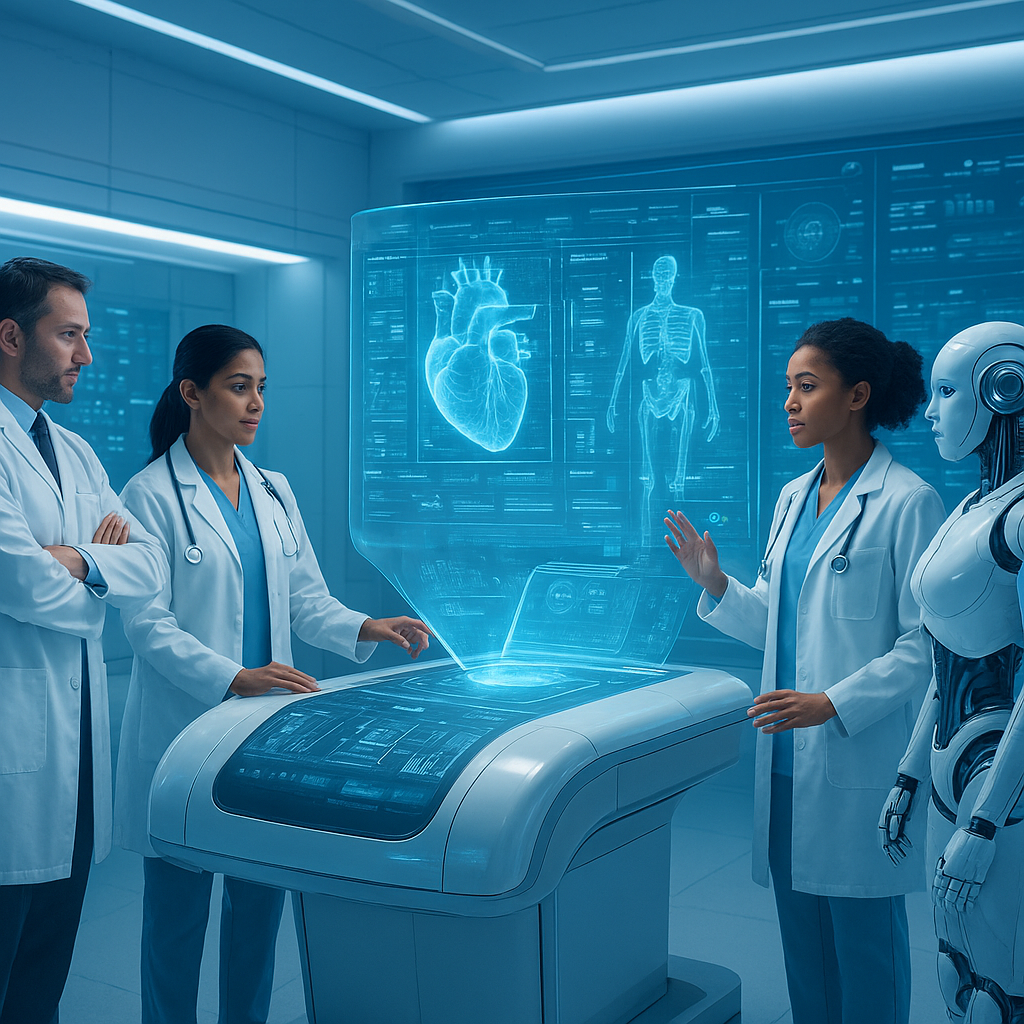

Revolution at the Diagnostic Frontline: A New Era Unfolds
In a bustling hospital in Boston early last year, a 58-year-old patient arrived with ambiguous symptoms: fatigue, mild chest discomfort, and intermittent shortness of breath. Traditional diagnostic methods suggested inconclusive results, but within minutes, an AI-powered diagnostic system analyzed his electronic health records, imaging scans, and even genomic data to predict a rare cardiac condition with 94% accuracy. This case is emblematic of a broader transformation sweeping through healthcare diagnostics in 2026, where artificial intelligence (AI) is no longer a futuristic concept but a practical, reliable tool reshaping how diseases are detected and managed.
The integration of AI into diagnostic workflows is rapidly enhancing precision, speed, and accessibility. According to a recent report by Analytics Insight, AI-driven healthcare companies have collectively raised over $15 billion in funding in 2025 alone, underlining investor confidence in this paradigm shift. This surge is supported by advancements in machine learning algorithms, natural language processing, and computer vision, enabling AI systems to interpret complex medical data that previously required extensive human expertise.
Beyond the dramatic improvements in accuracy, AI is reducing diagnostic disparities in underserved regions by facilitating remote analysis and tele-diagnostics. This democratization of healthcare access is a crucial step towards equitable treatment outcomes globally.
“Artificial intelligence is not just augmenting human expertise—it is fundamentally redefining diagnostic accuracy and efficiency, enabling earlier interventions that save lives,” says Dr. Lena Morris, Chief Medical Officer at MedTech AI Solutions.
Tracing the Journey: From Conventional Diagnostics to AI-Driven Insights
The journey to AI-enabled diagnostics has evolved through decades of incremental innovation. Traditionally, healthcare diagnostics relied heavily on manual interpretation of clinical tests, radiology images, and pathology slides, processes often limited by human subjectivity and variability. The advent of digital health records in the early 2000s laid the groundwork by centralizing patient data, but extracting actionable insights remained a challenge.
By the 2010s, early AI applications began focusing on image recognition, particularly in radiology and dermatology, where algorithms demonstrated comparable accuracy to specialists in identifying tumors and skin lesions. However, these systems were limited by insufficient training data and computational power.
In the 2020s, exponential growth in computational resources, coupled with the availability of large annotated datasets, allowed deep learning models to mature. These models started integrating multi-modal data—combining imaging, genomics, lab results, and clinical notes—to provide holistic diagnostic perspectives. Regulatory bodies like the FDA began approving AI-based diagnostic tools, recognizing their potential to improve clinical workflows.
Moreover, AI's role expanded beyond diagnostics to predictive analytics and personalized medicine, signaling a shift towards proactive health management. This historical context is essential to appreciate the sophistication and impact of AI diagnostics as of 2026.
Analyzing the Impact: AI Diagnostic Technologies and Their Performance Metrics
The core strength of AI in diagnostics lies in its ability to process vast, heterogeneous datasets rapidly and identify subtle patterns invisible to the human eye. Several categories of AI diagnostic tools have emerged, each contributing uniquely to healthcare.
- Imaging Analysis: AI algorithms analyze X-rays, MRIs, CT scans, and ultrasounds, detecting anomalies such as tumors, fractures, and vascular issues with sensitivity often exceeding 95%. For example, NVIDIA’s Clara platform now supports real-time 3D imaging interpretation in over 100 hospitals globally.
- Pathology and Histology: Digital pathology combined with AI classification algorithms accelerates cancer diagnosis, reducing turnaround times by up to 50%. Companies like PathAI have reported diagnostic accuracy improvements by 12% compared to manual assessments.
- Genomic Diagnostics: AI-enabled genome sequencing interprets mutations linked to inherited diseases and cancer predispositions, facilitating tailored treatment plans. Illumina’s AI-driven sequencing pipeline currently processes over 10,000 genomes monthly, cutting analysis time by 40%.
- Symptom Checkers and Clinical Decision Support: AI chatbots and decision support systems analyze patient symptoms and histories to suggest differential diagnoses, improving triage efficiency in emergency settings by 30%, according to Mayo Clinic studies.
These tools are benchmarked not only on accuracy but also on integration ease, clinician acceptance, and patient outcomes. Comparative studies reveal that AI-augmented diagnostics reduce diagnostic errors by up to 35%, a critical factor in improving healthcare quality.
“The convergence of AI with diagnostic imaging and genomics is creating a new gold standard in early disease detection, with tangible benefits in patient survival rates,” notes Dr. Miguel Fernandez, Director of Clinical AI Research at Stanford Medicine.
2026 Landscape: Breakthroughs and Trends Shaping AI Diagnostics Today
The year 2026 marks a pivotal point as AI diagnostics transition from supplementary tools to core clinical decision-makers. Recent innovations include:
- Explainable AI (XAI): Transparency in AI decision-making is enhancing trust among clinicians. New models provide interpretable outputs, highlighting factors influencing diagnoses, which is crucial for ethical and legal accountability.
- Federated Learning: This method enables AI systems to learn from decentralized patient data across institutions without compromising privacy, accelerating algorithm refinement while complying with GDPR and HIPAA regulations.
- AI in Rare Disease Diagnosis: Tools specialized in analyzing complex, multi-systemic disease presentations have shortened diagnostic odysseys from years to months, significantly improving patient care.
- Integration with Wearables and IoT: Continuous health monitoring devices feed AI models real-time physiological data, enabling earlier detection of conditions like atrial fibrillation and diabetic complications.
Corporate investments reflect these trends. According to Analytics Insight, the top 10 healthcare AI companies in 2026—such as Tempus, Zebra Medical Vision, and Owkin—focus heavily on multi-modal AI diagnostics and real-world data integration.
Regulatory frameworks have evolved correspondingly. The FDA’s Digital Health Center of Excellence now routinely fast-tracks AI diagnostic devices with robust clinical validation, fostering innovation while ensuring patient safety.
These developments are reshaping hospital workflows. AI diagnostic assistants now routinely collaborate with clinicians during rounds, providing real-time second opinions and error checks, as detailed in our analysis of machine learning in healthcare.
Voices from the Field: Expert Insights and Industry Implications
Leading voices in medicine and technology emphasize AI’s transformative potential balanced with challenges. Dr. Aisha Rahman, Chief Data Scientist at HealthAI, underscores the importance of multidisciplinary collaboration. “AI diagnostics require not only technical expertise but also deep clinical understanding to ensure outputs are actionable and contextually relevant,” she explains.
From an industry perspective, AI diagnostics are influencing healthcare economics by reducing unnecessary tests and hospital stays. A 2025 study published in the Journal of Health Economics estimated potential annual savings of $25 billion in the U.S. alone through AI-enabled early detection and treatment optimization.
Nevertheless, ethical concerns persist. Issues around data privacy, algorithmic bias, and the risk of overreliance on AI necessitate ongoing oversight. Recent debates highlighted in a Yahoo report on pediatric surgery stress that AI must complement, not replace, human judgment.
Healthcare providers are increasingly establishing AI governance committees to manage these risks, ensuring transparency and fairness. This governance culture is critical as AI becomes embedded in diagnostic protocols.
Looking Ahead: What to Watch in AI Diagnostics Beyond 2026
As AI diagnostics mature, several trajectories warrant close attention:
- Personalized Diagnostics: Leveraging patient-specific data to tailor diagnostic algorithms promises more precise and individualized care pathways.
- Global Health Equity: Expanding AI diagnostic access in low-resource settings through mobile platforms and cloud computing could reduce global disease burden disparities.
- Hybrid Human-AI Teams: The evolving interaction models between clinicians and AI tools will define future diagnostic efficiency and safety standards.
- Regulatory Harmonization: International cooperation on AI diagnostic standards and data sharing protocols will accelerate innovation and adoption.
Incorporating AI diagnostics into broader healthcare IT ecosystems, including electronic health records and predictive analytics platforms, as explored in our coverage on predictive analytics, will further enable proactive health management and outcome improvements.
Cases in Point: Real-World Examples of AI Diagnostic Success
Several landmark implementations illustrate AI’s diagnostic prowess. For instance, the Cleveland Clinic’s partnership with Google Health harnesses AI to detect diabetic retinopathy from retinal images, leading to a 45% increase in early diagnosis rates and preventing vision loss in thousands of patients.
Another notable case is the UK’s National Health Service (NHS) deployment of AI platforms for breast cancer screening. The AI system reduced false positives by 20%, easing patient anxiety and reducing unnecessary biopsies.
In oncology, AI-driven liquid biopsy analysis has enabled non-invasive cancer detection, as exemplified by GRAIL’s platform, which identifies circulating tumor DNA with over 90% sensitivity for multiple cancer types. This technology is rapidly gaining traction in routine clinical practice.
These case studies underscore AI’s capacity to enhance diagnostic accuracy, reduce costs, and improve patient experiences, establishing a new standard of care.






























Sign in to leave a comment.