How AI Is Transforming Project Controls Certification Training


AI is transforming project controls certification training by making learning more personalised, practice-focused and data-driven. It can help professionals understand complex concepts, practise cost and schedule analysis, identify knowledge gaps and receive faster feedback. However, AI works best as a learning support tool alongside expert guidance, practical experience and recognised project controls principles.
Artificial intelligence is changing how project professionals plan, monitor and manage projects. It is also influencing how people learn project controls skills, practise technical concepts and prepare for professional assessments. Traditional training methods remain valuable, but AI tools can add personalised learning, scenario-based practice and faster feedback.
Project Controls Institute Global, Inc (PCI AI) brings AI into its project controls competency framework, covering areas such as cost control, forecasting, risk, reporting and project planning. Understanding these changes can help professionals prepare for the evolving demands of the industry.
What Is AI in Project Controls Certification Training?
AI in project controls certification training means using artificial intelligence and data-driven tools to support the development and assessment of project controls knowledge.
It can help learners understand technical subjects, analyse project information, practise real-world scenarios and identify areas where they need further study.
Some important terms include:
- Artificial Intelligence (AI): Technology that performs tasks such as analysing information, generating content and identifying patterns.
- Machine Learning (ML): A branch of AI that uses data to identify patterns and generate predictions.
- Predictive Analytics: The use of historical and current information to estimate possible future outcomes.
- Earned Value Management (EVM): A method of measuring project performance by comparing planned work, completed work and actual costs.
- AI Governance: The policies and controls used to ensure AI outputs are reliable, explainable, secure and appropriately supervised.
In project controls education, these concepts help learners understand how modern technology can support planning, scheduling, cost management and project reporting.
1. Personalised Learning Based on Knowledge Gaps
Traditional training often follows a fixed learning sequence. However, learners may have different levels of experience and different technical strengths.
AI-supported learning can help identify knowledge gaps through quizzes, practice assessments and performance analysis.
For example:
- A planning engineer may need additional practice in cost forecasting.
- A cost controller may want to improve knowledge of earned value management.
- A project manager may need to understand predictive analytics and AI governance.
Based on practice results, an AI-supported learning system can recommend relevant topics and additional exercises.
This makes project controls certification training more focused because learners can spend additional time on areas where they need improvement.
2. More Practical Learning Through Project Scenarios
Project controls professionals regularly deal with situations that require analysis and judgement. These include schedule delays, budget overruns, changing project requirements and unexpected risks.
AI can help create realistic learning scenarios for these situations.
For example, a training exercise might present a project with:
- An approved budget of $10 million.
- Actual expenditure higher than planned.
- Delays in critical project activities.
- Changes in material costs.
- An increased risk of missing the completion date.
Learners can analyse the information, identify possible causes and recommend appropriate actions.
AI can also provide explanations and follow-up questions. However, the scenario should be checked against sound project controls principles so that learners do not rely on inaccurate or misleading outputs.
3. Better Understanding of Cost Control and Forecasting
Cost management is one of the areas where AI can support project controls professionals.
AI and machine learning tools can analyse historical project information, identify unusual cost patterns and support forecasting.
For example, an AI-supported system may help identify:
- Repeated increases in material costs.
- Unusual spending patterns.
- Differences between planned and actual expenditure.
- Potential budget overruns.
- Trends affecting the estimated cost at completion.
During training, learners can use these examples to understand how forecasting works and why data quality matters.
It is important to remember that an AI-generated forecast is not automatically correct. Professionals must check assumptions, review source data and explain the reasoning behind important decisions.
4. AI-Supported Risk Identification and Schedule Analysis
Project risks can affect cost, schedule, quality and delivery. Identifying possible problems early gives project teams more time to evaluate their options.
AI can support risk analysis by reviewing project documents, identifying recurring patterns and highlighting information that may require further investigation.
In project scheduling, AI-supported tools may help analyse progress data, identify potential delays and highlight activities that could affect critical milestones.
For training purposes, these capabilities create opportunities to practise:
- Identifying project risks.
- Reviewing schedule performance.
- Understanding critical path dependencies.
- Analysing delay scenarios.
- Evaluating possible corrective actions.
AI should support professional judgement rather than replace the experience of planners, schedulers and project controls managers.
5. Faster Feedback and More Effective Exam Preparation
One of the challenges in professional training is understanding why an answer is incorrect.
AI-supported learning tools can provide explanations, generate additional practice scenarios and help learners revisit difficult subjects.
For example, if a learner struggles with cost performance analysis, the system may provide another example involving planned value, earned value and actual cost.
A useful preparation routine can include:
- Study one project controls topic.
- Complete a short practice assessment.
- Review incorrect answers.
- Use additional examples to understand difficult concepts.
- Revisit the topic and test your understanding again.
Project Controls Institute Global, Inc (PCI AI) incorporates governed AI into its project controls competency framework. Its PCL-AI credential covers planning, cost engineering, earned value, forecasting, risk and project finance, with a dedicated AI knowledge area. This provides a relevant example of how AI knowledge is being included within a specialist project controls certification framework.
6. Traditional Training vs AI-Supported Training
Both approaches can contribute to professional development. The main difference is how learning activities are delivered and supported.
i) Traditional project controls training:
- Usually follows a structured syllabus.
- Relies on instructor-led explanations, study materials and exercises.
- Provides opportunities for discussion and expert guidance.
- May use scheduled assessments and feedback.
ii) AI-supported project controls training:
- Can adapt practice activities to learner performance.
- Can generate additional examples and scenarios.
- May provide faster feedback on practice questions.
- Can help analyse learning progress and identify knowledge gaps.
iii) A blended approach:
- Combines structured instruction with AI-supported practice.
- Uses expert guidance to verify technical information.
- Builds practical understanding through realistic scenarios.
- Keeps professional judgement and accountability with the learner.
AI-supported learning should complement reliable training resources, not replace experienced instructors or practical project experience.
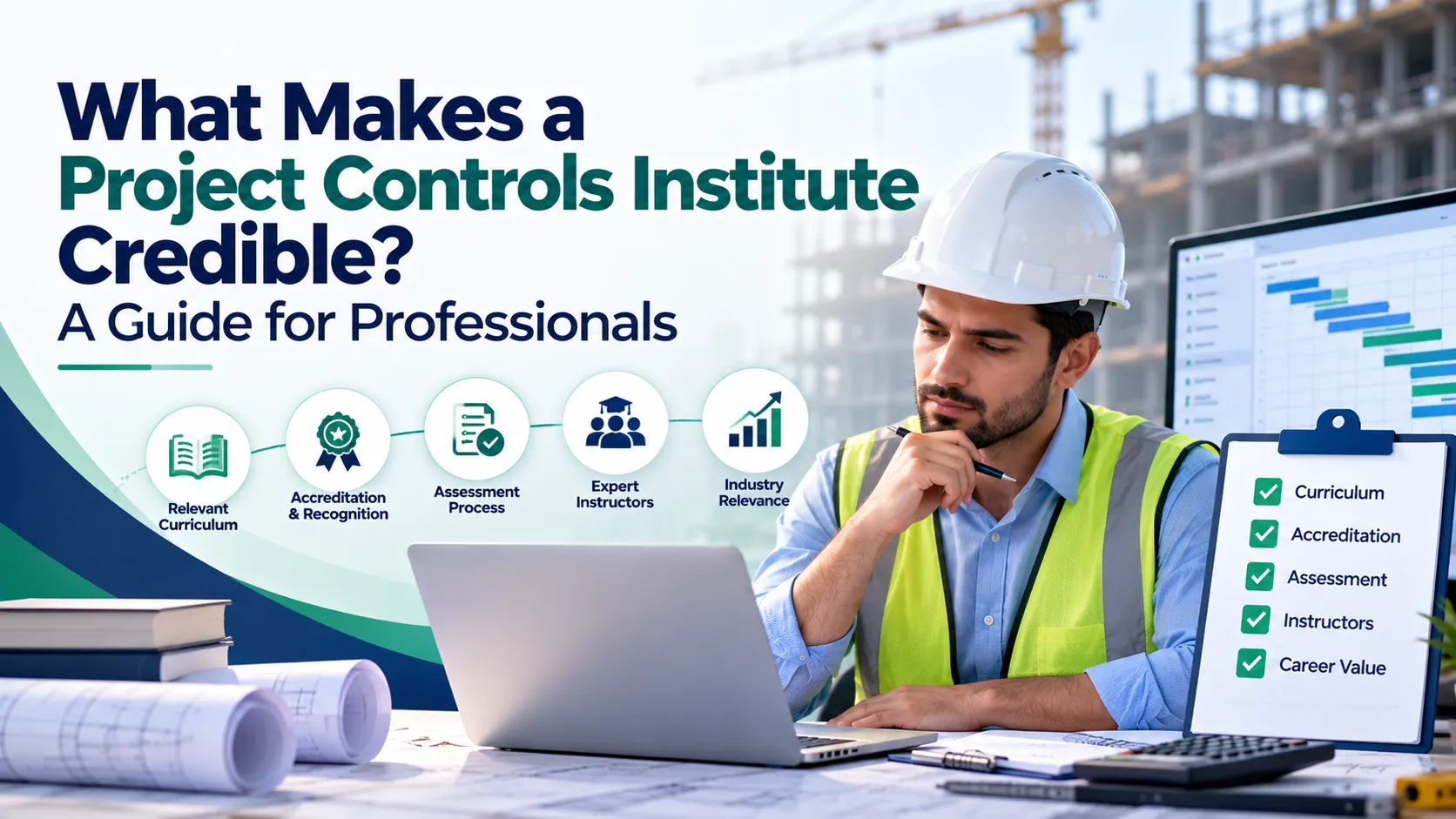
7. How to Choose an AI-Focused Project Controls Certification Programme
Before selecting a programme, check whether it teaches useful project controls skills alongside responsible AI use.
Consider these factors:
- Relevant curriculum: Does it cover planning, scheduling, cost control, forecasting and risk?
- Practical AI applications: Does it explain predictive analytics, anomaly detection and AI-supported reporting?
- Human oversight: Does it teach learners to validate AI outputs and recognise limitations?
- Assessment quality: Does the assessment test practical understanding and professional judgement?
- Transparency: Are eligibility, examination requirements, fees and certification status clearly explained?
- Industry relevance: Do the learning outcomes match your current role or intended career path?
For example, the PCI AI Project Controls Leader (PCL-AI) is designed around integrated project controls, cost engineering, earned value, forecasting, risk and governed AI. Review its published competency framework and examination information before deciding whether it matches your professional development goals.
Final Thoughts
AI is creating new opportunities in project controls education by making learning more adaptive, practical and connected to real project challenges. However, technology alone cannot develop the judgement needed to manage project cost, schedule, risk and performance. Professionals should combine technical knowledge, practical experience and responsible AI use. Project Controls Institute Global, Inc (PCI AI) offers a certification framework that brings these areas together, including a dedicated focus on governed AI. Review the published curriculum and assessment requirements to decide whether this learning pathway aligns with your career goals.
Frequently Asked Questions
Q1. How is AI changing project controls training?
AI is supporting personalised learning, practice scenarios, performance analysis and faster feedback. It also introduces new topics such as predictive analytics and AI governance.
Q2. Can AI replace project controls professionals?
No. AI can assist with analysis and reporting, but professionals remain responsible for validating information, interpreting results and making decisions.
Q3. How is AI used in project cost control?
AI tools can analyse cost data, identify unusual spending patterns and support forecasts. Their outputs should be checked against reliable project information.
Q4. Can AI help with project scheduling?
AI can support schedule analysis by identifying patterns, highlighting potential delays and reviewing progress information. Final planning decisions still require professional judgement.
Q5. What should an AI-focused project controls certification cover?
It should address project planning, scheduling, cost management, earned value, forecasting, risk, AI applications and responsible AI governance.
Q6. Is AI knowledge important for project controls analysts?
It is becoming increasingly useful. Understanding how AI tools work, where they can help and how to validate their outputs can strengthen an analyst's ability to work with project data.
Q7. Does AI-supported training guarantee better certification results?
No. AI tools can support practice and feedback, but results depend on the learner's knowledge, preparation, practical understanding and assessment performance.







Sign in to leave a comment.