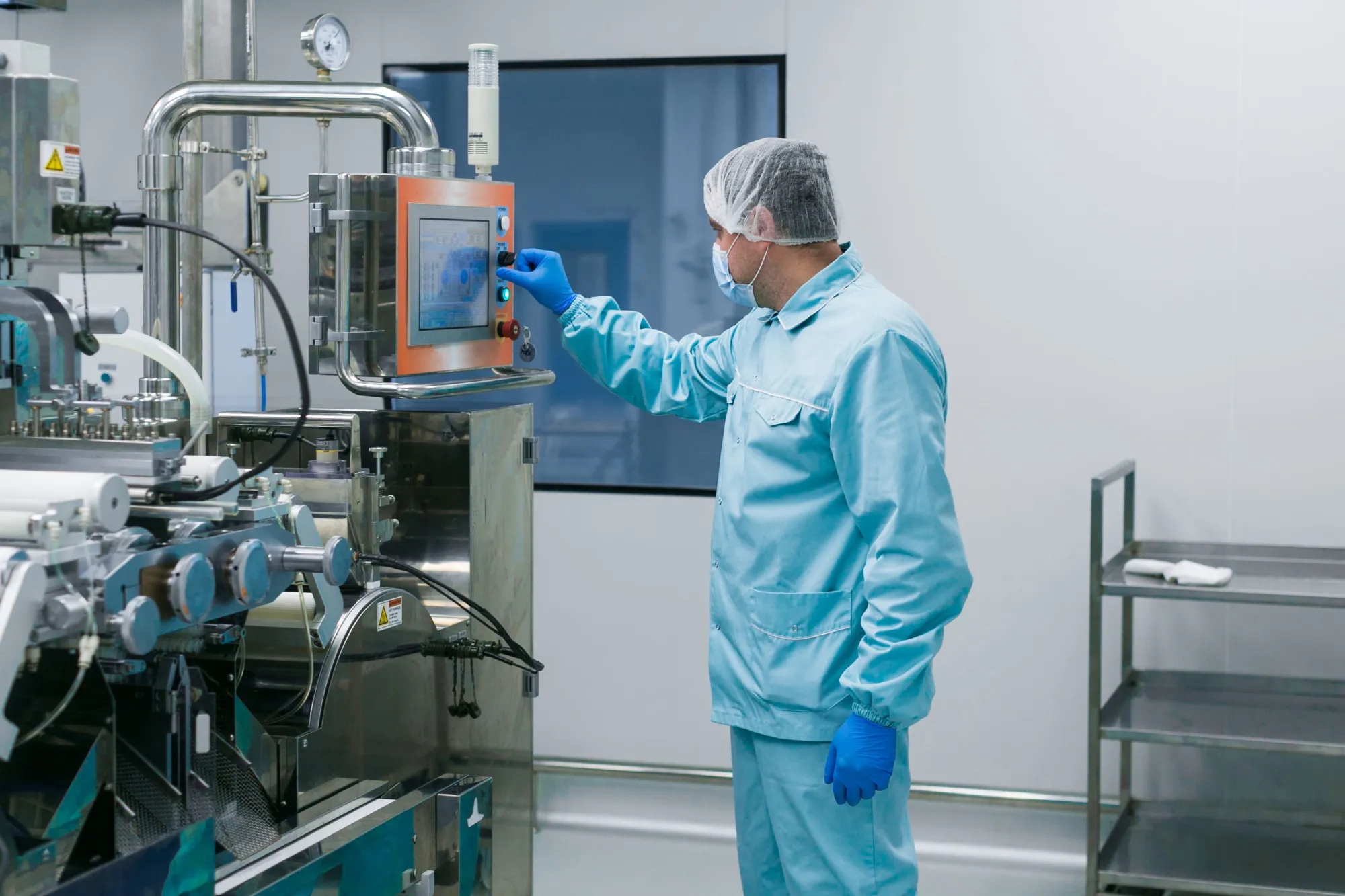

The maintenance budget conversation in manufacturing has fundamentally changed. For most of the last two decades, maintenance was treated as a cost centre, a necessary operational expense to be managed downward. In 2026, a growing number of plant managers, COOs, and CFOs are repositioning it as a strategic lever, one where the right technology investment directly determines production output, asset longevity, and competitive margin.
The shift is being driven by a convergence of pressures that calendar-based and reactive maintenance strategies are structurally unable to address. Deploying AI predictive maintenance software has moved from a forward-looking experiment to a measurable, ROI-validated operational decision for manufacturers across steel, cement, chemicals, food processing, pharmaceuticals, paper, and heavy discrete manufacturing. The predictive maintenance market was valued at $14.93 billion in 2025 and is projected to reach $245.73 billion by 2035, growing at a CAGR of 32.32%, driven by quantifiable cost reduction and uptime improvement ROI across industrial sectors.
Understanding why manufacturers are making this investment at scale in 2026 requires examining the specific operational forces pushing the decision and the documented outcomes pulling it forward.
Four Converging Pressures Driving the 2026 Investment Wave
Aging Equipment Running Beyond Design Life
The average age of industrial fixed assets in manufacturing is now 24 years, the oldest average age in nearly 70 years. The average manufacturing facility experiences 25 unplanned downtime incidents per month, adding up to 326 hours of downtime per year, with mean time to repair increasing from 49 minutes to 81 minutes on average due to skills gaps and supply chain delays.
Older equipment does not fail on schedule. It fails progressively, through accumulating wear patterns in bearings, seals, windings, and gear teeth that degrade at rates determined by operating load, lubrication quality, thermal cycling, and process variation. Calendar-based maintenance cannot track this progression. AI condition monitoring can continuously read the vibration, temperature, and acoustic signatures that reflect the actual health state of each asset in real time.
For plant managers running assets well past their original design life, AI-driven condition intelligence is not an upgrade. It is risk management.
The Skilled Labor Shortage and Knowledge Retention Crisis
Over 68% of facility operators and technicians are above age 45 in 2026, with 21% remaining active beyond retirement age. 40% of the manufacturing workforce is set to retire by 2030, and a lack of resources remains the biggest challenge cited by maintenance leaders, with 45% identifying it as their primary obstacle.
The institutional knowledge walking out of plants with retiring vibration analysts, reliability engineers, and senior maintenance technicians cannot simply be replaced through hiring. The talent pipeline does not exist at the required scale or speed.
AI platforms that encode domain-specific fault diagnosis into their models effectively democratize that expertise. A technician with two years of experience, guided by an AI system that identifies a specific bearing fault mode, recommends the corrective action, and routes it into the work order queue, can make intervention decisions that previously required a senior reliability specialist. This capability is not a convenience in 2026. It is an operational necessity for facilities managing large asset populations with shrinking expert teams.
Rising Downtime Costs and Tighter Production Margins
Each hour of unplanned downtime now costs 50% more than in 2019 due to inflation, supply chain complexity, and higher production demands. For facilities running just-in-time production schedules, supplying automotive, pharmaceutical, or consumer goods customers with zero tolerance for delivery failure, a single unplanned stoppage carries consequences that extend well beyond the immediate repair cost.
Fortune 500 companies stand to save an estimated $233 billion in annual maintenance costs and recover 2.1 million hours of uptime per year with full adoption of condition monitoring and predictive maintenance. Even at the facility level, the financial arithmetic is clear: a mid-market plant experiencing 100 hours of unplanned downtime annually at average manufacturing downtime costs faces losses that dwarf the investment required for a well-deployed AI condition monitoring program.
The 2026 Competitive Inflection Point
65% of maintenance teams say they plan to use AI by the end of 2026, and 88% of manufacturing teams expect their headcount to increase or remain stable, while 73% expect maintenance budgets to increase or stay the same, signaling a rising recognition of maintenance as a strategic competitive lever.
This matters because competitive dynamics in manufacturing are increasingly determined by asset reliability. Facilities that eliminate unplanned downtime protect on-time delivery commitments. Plants that reduce maintenance costs improve unit economics. Operations that extend asset life defer capital expenditure. All three outcomes compound into a structural cost and reliability advantage over competitors still managing maintenance reactively.
What Manufacturers Are Actually Getting for the Investment
Documented ROI Across Deployment Scales
64% of industrial organizations report seeing positive ROI from their AI investments within 12 months. Companies utilizing AI-driven predictive maintenance report a 15 to 20% reduction in total maintenance spend, achieved not by cutting staff but by eliminating consumption of spare parts and labor on assets that do not actually need service. AI-monitored assets also show a 20% increase in useful life.
The ROI structure in mature deployments has a compounding characteristic that budget-based maintenance programs do not: Year 2 ROI typically runs 30 to 40% higher than Year 1 because AI models accumulate equipment-specific failure history, reach peak prediction accuracy above 90%, and equipment lifespan extension benefits begin materializing as components run longer before replacement.
Prescriptive Guidance Beyond Simple Fault Detection
The investment case in 2026 is not built on anomaly detection alone. Early AI maintenance programs generated alerts. Current deployments generate prescriptions: specific fault mode identification, root cause diagnosis, corrective action recommendation, and priority ranking relative to other open maintenance items based on asset criticality and estimated time to failure.
Platforms built on vertical-specific AI models, trained on real operating data from heavy industrial environments, deliver this prescriptive layer with the domain specificity that generic anomaly detection tools cannot match. The reliability engineer reviewing a confirmed outer race bearing fault on a critical drive motor, with a recommended corrective action and a 14-day intervention window, makes a faster and more confident maintenance decision than the same engineer reviewing a threshold alert with no diagnostic context.
This capability is where the investment separates high-performing maintenance programs from those that plateau at alert generation.
Safety and Energy as Secondary but Significant Returns
Reactive maintenance is three times more likely to result in a safety incident than planned maintenance. By shifting work from reactive to predictive, companies have seen a 14% reduction in recordable safety incidents.
Energy efficiency improvement is an additional return that is frequently underestimated in ROI calculations. Degrading equipment consumes more energy than healthy equipment operating within specification. Motors running with bearing faults, pumps operating with impeller wear, and fans with imbalance issues all draw excess current relative to their load. AI condition monitoring catches these conditions before they cause failures, and in doing so, also restores energy efficiency to design parameters. For energy managers tracking per-unit energy consumption as part of sustainability and cost reduction commitments, this return is directly measurable.
How AI Predictive Maintenance Software Fits Into the Broader Operations Strategy
The manufacturers making the strongest returns on condition monitoring investment in 2026 are not treating it as a standalone technology purchase. They are integrating it into the operations strategy as a reliability discipline: AI generates prescriptive guidance, reliability engineers validate and confirm diagnoses, maintenance technicians execute work with advance notice and pre-staged parts, and the outcome data feeds back into the model to improve future accuracy.
The most effective predictive maintenance approach takes into account the current condition of equipment through continuous measurement rather than average or expected life statistics, enabling maintenance work to be better planned with the right spare parts, people, and scheduled interventions, increasing plant availability and reducing unplanned stops.
The integration with existing CMMS, SCADA, DCS, and ERP infrastructure is equally important. Condition intelligence that remains siloed in a dedicated dashboard and requires manual handoff to the maintenance team loses value at every step of that handoff. Platforms that route confirmed fault diagnoses directly into work order queues, with complete task specifications and parts lists, eliminate that loss and make the reliability loop fully operational.
Conclusion
The manufacturing investment in AI-driven condition monitoring in 2026 is not a technology trend response. It is a rational operational decision driven by aging assets, shrinking expert workforces, rising downtime costs, and a competitive environment where asset reliability is increasingly the differentiator between market leaders and the rest.
The facilities that invested early are compounding their returns year on year. The facilities evaluating the decision now are entering a point where the technology is mature, the service models are accessible, and the documented ROI case across industries is established.
For plant managers and reliability leaders ready to move from evaluation to execution, the starting point remains consistent: identify your highest-consequence rotating assets, establish continuous condition monitoring coverage, and measure results quarter by quarter against the downtime cost baseline. The investment case builds itself from there.
Frequently Asked Questions
What is driving manufacturers to invest in AI predictive maintenance software specifically in 2026?
Four converging pressures are driving investment: aging industrial assets running beyond design life, a worsening skilled labor and reliability expertise shortage, rising unplanned downtime costs that now run 50% higher than 2019 levels, and growing competitive pressure as peer facilities operationalize AI maintenance programs. The combination makes reactive and calendar-based maintenance strategies increasingly costly to sustain.
How quickly can a manufacturing facility expect to see ROI from condition monitoring deployment?
64% of industrial organizations report positive ROI within 12 months of AI investment. For mid-market plants with 10 to 30 critical assets, the payback period typically runs 8 to 18 months, depending on current downtime frequency and cost per hour. Year 2 returns consistently outperform Year 1 as AI models mature on facility-specific data.
Does AI predictive maintenance require replacing existing CMMS or control systems?
No. Effective condition monitoring platforms operate as a parallel intelligence layer alongside existing CMMS, SCADA, DCS, and ERP systems. The AI layer adds fault diagnosis and prescriptive guidance on top of existing infrastructure rather than replacing it, integrating confirmed fault recommendations directly into existing work order workflows.
How does AI condition monitoring address the skilled labor shortage in maintenance teams?
AI platforms encode domain-specific fault diagnosis capability into the system itself, allowing technicians with less specialized experience to act on high-confidence, context-rich maintenance recommendations. This reduces dependence on scarce senior reliability engineers and vibration analysts for routine condition assessment decisions across large asset populations.
What is the difference between predictive and prescriptive AI in manufacturing maintenance?
Predictive AI identifies that a fault is developing and estimates the time to failure. Prescriptive AI specifies the exact fault mode, probable root cause, recommended corrective action, and intervention priority. Prescription converts detection into a complete maintenance decision, eliminating the manual analysis step that reliability engineers would otherwise need to perform between receiving an alert and directing a technician.

























Sign in to leave a comment.