
Packaging is more than simply protection in high-frequency electronics; it's performance. The air cavity package is one notable invention in the RF and microwave fields. Air cavity designs, unlike conventional molded plastic packaging, reduce dielectric loading, improving signal integrity and heat management in circuits.
In applications where accuracy is crucial, such as radar systems, satellite communications, and 5G infrastructure, these packages are becoming essential. We'll look at five ways air cavity packing improves RF and microwave system performance in this blog.
Minimized Dielectric Loss for Better Signal Integrity
Because of their greater dielectric constant, conventional plastic packaging materials can interfere with radio frequency signals. On the other hand, air has a very low dielectric value, which lowers dielectric loss and parasitic capacitance. This makes air cavity packages perfect for sending high-frequency signals that are clear and distortion-free, particularly when GHz-level performance is needed.
Superior Thermal Management
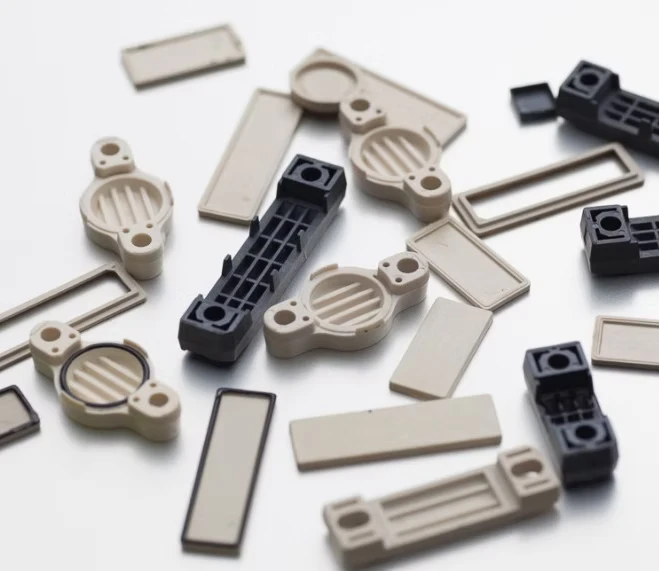
Significant heat is frequently produced by RF and microwave components. More thermal design freedom is possible with air cavity packaging. It is possible to improve the ceramic base and metal lid that are frequently seen in these containers in order to better conduct and disperse heat. As a result, crucial systems are more reliable and operate at lower temperatures.
Improved Electromagnetic Isolation
The ability of the air cavity package in RF applications to protect components from external electromagnetic interference (EMI) is one of its greatest advantages. These packages can have metal enclosures that isolate signals and reduce crosstalk, and they are usually hermetically sealed. In crowded, multi-signal settings, such as communication modules or radar arrays, this is essential.
Support for High-Power and High-Frequency Devices
Packaging that can endure these conditions is becoming increasingly important as frequencies and power demands in devices like RF amplifiers and oscillators increase. Air cavity packaging is engineered to handle these stresses. High-frequency performance is supported by the rigid construction, while thermal and dimensional stability are preserved.
Customizability for Complex Designs
RF and microwave circuits frequently call for special component spacing and layouts. Excellent customization is possible with air cavity packages, which support different die sizes, pin arrangements, and even multi-die integration. This adaptability makes them a favorite among engineers working on cutting-edge communication technologies and aerospace systems.
Final Words
The air cavity package has proven to be more than simply a housing in a world where high-speed connectivity and tiny electronics are the norm; it's a performance enabler. For RF and microwave components, it provides unparalleled benefits, ranging from thermal management to signal clarity. Choosing the appropriate air cavity package in RF applications is crucial. It's time to prioritize air cavity technology for your next design if you're working on sophisticated electronics.











Sign in to leave a comment.