

Machine learning (ML) has recently made significant strides, transitioning from simple linear models to more advanced deep neural networks. However, a game-changing development occurred with the introduction of attention mechanisms, particularly in NLP, computer vision, and multimodal areas. This new technology has not only improved the performance of ML models but also made them more explainable, scalable, and adaptable. As more individuals delve into modern ML, enrolling in a machine learning course in Canada becomes a common and empowering choice to stay relevant during the AI revolution.
What Is Meant by Attention Mechanisms in Natural Language Processing?
An attention mechanism makes it possible for a model to attend to the key parts of data needed to accomplish a task, much as people do. As an example, while reading a sentence to translate, someone might pay attention to the main ideas and let the extra words go. It was primarily introduced in sequence-to-sequence models for machine translation, in which the model matched parts of the input sentence with those in the output sentence.
Recurrent Neural Networks (RNNs) and Long Short-Term Memory (LSTM) networks, used in the past, did not have any mechanism for attention. Their benefits were limited by a challenge to process long-range tasks and hold onto significant data for several steps at a time. Attention mechanisms solved these problems by allowing the model to notice the essential parts of the input, no matter where they are in the sequence.
The Transformer: A Game Changer
Transformer, by Vaswani and his group in 2017, initiated the true revolution for natural language models. Transformers did not use recurrence but depended just on self-attention to handle sequence input. With this shift, models could be trained simultaneously, which made the process much faster.
Thanks to Transformers, it became possible to develop important models like BERT, GPT, and Vision Transformers (ViTs). Such models have raised the standard for results in language translation, text generation, answering questions, and classifying images.
Main Benefits of Attention Mechanisms
One of the key reasons to use attention mechanisms is that they do better at handling information that spans a long distance. It was difficult for traditional RNNs and LSTMs to store information over a long sequence. Unlike others, attention mechanisms, mainly self-attention, allow all parts of the input to interact directly. The model can consider the complete context, resulting in a much better outcome.
Attention gives another significant advantage: it helps make our models more straightforward to understand. Attention weights display where the model pays the most attention as it makes its prediction. Being at this level of transparency matters primarily for apps used in healthcare and finance, which need to be easy to explain.
Attention mechanisms help make parallel processing much easier. Because transformers use attention, they can process multiple pieces of data in parallel while being trained, unlike RNNs. Because of this feature, training can be done faster, which allows for creating bigger models such as GPT-4 and those that follow.
Also, attention mechanisms make transfer learning and fine-tuning easier than other approaches. Small amounts of data are enough to fine-tune pretrained models for specific tasks such as BERT. As a result, these colleges give students in AI and ML courses in Canada hands-on education by using these models.
Beyond Text: Attention in Vision and Multi-Modal Tasks
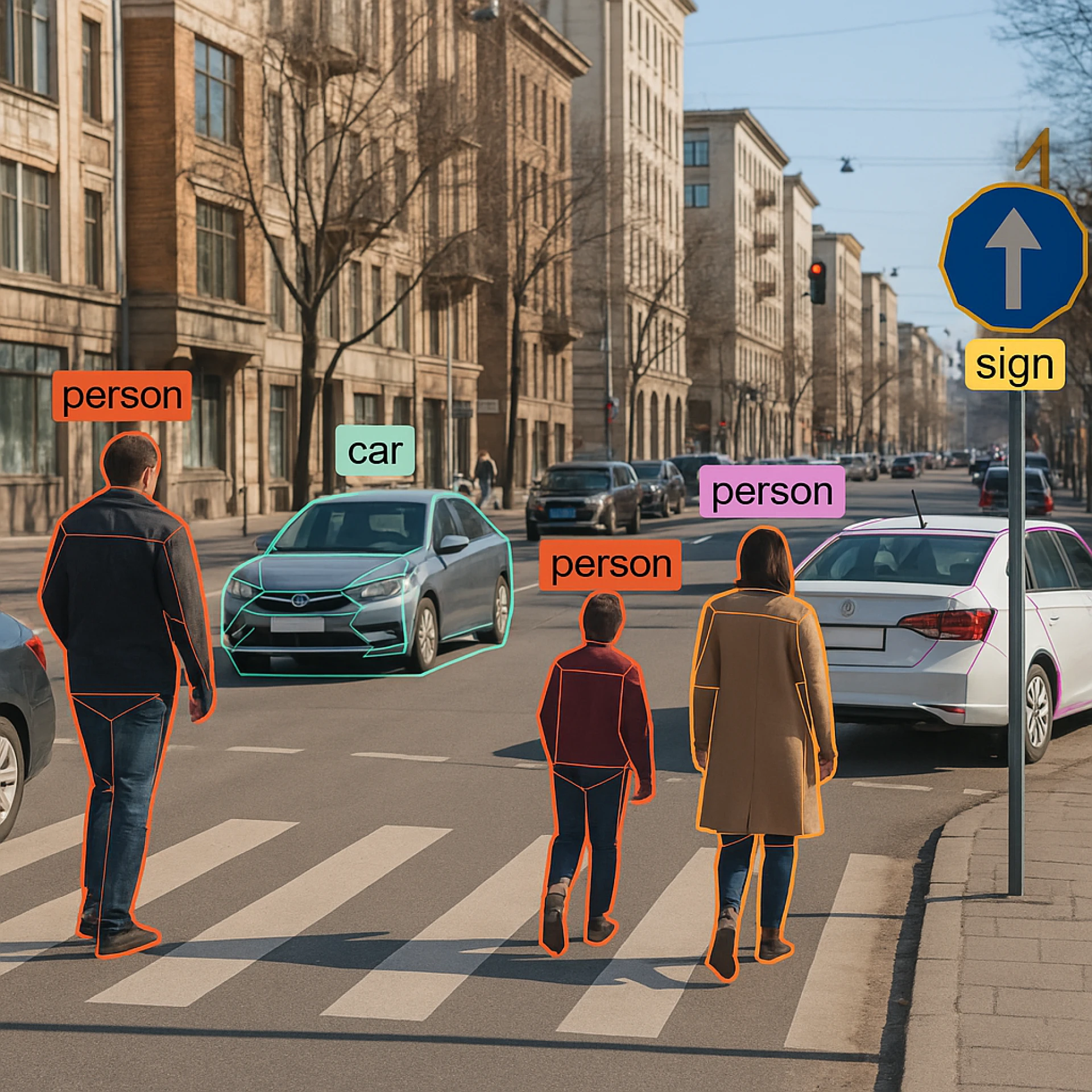
Although attention mechanisms were developed for NLP problems, they now affect many other areas too. In different computer vision tasks, Vision Transformers are often able to compete with or outperform standard CNNs.
Multi-modal models that work with text, images, and audio often depend heavily on attention mechanisms. They make it possible for AI to caption images, ask questions about pictures or videos, and analyze what is going on in videos. The achievements of these networks have made registering for a machine learning course in Canada even more valuable, as students commonly get to work on projects across a variety of domains.
In addition, attention mechanisms are now heavily used in recommendation systems, speech recognition, and reinforcement learning. Because these applications are becoming more critical, there is an increasing demand for AI and ML courses in Canada, and many now focus on attention-based architectures.
Real-World Applications
Attention mechanisms affect many areas where they are applied in practical settings. Google Translate and other modern language translation engines mostly use attention-based models to make the translated text more correct and easier to read. Because of attention, chatbots and virtual assistants can absorb user requests properly and reply with suitable answers. In healthcare, with attention mechanisms, it is possible to examine radiology images and catch helpful insights from clinical reports to boost effective treatment and diagnosis. Multi-modal attention helps autonomous vehicles gather information from multiple sensors, such as cameras and LiDAR, in their environment.
Many AI and ML courses in Canada are giving students practical experience in making intelligent systems that adjust according to their environment.
Challenges and Future Directions
While attention mechanisms have significantly shaped AI, they also bring some difficulties. There is a serious issue in using a lot of function. Techniques like sparse attention and low-rank which approximations seek se on the environment compromising the accuracy of the result. This potential for efficiency they is a reason for optimism about the future of AI.
Ongoing studies are working to improve how attention mechanisms function. Sparse attention and low-rank matrix approximations seek to reduce how much time and memory are needed without affecting how accurate the result is. People are also showing more interest in mixing attention with graph neural networks and similar models to handle more complex patterns in data.
People eager to help advance machine learning can get a solid foundation in theory and practice by enrolling in a machine learning course in Canada. Usually, attention mechanisms, Transformer designs, and cutting-edge use cases in various fields are part of these programs. They also typically involve group work and link up with the industry, giving students a similar experience to the real professional world.
Conclusion
With attention mechanisms, machine learning approaches are more potent in their ability to notice relevant details, think, and apply their learning generally. Attention makes a big difference in advancing NLP, computer vision, and the teaching of multiple senses.
Since skilled workers in this field are needed now more than ever, choosing a machine learning course in Canada is a worthwhile choice. They are meant to give learners the skills, knowledge, and practice required to succeed in an AI-powered world. A focus on practical training and real-world lessons has led AI and ML courses in Canada to nurture tomorrow's industry leaders and innovators.























Sign in to leave a comment.