

For years, Augmented Reality (AR) was viewed as an exciting glimpse into the future. It appeared in gaming, entertainment, and technology demonstrations, but many questioned when it would become an essential part of everyday life. In 2026, that question has finally been answered.
Today, AR has moved beyond novelty and into practical business applications. Companies across manufacturing, healthcare, logistics, construction, education, retail, mining, defence, and field services are integrating AR into their daily operations to improve productivity, enhance safety, reduce costs, and empower employees.
Unlike virtual reality, which immerses users in a completely digital environment, augmented reality overlays digital information onto the real world. Workers can continue interacting with their physical surroundings while receiving real-time guidance, data, and expert support exactly when they need it.
As industries continue to face skilled labour shortages, increasing operational complexity, and rising customer expectations, AR has become one of the most transformative technologies of 2026.
Let’s explore how augmented reality is changing the world and why businesses are investing in AR now more than ever.
The Shift from Innovation to Essential Business Tool
Only a few years ago, many organisations considered AR a technology worth experimenting with. Today, it has become a strategic investment.
Several global trends have accelerated AR adoption:
- Labour shortages across technical industries
- Increasing demand for remote work capabilities
- Rising operational costs
- Growing emphasis on workplace safety
- Need for faster employee onboarding
- Digital transformation initiatives across enterprises
Businesses are no longer asking whether they should adopt AR. Instead, they’re asking how quickly they can implement it across their operations.
Modern AR solutions are also significantly more practical than earlier generations. Lightweight smart glasses, AI-powered software, cloud connectivity, edge computing, and improved battery life have made AR devices suitable for full-day industrial use.
The result is a technology that delivers measurable business value rather than just visual appeal.
Transforming Frontline Work
Frontline workers are at the centre of global industries. They inspect equipment, repair machinery, install infrastructure, perform maintenance, conduct safety inspections, and keep essential services running.
Yet many of these workers still rely on paper manuals, printed checklists, or handheld tablets that interrupt their workflow.
Augmented reality changes this completely.
Instead of stopping work to search for documentation, workers can access instructions directly within their field of view. Step-by-step procedures appear while they continue working hands-free.
This dramatically reduces:
- Downtime
- Human error
- Training time
- Equipment failures
- Communication delays
Workers spend less time searching for information and more time completing tasks accurately.
Revolutionising Industrial Training
Training has traditionally depended on classroom sessions, manuals, videos, and experienced employees mentoring new staff.
While these methods remain valuable, they often require significant time and resources.
AR introduces a new approach known as guided learning.
New employees can follow interactive instructions displayed directly during real work tasks. Instead of trying to memorise procedures beforehand, they learn while performing the job.
This offers several advantages:
- Faster onboarding
- Improved confidence
- Better knowledge retention
- Reduced dependency on senior technicians
- Consistent training across multiple locations
As experienced workers retire, preserving institutional knowledge has become a major challenge. AR helps organisations capture expert procedures digitally, ensuring valuable knowledge remains accessible for future generations.
Remote Expert Assistance Without Travel
One of the biggest breakthroughs in AR has been remote collaboration.
Previously, solving a complex technical problem often required flying an expert to a site.
Today, AR smart glasses allow remote specialists to see exactly what the frontline worker sees.
Experts can:
- Draw annotations onto the worker’s display
- Highlight components
- Share documentation
- Guide repairs in real time
- Verify completed work
This reduces travel costs while dramatically improving response times.
For organisations with operations across multiple countries, remote AR support has become an essential capability.
Improving Workplace Safety
Safety remains one of the strongest drivers of AR adoption.
Industrial environments present numerous hazards, including:
- High-voltage equipment
- Confined spaces
- Heavy machinery
- Extreme temperatures
- Hazardous chemicals
- Elevated work platforms
AR helps workers remain aware of these risks by displaying contextual safety information without distracting them from their surroundings.
Examples include:
- Equipment warnings
- Hazard notifications
- Lockout/tagout procedures
- PPE reminders
- Thermal imaging overlays
- Emergency response guidance
Because workers can keep both hands free while accessing critical information, AR reduces unnecessary distractions and supports safer decision-making.
Healthcare Is Becoming Smarter
Healthcare has embraced AR in remarkable ways during 2026.
Medical professionals now use AR to:
- Visualise patient anatomy
- Assist during surgeries
- Access medical records hands-free
- Improve remote consultations
- Guide complex procedures
- Enhance medical education
Surgeons can overlay medical imaging directly onto patients during procedures.
Medical students benefit from immersive anatomy training.
Emergency responders receive live guidance during critical interventions.
The combination of AR and artificial intelligence is enabling faster, more informed clinical decisions.
Construction Is Going Digital
Construction projects involve thousands of moving parts.
Architectural plans, engineering drawings, utility layouts, safety procedures, inspections, and quality control all require constant coordination.
AR simplifies this complexity.
Construction teams can visualise digital building models directly on-site before work begins.
Engineers can compare completed work against Building Information Models (BIM) in real time.
Potential issues become visible before they turn into expensive mistakes.
Benefits include:
- Fewer reworks
- Improved accuracy
- Better project coordination
- Faster inspections
- Reduced construction delays
As infrastructure projects become increasingly complex, AR has become an invaluable planning and execution tool.
Retail Experiences Are Becoming Interactive
Consumers now expect more personalised shopping experiences.
AR allows customers to:
- Virtually try products
- Preview furniture inside their homes
- Test cosmetics digitally
- Visualise home renovations
- Compare product sizes
Retailers benefit through:
- Higher customer engagement
- Lower product returns
- Improved purchasing confidence
- Enhanced online shopping experiences
The line between physical and digital retail continues to blur.
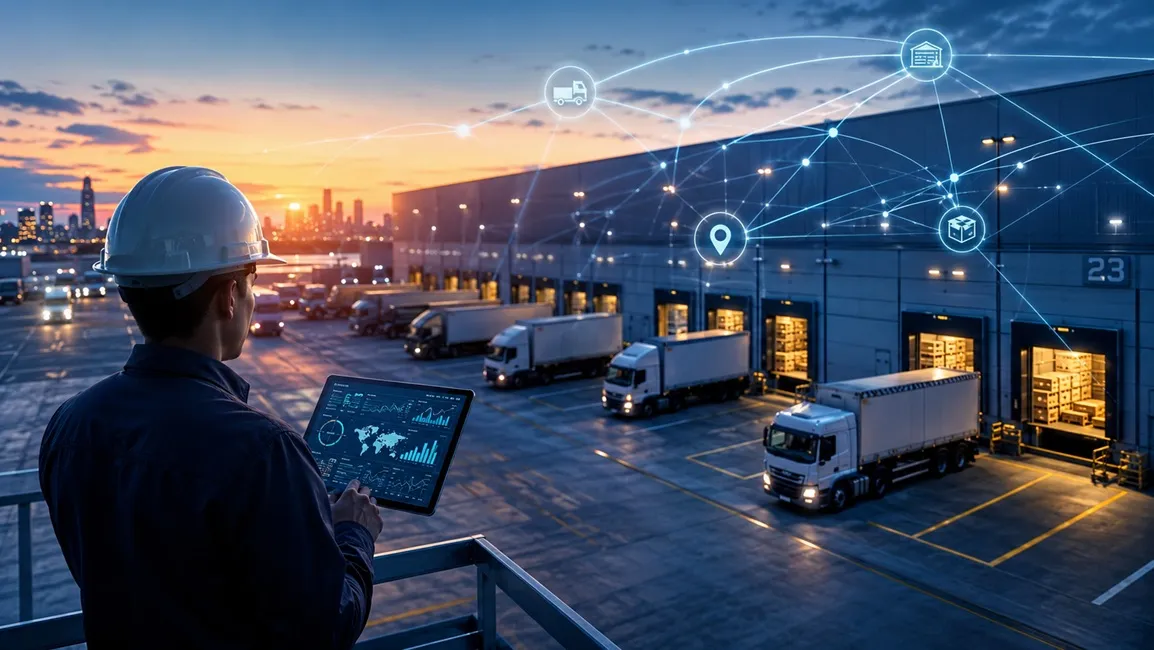
Logistics and Warehousing Are Becoming More Efficient
Warehouses operate under constant pressure to improve speed and accuracy.
AR assists workers by displaying:
- Picking routes
- Inventory locations
- Shipping information
- Barcode data
- Packing instructions
Hands-free navigation reduces searching time and improves order fulfilment accuracy.
Warehouse managers also gain better operational visibility through real-time data integration.
Manufacturing Is Entering the Smart Factory Era
Manufacturers increasingly combine AR with Industrial Internet of Things (IIoT) technologies.
Machines generate enormous amounts of operational data.
AR delivers this information directly to technicians while they inspect equipment.
Workers can instantly view:
- Equipment status
- Maintenance history
- Sensor readings
- Fault alerts
- Repair procedures
Rather than switching between multiple systems, technicians receive all relevant information within a single interface.
This improves maintenance efficiency and minimises production interruptions.
Artificial Intelligence Is Making AR Even More Powerful
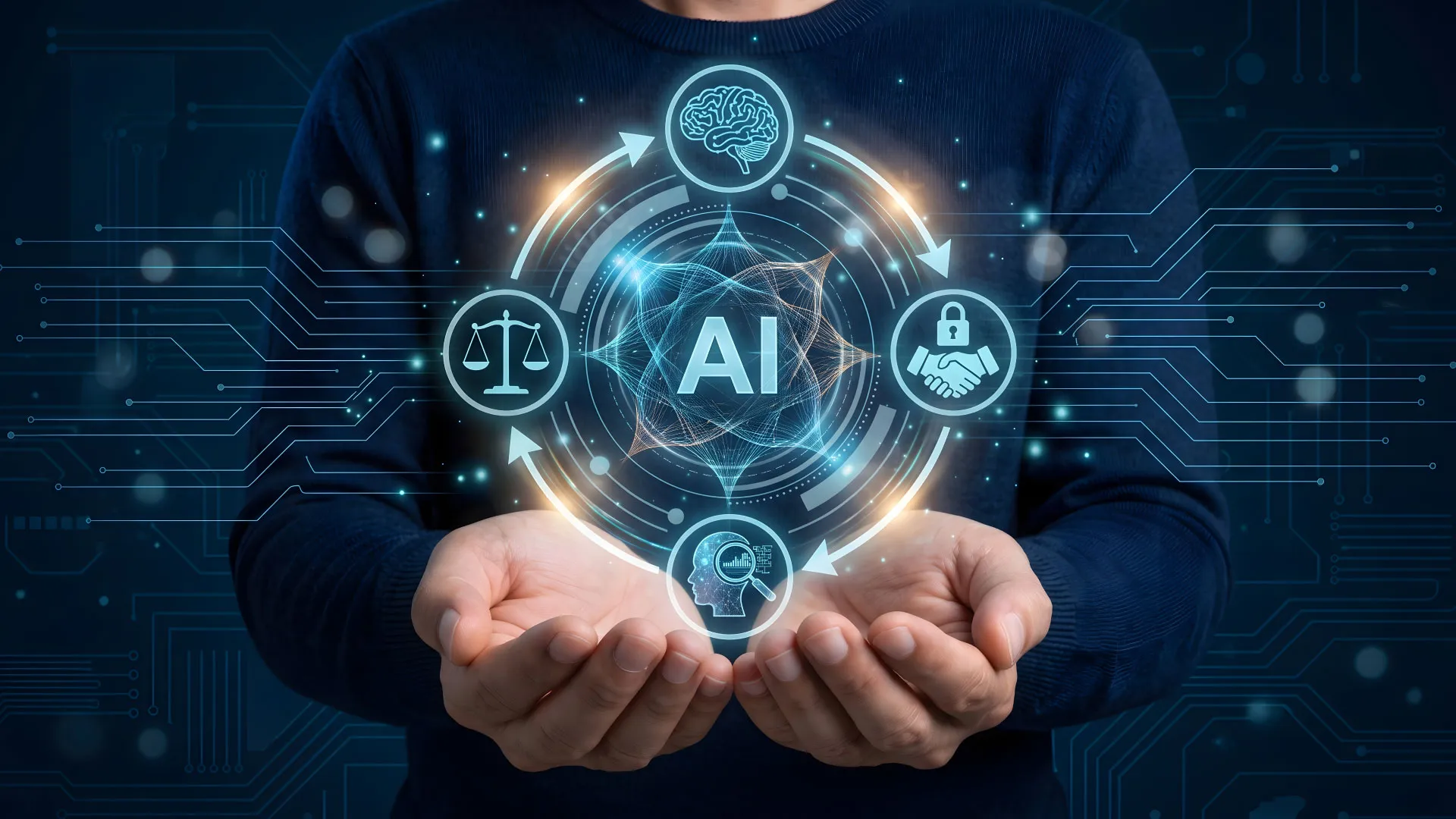
The convergence of AI and AR represents one of the most significant technology trends of 2026.
AI enhances AR by providing:
- Intelligent object recognition
- Voice-controlled assistance
- Predictive maintenance recommendations
- Automated documentation
- Instant translations
- Workflow automation
Instead of simply displaying information, modern AR systems understand context.
For example, an AI-powered AR platform can identify equipment automatically, retrieve maintenance history, recommend repair procedures, and generate service reports after work is completed.
This dramatically increases worker productivity.
Education Beyond the Classroom
Education is undergoing rapid digital transformation.
AR enables students to experience subjects rather than simply reading about them.
Examples include:
- Interactive science experiments
- Historical recreations
- Engineering simulations
- Medical training
- Technical education
- Virtual laboratories
Students engage more actively, leading to better understanding and knowledge retention.
Educational institutions are increasingly adopting AR to prepare learners for technology-driven workplaces.
Sustainability Through Smarter Operations
Environmental sustainability has become a major business priority.
AR contributes by reducing:
- Business travel
- Paper documentation
- Equipment downtime
- Material waste
- Energy consumption
Remote support alone eliminates thousands of unnecessary flights and vehicle journeys every year.
Digital work instructions also replace printed manuals, helping organisations reduce paper usage while ensuring employees always access the latest documentation.
The Rise of Smart Glasses
The biggest hardware trend in 2026 is the rapid evolution of smart glasses.
Modern industrial smart glasses are:
- Lightweight
- Comfortable for all-day use
- Rugged
- Voice-controlled
- Compatible with safety equipment
- Designed for demanding environments
Unlike consumer smart glasses focused on entertainment, industrial devices prioritise reliability, durability, and productivity.
Workers can perform inspections, capture images, stream live video, receive instructions, and communicate with remote experts without carrying additional devices.
As digital transformation accelerates, having an experienced AR partner like Realwear ARC 3 can significantly reduce implementation complexity while maximising return on investment.
Industries Leading AR Adoption in 2026
Several industries are currently experiencing particularly rapid AR growth:
Oil and Gas
Operators use AR for remote inspections, equipment maintenance, hazardous environment monitoring, and thermal imaging.
Mining
Mining companies leverage AR to improve underground safety, equipment diagnostics, remote support, and maintenance efficiency.
Utilities
Electricity, water, and telecommunications providers use AR for infrastructure inspections, maintenance workflows, and workforce training.
Healthcare
Hospitals utilise AR for surgical assistance, diagnostics, remote consultations, and medical education.
Manufacturing
Factories integrate AR with automation systems to improve maintenance, quality control, and production efficiency.
Logistics
Distribution centres employ AR to streamline inventory management and warehouse operations.
Construction
Construction firms use AR to visualise projects, compare BIM models, and improve field collaboration.
Challenges That Still Remain
Despite impressive progress, AR adoption is not without challenges.
Businesses must still consider:
- Infrastructure readiness
- Employee adoption
- Data security
- Device management
- Software integration
- Workforce training
- Change management
However, these challenges are becoming easier to overcome as AR platforms mature and implementation expertise grows.
Many organisations now begin with pilot projects before expanding deployment across multiple departments.
The Future Beyond 2026
The pace of AR innovation shows no signs of slowing.
Over the coming years, we can expect:
- AI becoming deeply integrated into AR workflows
- Even lighter and more powerful wearable devices
- Improved spatial computing experiences
- Enhanced digital twins
- Greater automation
- Real-time language translation
- Advanced predictive maintenance
- Wider adoption across small and medium-sized businesses
Eventually, AR may become as common in industrial workplaces as smartphones are today.
Rather than replacing human workers, AR will continue enhancing their abilities by providing immediate access to knowledge, improving decision-making, and enabling safer, more efficient work.
Final Thoughts
Augmented reality has reached a defining moment in 2026. What was once considered futuristic technology has become an essential business tool that is reshaping industries around the world.
From manufacturing floors and construction sites to hospitals, warehouses, energy facilities, and classrooms, AR is helping organisations work smarter, train faster, collaborate remotely, and operate more safely. Combined with artificial intelligence, cloud computing, and advanced wearable devices, augmented reality is empowering frontline workers with the right information at exactly the right moment.
For businesses looking to stay competitive in an increasingly digital world, investing in AR is no longer just about innovation — it is about building resilience, improving productivity, and preparing for the future of work.
Companies like RealTime AR are playing a vital role in this transformation by helping organisations deploy enterprise-grade AR solutions that solve real operational challenges. As adoption continues to grow, the businesses embracing augmented reality today will be the ones best positioned to lead tomorrow’s industries.


























Sign in to leave a comment.