
Owning a boat in Baton Rouge is all fun and games until you start wondering where to keep it when you’re not on the water. The heat, sticky air, and sudden downpours can be just as harsh on your boat as a rough day on the river.
This is where proper boat storage in Baton Rouge can make all the difference. It plays an instrumental role in keeping your boat in pristine condition throughout the year. Good boat storage is all about keeping moisture, sun, and storms under control so your boat is ready to go whenever you are.
But how does boat storage really work? Let’s break it down.
Climate Challenges in Baton Rouge
Baton Rouge is notorious for its humidity. According to WorldAtlas, it’s the ninth most humid city in the United States, with an average daily humidity level of 74%. Summers in Baton Rouge are long, hot, and sticky. Water from the river, bayous, and heavy rains often lingers in the air and soil, which creates a constant sense of moisture. Even in the cooler months, the city rarely feels dry.
The humid subtropical climate speeds up rust, corrosion, and mold growth on boats. Fiberglass, upholstery, electronics, and engines can all suffer if a boat sits uncovered in this environment for long periods. Humidity also increases the risk of mildew in cabins, storage lockers, and under seats, especially if air cannot circulate freely. Add strong sun and sudden storms to that, and outdoor, unprotected storage quickly leads to faded gelcoat, cracked vinyl, and water intrusion.
Main Boat Storage Types Used Locally
Boat owners around Baton Rouge typically choose from three main storage styles: outdoor, covered, and indoor or climate‑controlled.
- Outdoor Storage: The boat sits on a trailer or in a parking space in an open lot. This is usually the cheapest option but offers the least protection from the sun and rain.
- Covered Storage: The boat is parked under a roofed structure or carport-style shelter that shields it from direct sun and rain but is still open to humid air and temperature swings.
- Indoor/Climate‑Controlled Storage: The boat is stored inside a building, sometimes in a dry-stack arrangement, and some facilities manage temperature and humidity to reduce moisture‑related damage.
How Climate-Controlled Boat Storage Works
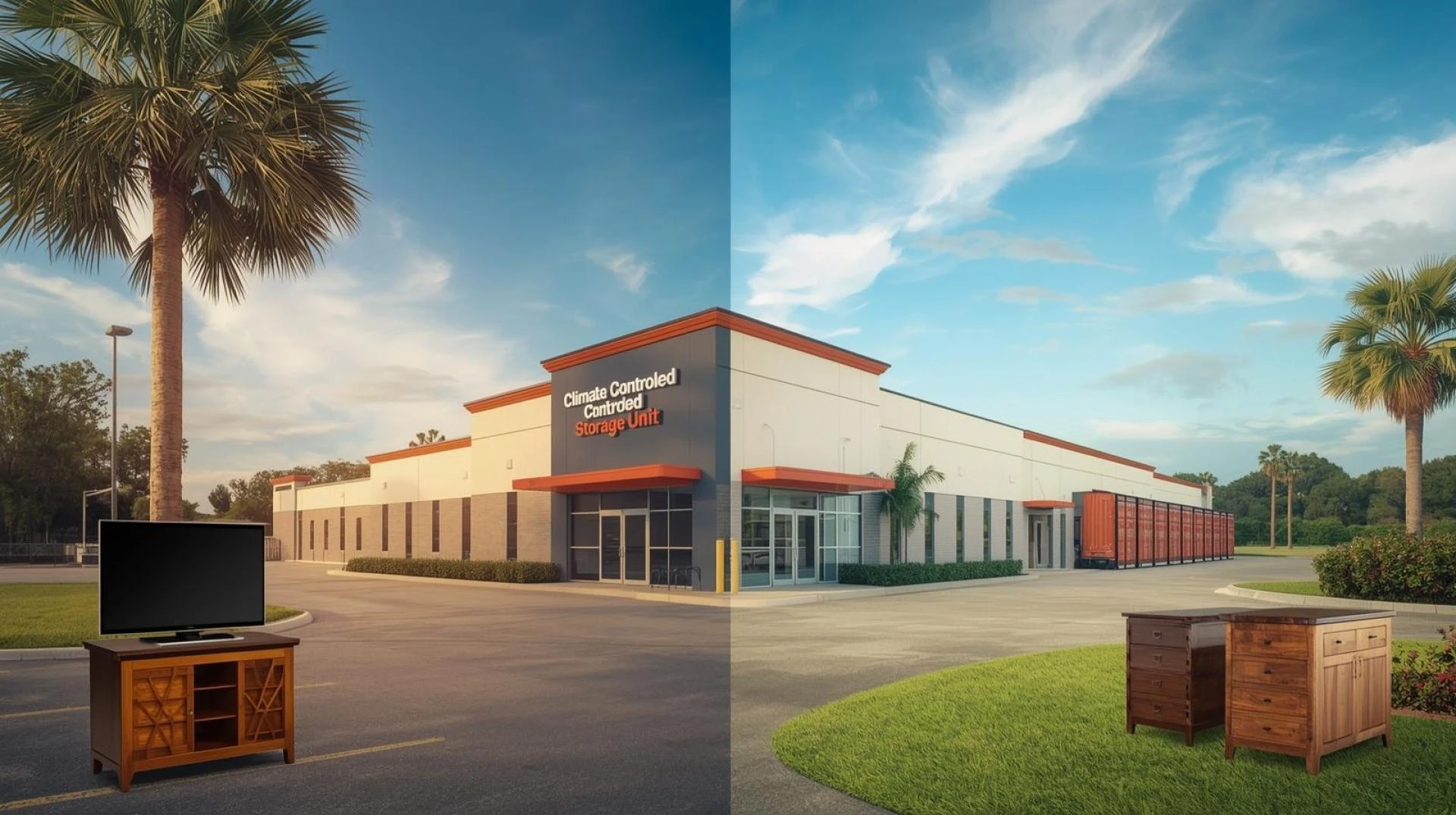
Climate‑controlled storage facilities in Baton Rouge use air conditioning and dehumidification to keep temperature and humidity more stable inside the units. They keep humidity in a moderate range, which helps slow down mold and mildew growth and protect sensitive materials, such as electronics and upholstery.
For boat owners, this means engines, wiring, cushions, and interior surfaces are less exposed to damp air, reducing corrosion and musty odors when the boat comes out of storage. Indoor storage also shields the hull and deck from UV exposure and heavy rain, which is valuable for higher‑end or more delicate vessels.
How Outdoor and Covered Storage Work
Uncovered outdoor storage is the most affordable option and is commonly used by boat owners who prioritize cost or plan to access their boat frequently. While this type of storage offers easy maneuverability and 24/7 access at some facilities, it provides the least protection from Baton Rouge’s humid climate.
Covered outdoor storage is a popular compromise for boat owners who want protection without the cost of a full indoor unit. These spaces shield your boat from direct rainfall and harsh sunlight, which are two major drivers of weather-related damage. A covered structure can make a meaningful difference in preserving paint, upholstery, and exposed hardware. However, because the sides are usually open, humidity still circulates around the boat.
How to Prepare a Boat for Humid Storage?
Proper preparation before storage is just as important as choosing the right facility, especially in humid conditions.
Key steps include:
- Cleaning the boat thoroughly, inside and out, to remove salt, dirt, and organic residue that can feed mold and mildew.
- Draining all water from bilges, livewells, and tanks, and allowing surfaces to dry completely before covering or closing up compartments.
- Applying a protective wax to the hull and treating metal hardware to add a barrier against corrosion.
- Changing engine oil and filter, stabilizing the fuel, and running treated fuel through the system to reduce internal corrosion risks during long storage periods.
Final Thoughts
Storing a boat in Baton Rouge isn’t just a matter of finding an empty spot to park it. In a hot, humid climate, the way you store your boat has a direct impact on how long it lasts, how often it needs repairs, and how ready it is when you want to get back on the water.
With an understanding of how local facilities operate and by taking a few simple precautions yourself, you can keep your vessel in excellent condition all year long.




























Sign in to leave a comment.