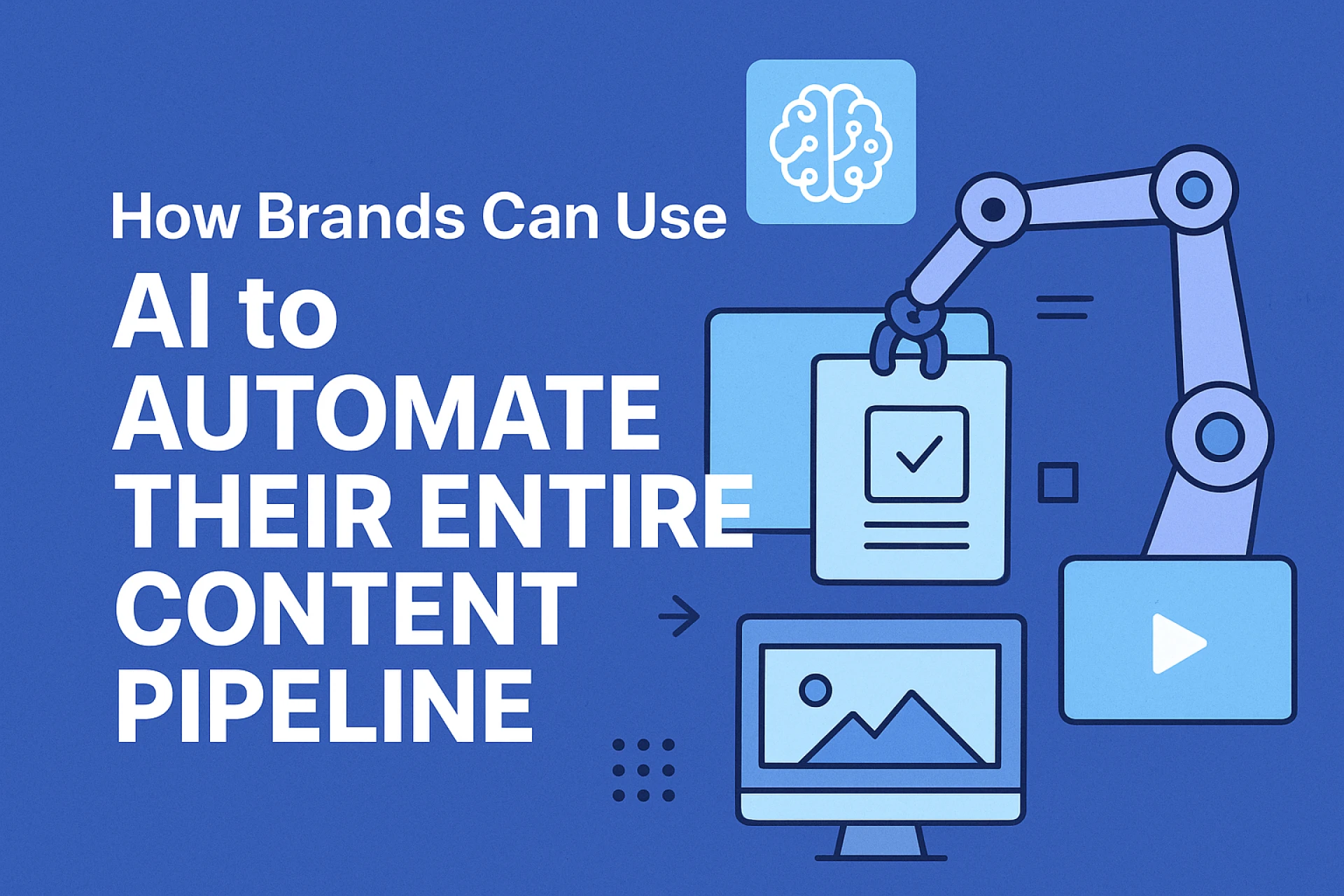

In today’s fast-moving digital landscape, brands are under constant pressure to produce more content faster, smarter, and with greater personalization. Yet, managing a content pipeline manually is slow, costly, and inconsistent. This is where AI steps in not as a replacement, but as a powerful engine that can automate, optimize, and transform every stage of your content creation workflow.
From brainstorming and research to creation, publishing, and performance tracking, AI allows brands to operate like high-efficiency media companies.
Why Automate the Content Pipeline?
Automation isn't just about speed. It’s about:
- Reducing operational costs
- Maintaining consistent brand voice
- Scaling content output without scaling the team
- Improving accuracy and eliminating repetitive manual tasks
- Boosting personalization at every touchpoint
With AI, brands can create a sustainable, scalable, and data-driven content ecosystem.
AI Across the Entire Content Pipeline
1. Ideation & Research: Generate Smarter, Data-Backed Ideas
AI tools can instantly analyze trends, keywords, audience behavior, and industry conversations to suggest high-impact content ideas.
How AI helps:
- Identifies trending topics before competitors
- Recommends headlines and brief outlines
- Analyzes SERPs to suggest content gaps
- Generates customer-focused content angles
Tools: ChatGPT, BuzzSumo, Semrush AI, AnswerThePublic
2. Content Creation: Produce High-Quality Drafts at Scale
AI writing models can produce well-structured drafts, social media posts, ad copy, newsletters, captions, and long-form blogs.
How AI helps:
- Creates first drafts in seconds
- Supports brand tone and guidelines
- Converts content between formats (e.g., blog → carousel → script)
- Assists multimedia creation (images, videos, voiceovers)
Tools: ChatGPT, Jasper, Canva AI, Descript, RunwayML
3. Editing & Optimization: Polish Content With Precision
AI doesn’t replace editors, it gives them superpowers.
How AI enhances editing:
- Grammar, tone, and clarity improvement
- SEO optimization and readability scoring
- Fact-checking assistance
- Style consistency across all brand assets
Tools: Grammarly, Hemingway AI, SurferSEO, Clearscope
4. Visual & Multimedia Creation: Automate the Creative Layer
Today, content is not just text, it’s reels, graphics, podcasts, landing pages, and animations.
AI can generate:
- Social media creatives
- Infographics and carousels
- Product videos
- Studio-quality product images
- Podcast scripts and audio cleanup
Tools: Midjourney, Canva Magic Studio, Runway, DALL·E, ElevenLabs
5. Scheduling & Publishing: Automate Distribution
Once content is ready, AI can manage the posting, scheduling, and optimization process.
AI enables:
- Automatic post scheduling based on peak engagement
- Platform-specific content adjustments
- Auto-tagging and categorization
- Bulk publishing
- A/B testing of headlines and visuals
Tools: Buffer AI Assist, Hootsuite Owly AI, Notion AI, Zapier
6. Content Repurposing: Multiply Impact Without Extra Work
A single piece of content can turn into ten.
AI can convert:
- Blogs → videos, reels, carousels, newsletters
- Podcasts → articles & snippets
- Long posts → tweets & captions
It helps brands reach audiences across multiple platforms effortlessly.
7. Performance Tracking & Optimization
AI analytics give brands a real-time view of what’s working and what isn’t.
AI-driven insights include:
- Engagement predictions
- Audience behavior patterns
- Automated reporting
- Next-step recommendations
- Keyword and competitor movement
Tools: Google Analytics + AI insights, HubSpot AI, Sprout Social AI
How Tech Enhances This Automated Pipeline
Technology acts as the backbone of AI-driven production:
- Unified dashboards centralize brainstorming, creation, publishing, and analytics.
- Workflow automation using tools like Zapier or Make eliminates manual handovers.
- Cloud AI systems allow teams to collaborate in real-time.
- API integrations help brands plug AI directly into CMS, CRM, and design workflows.
- Version control & governance ensure every output remains on-brand and compliant.
The result is a seamless, end-to-end system where content moves automatically from idea → creation → optimization → publishing → tracking.
Conclusion
AI is not just a tool, it’s a full-scale content engine that helps brands operate with the efficiency of a global media house. By automating their content pipeline, businesses can produce more high-quality content, improve engagement, reduce costs, and stay ahead in a hyper-competitive digital world.
Brands that adopt AI early will be the ones leading conversations tomorrow.


























Sign in to leave a comment.