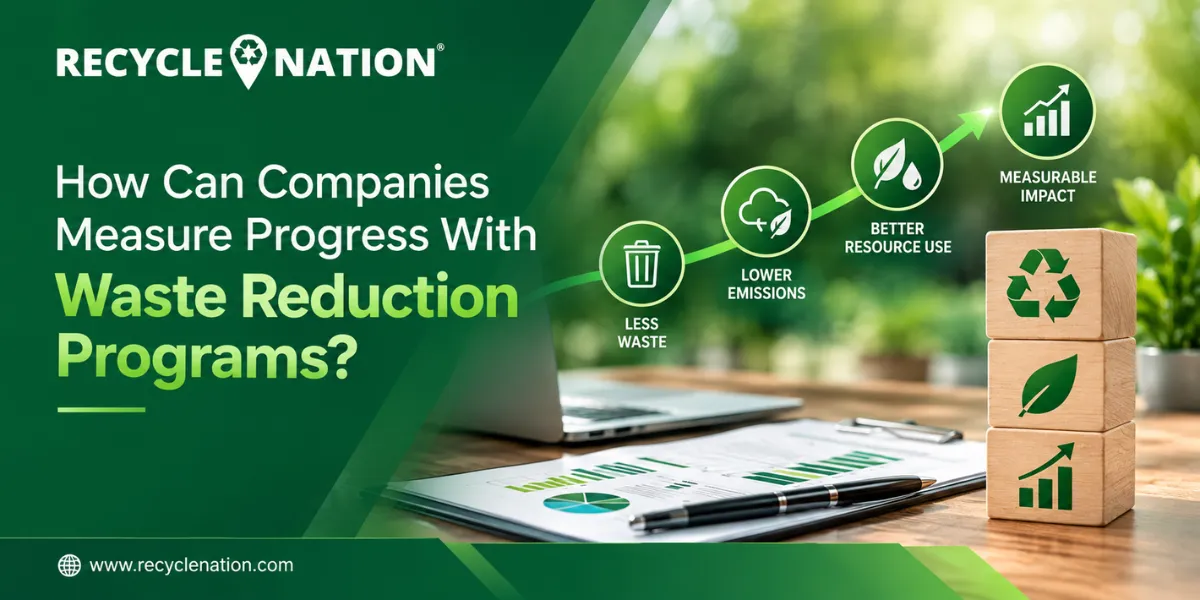

A waste programme can easily look successful because staff are recycling more or garbage cans are less full. Those insights are useful, but they don’t tell a corporation how much material it has actually avoided, redirected, repurposed or recycled. To effectively measure waste reduction you need a baseline, regular tracking and goals that can be tracked over time.
The U.S. Environmental Protection Agency advises measuring the amount of waste and recyclables created as a basis for measuring a waste management programme. It also encourages the use of waste assessments to understand the composition of the waste stream and to find potential for improvement.

Start With a Baseline Before Changing the Program
Before a company can know if it’s making progress, it has to know where it started. A baseline could be the weight or volume of trash, recycling, compostable material, and other related waste streams within a given timeframe.
The baseline period should be representative of usual operations. Waste profiles from a plant, an office, a restaurant or a retail store can be highly different, and so utilising the figures from another company as a direct benchmark can lead to incorrect findings.
Why Does the Measurement Period Matter?
Business activity fluctuates during the year. The volume of material produced can be affected by seasonal sales, production cycles, workforce levels, special events, etc.
So comparing an extraordinarily busy month with an unusually calm month may tell you little about actual development. Instead, companies can report on a consistent monthly or quarterly basis, and describe atypical operational conditions along with the numbers.
Use Waste Audits to Find the Real Problems
A waste audit can tell you something that disposal invoices can't: what's really in the waste stream. trash assessments are systematic studies of trash creation, purchase and management procedures and identify opportunities where reduction initiatives can have the greatest effect, says the EPA.
An evaluation can comprise a record check, a facility walk-through and sorting of trash samples. The results could inform you that a corporation is wasting a lot of a resource that could have been avoided, reused, recycled or composted.
Which Metrics Should Companies Track?
There is no single measurement that works for every organization. The most useful metrics depend on what the program is designed to accomplish.
A company could track:
- Total waste generated per month
- Landfill waste
- Recycling volume
- Composting volume
- Diversion rate
- Material purchasing changes
- Disposal expenses
- Recycling or processing costs
- Waste generated per employee or production unit
Using an intensity measure can be particularly useful when business activity changes. If production increases while total waste rises slightly, for example, waste generated per unit of production may still have improved.
Can Financial Results Show Whether a Program Works?
Yes. Environmental improvement and financial performance can be monitored jointly.
Reductions in waste disposal volumes, purchasing methods, needless packaging and reuse of resources may reduce operating expenses. The EPA says organisations can utilise performance tracking to find savings from cutting material and energy use or from minimising disposal costs.
This is also the place where sustainable living concepts can be translated into organisational practices. It is often more helpful to prevent wasteful consumption of things, rather than seeking better places for materials after they have become waste.
So a corporation may track pounds of material avoided and dollars saved.
What About Recycling Contamination?
More recycling volume does not equal a better recycling programme. Contaminated loads might diminish the value of the gathered material and possibly create extra handling challenges.
A trash assessment can help determine if recyclable materials are being disposed of in the improper containers, or if personnel understand the sorting requirements of the site. EPA particularly highlights waste assessments that can help identify pollution and aid organisations to figure out where more communication or education is needed.
That makes contamination another good performance indicator.
How Can Companies Turn Measurements Into Goals?
If baseline information is available, management can create specific targets. A goal like being more sustainable is hard to measure. It is easier to assess a target that is linked to a certain material, time frame and measuring method.
For example, a company could aim to:
- Reduce landfill waste by a defined percentage
- Lower paper consumption per employee
- Increase correctly sorted recyclables
- Reduce disposable packaging
- Increase reuse of shipping materials
- Decrease waste disposal costs
EPA suggests using the tracking data to set benchmarks and determine quantifiable goals, and then monitoring against the benchmarks on an ongoing basis.
The aim should also be realistic enough for employees to be able to influence the result.
Where Do Recycling Resources Fit In?
Nor should measurement be confined to the company's own plant. Local recycling programmes, hauliers, processors and government resources can tell you what materials are accepted and how they should be handled.
Employees may also ask queries such as where can I recycle certain materials, especially goods that don’t belong in the everyday office recycling receptacle. A corporation can supply approved local resources instead of relying on staff to assume.
When you do your evaluations, EPA suggests you work with your local government or waste hauliers since they may have helpful information or can help you.
Frequently Asked Questions
What is the simplest way to measure a waste program?
Set a baseline of total trash and major waste categories first. Then, on a regular basis, take those same measures across set intervals and compare the findings.
Should companies measure waste by weight or volume?
Weight is often beneficial since it is a more constant physical metric, although volume can also be useful where weight data are unavailable. The important thing is to have a consistent way of doing it.
Can waste reduction lower business costs?
It can. Cutting the amount of materials you buy, not over-packaging your products, reusing more items and throwing away less will minimize your operational costs. The outcomes will differ depending on the type of business and waste stream.
Conclusion
Effective waste reduction programmes are more than bins and environmental statements. Companies require credible baseline data, consistent measurements, waste assessments, quantifiable goals and regular evaluations to see whether their efforts are creating real outcomes.
The best technique of measuring links environmental results to operational and financial data. By quantifying waste streams, trash avoided, materials recovered and the costs of management, firms can identify specific areas for improvement and show progress over time.






















Sign in to leave a comment.