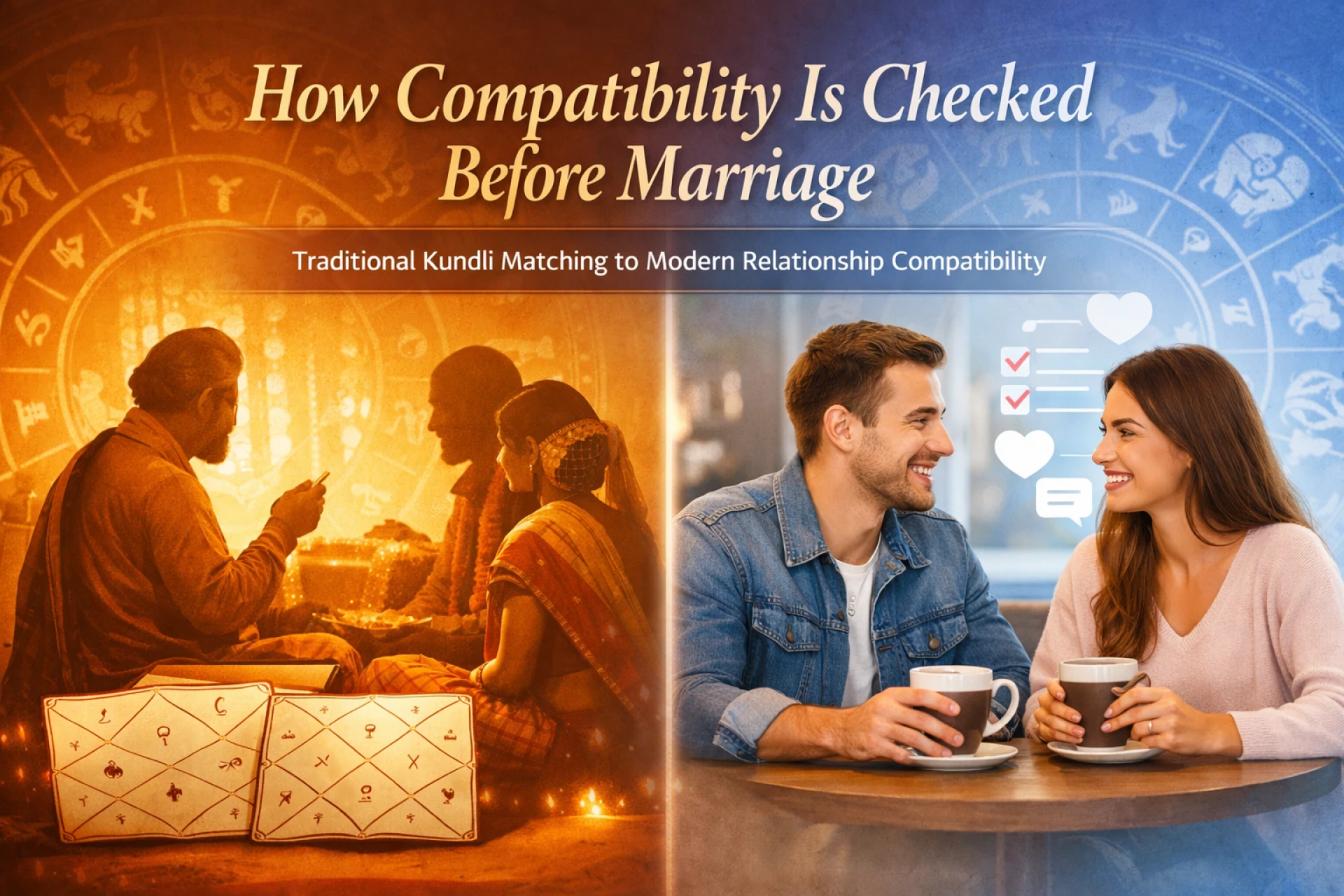

So you've found someone you want to spend forever with. That's amazing. But before families start booking wedding venues and ordering 500 samosas, there's usually one more step in traditional households: the compatibility check.
If you're thinking "wait, we already know we're compatible," hold that thought. The compatibility we're talking about here goes deeper than whether you both like the same Netflix shows or agree on pizza toppings.
What's This Compatibility Check About?
In many Indian families, checking compatibility before marriage isn't just about personality matching. It's about understanding how two people's energies, life paths, and futures might blend. Think of it like checking if two puzzle pieces actually fit before gluing them permanently.
The traditional method involves ancient systems that have been around for centuries. Before you dismiss it as "old people stuff," know that even super-modern couples often go through this because, honestly, what's the harm in getting another perspective?
The Birth Chart: Your Cosmic Blueprint
Your birth chart is basically a snapshot of where all the planets were at the exact moment you were born. It's calculated using your birth date, time, and location. Think of it as your celestial fingerprint, unique to you.
This chart supposedly reveals your personality traits, strengths, challenges, how you handle relationships, career inclinations, and even health tendencies. It's like having a manual for how you operate as a human being.
When two people are considering marriage, their individual birth charts are examined to see how they might interact. Do their energies complement each other or clash? Will they support each other's growth or create constant friction?
Gun Milan: The 36-Point Compatibility Test
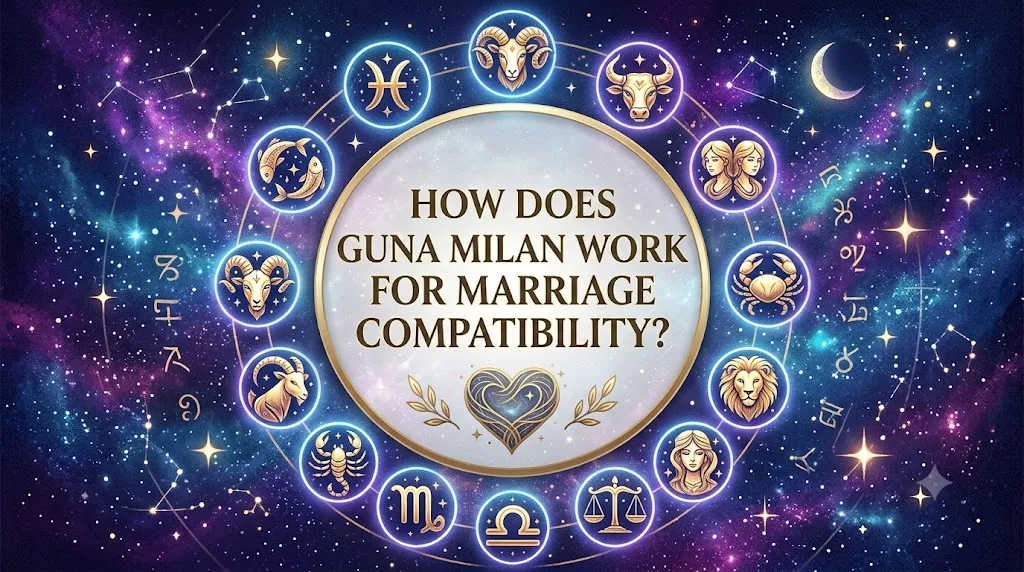
Here's where it gets specific. Gun Milan is the traditional method of matching horoscopes for marriage compatibility. "Gun" means qualities, and "Milan" means matching. So you're literally matching qualities.
The system looks at 36 different points across eight categories. Each category examines a different aspect of compatibility: spiritual connection, mutual attraction, health compatibility, sexual intimacy, mental friendship, temperament matching, emotional love, and even considerations for future children.
Each category has points assigned to it, totaling 36. The more points a couple scores, the more compatible they're considered. Generally, 18 points or above is considered acceptable for marriage, though many families look for higher scores.
Why Families Still Do This
You might wonder why this practice hasn't died out in our modern age of dating apps. Here's the thing: marriage in many cultures isn't just about two people falling in love. It's about two families coming together, and families want some reassurance.
Parents have seen marriages fall apart. They've watched friends struggle with incompatibility issues that weren't obvious during the dating phase. So when there's a system that claims to predict potential problems, they're like, "Why not check?"
It's also about tradition and cultural continuity. For many families, skipping the compatibility check would feel like skipping an important ritual.
Modern Couples and Traditional Checks
Here's where it gets interesting. Even couples who found each other on dating apps often agree to the compatibility check to keep their families happy. It's become less about "should we marry?" and more about "what should we be aware of?"
Smart couples use it as a tool for insight, not a dealbreaker. Low compatibility score? They don't necessarily call off the wedding. Instead, they ask questions: "What specific areas does this highlight as challenging? How can we work on those?"
It's like getting a relationship forecast. If you know storms are coming, you can prepare instead of being blindsided.
What Happens When Scores Are Low?
So what if the Gun Milan score comes back at 12 points instead of the desired 20+? Does that mean the wedding's off? Not necessarily, though it can create family drama.
Some families are strict about it. A low score means no wedding, end of discussion. Other families are more flexible, especially if the couple is determined and committed.
There are also remedies suggested for improving compatibility, like wearing certain gemstones, performing specific rituals, or timing the wedding during favorable periods. Whether this work is up for debate, but they give families a sense that something is being done.
The Practical Benefits Nobody Talks About
Strip away the mystical elements for a second. The compatibility check forces couples and families to have important conversations. Topics that might never come up casually suddenly get discussed:
Financial management styles. Family planning and children. Career ambitions and compromises. How each person handles stress and conflict. Long-term goals and values.
Even if you don't believe planets influence any of this, having these conversations before marriage is valuable. The birth chart analysis often becomes a framework for discussing real compatibility factors that matter.
When It Gets Problematic
Let's be real: sometimes this system is used to justify prejudices or control. Families might claim incompatibility when they really just don't like the match for other reasons.
Or it becomes a tool for manipulation. "The charts say you'll have problems, so you should marry our choice instead." That's not about compatibility, that's about control.
The system works best when used as one input among many, not as the final authority. Your lived experience with someone, your communication, and your shared values matter more than any chart reading.
How to Approach It If You're Facing This
If you're in a relationship and families want to check compatibility, here's a balanced approach:
Go along with it, especially if it's important to your family. Fighting it creates unnecessary conflict. See it as gathering information, not receiving orders.
Ask questions. What specific areas are flagged? Are these things you've noticed in your relationship? Can you work on them together?
Remember that these systems are descriptive, not prescriptive. A chart might highlight potential challenges, but you and your partner get to decide how you handle those challenges.
Don't let it override what you know to be true about your relationship. You've spent time with this person. You know if you're compatible. The analysis should inform your perspective, not determine it.
Bottom Line
Checking compatibility before marriage is a tradition that's survived because it offers families reassurance and couples a framework for important conversations.
Whether you believe in astrological influence or see it as a cultural practice, going through the process can be valuable. It makes people pause and think seriously about whether two people are genuinely suited for a lifetime together.
Just remember: the best indicator of compatibility isn't a score out of 36. It's how you communicate, resolve conflicts, support each other's growth, and choose each other every day. The chart might tell you where to pay attention, but you and your partner are the ones who actually do the work.
If the stars say you're perfect together, awesome. If they say you'll have challenges, well, that's marriage anyway.



























Sign in to leave a comment.