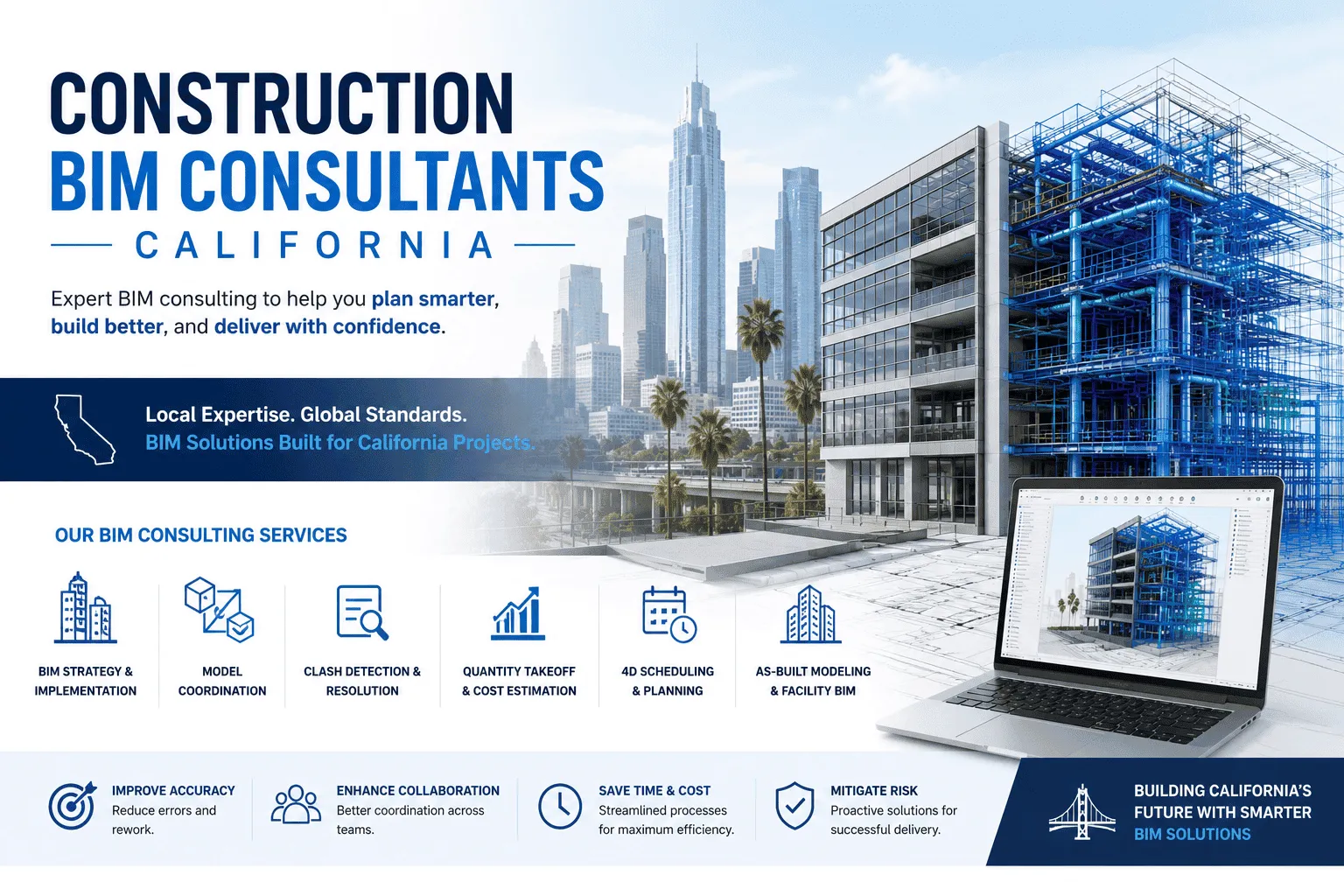

Building a modern structure requires immense precision, tight coordination, and the right technology. Building Information Modeling (BIM) has completely transformed the construction industry by replacing traditional flat 2D blueprints with dynamic, data-rich 3D models. This digital shift allows architects, engineers, and contractors to plan and execute projects with unprecedented accuracy.
However, adopting this technology effectively requires specialized knowledge. Simply purchasing the software does not guarantee a successful rollout. Teams need guidance to integrate these tools into their daily workflows without disrupting ongoing work.
This post explains how construction BIM consultants California enhance project efficiency from the initial design phase to the final handover, ensuring teams get the maximum return on their technological investment.
The Role of BIM Consultants
A BIM consultant acts as the bridge between advanced construction software and real-world building practices. They are digital construction experts who guide architectural, engineering, and construction firms through the process of implementing and managing BIM technologies.
Their expertise is crucial for successful BIM implementation because they understand both the software parameters and the practical realities of a construction site. They set up the initial project environments, establish naming conventions, and dictate how different disciplines will share their models. Without a consultant's guidance, firms often struggle with misaligned data, poor user adoption, and inefficient processes that negate the benefits of the software.
Key Ways BIM Consultants Enhance Project Efficiency
BIM consultants bring a structured approach to project management that directly translates into measurable efficiency gains.
Improved Collaboration and Communication
Construction projects involve dozens of stakeholders, from structural engineers to HVAC specialists. BIM facilitates better information exchange by providing a single source of truth—a centralized digital model that everyone works from. Consultants set up these collaborative workflows, ensuring that when an architect moves a wall, the mechanical engineer is immediately aware of the change. This prevents communication silos and keeps the entire project team aligned.
Enhanced Visualization and Design Review
Traditional blueprints leave a lot of room for interpretation. 3D modeling improves understanding and decision-making by allowing stakeholders to virtually walk through a building before any physical materials are ordered. Consultants lead regular design review meetings using these models. They guide clash detection processes, running software checks to see if, for example, a plumbing pipe intersects with a steel beam. Finding and resolving these clashes digitally prevents expensive physical corrections on the job site.
Cost and Time Savings
Efficiency ultimately comes down to saving time and money. BIM consultants help achieve this through several avenues:
- Reduced re-work: Early detection of design errors means fewer tear-downs and rebuilds on site.
- Optimized scheduling: By linking the 3D model to the construction schedule (known as 4D BIM), consultants help managers visualize the sequence of construction, ensuring materials and labor are deployed efficiently.
- Accurate cost estimations: Consultants use the model to extract precise material quantities, known as quantity take-offs. This allows for highly accurate cost estimations (5D BIM) and prevents over-ordering materials.
Risk Mitigation and Problem Solving
Every construction project carries risk, whether financial, safety-related, or structural. BIM consultants help identify potential issues long before construction begins. If a complex architectural feature poses a structural challenge, the consultant can help the engineering team simulate different load-bearing strategies within the digital model. They develop targeted strategies for complex challenges, removing the guesswork from the building process.
Data Management and Analytics
A building's lifecycle extends far beyond its construction phase. BIM allows teams to embed crucial data into the model, such as maintenance schedules, equipment warranties, and material specifications. Consultants leverage BIM for this lifecycle data management (6D and 7D BIM). They help analyze project performance, track key metrics, and predict outcomes, passing a highly valuable, data-rich model over to the facility managers upon project completion.
BIM in the California Construction Landscape
The construction environment in California is heavily regulated. The state enforces strict seismic codes, complex zoning laws, and aggressive environmental standards like CALGreen and Title 24 energy requirements.
Construction BIM consultants California are incredibly valuable in this specific market. They use BIM software to simulate energy performance and ensure designs meet local sustainability mandates before the permitting process begins. Furthermore, California's dense urban centers often require building on tight lots with complex logistics. BIM consultants use spatial modeling to plan material deliveries and crane placements, ensuring smooth operations in crowded city environments. Many major infrastructure and commercial projects across the state owe their on-time delivery to the rigorous application of BIM protocols.
Choosing the Right BIM Consultant in California
Selecting the right partner is vital for your project's success. When evaluating a BIM consultant, look closely at their experience, technical expertise, and past portfolio. They should have a proven track record of managing projects similar in size and scope to yours.
Local knowledge is also a massive asset. A consultant who understands the nuances of California's building codes and market dynamics will save you significant administrative headaches. Partnering with an established firm like Chudasama Outsourcing can provide your team with the specialized skills needed to handle complex modeling, drafting, and coordination tasks. The right partner will not just operate the software; they will proactively improve your overall construction strategy.
Building a Smarter Future
The impact of BIM consultants on project efficiency is undeniable. By fostering collaboration, preventing costly errors, and optimizing schedules, these professionals turn ambitious architectural visions into predictable, profitable realities. As building codes become stricter and construction techniques grow more complex, the reliance on digital modeling will only increase. For construction firms operating in California and beyond, embracing BIM consulting is no longer an optional upgrade—it is a fundamental requirement for staying competitive in a rapidly evolving industry.



























Sign in to leave a comment.