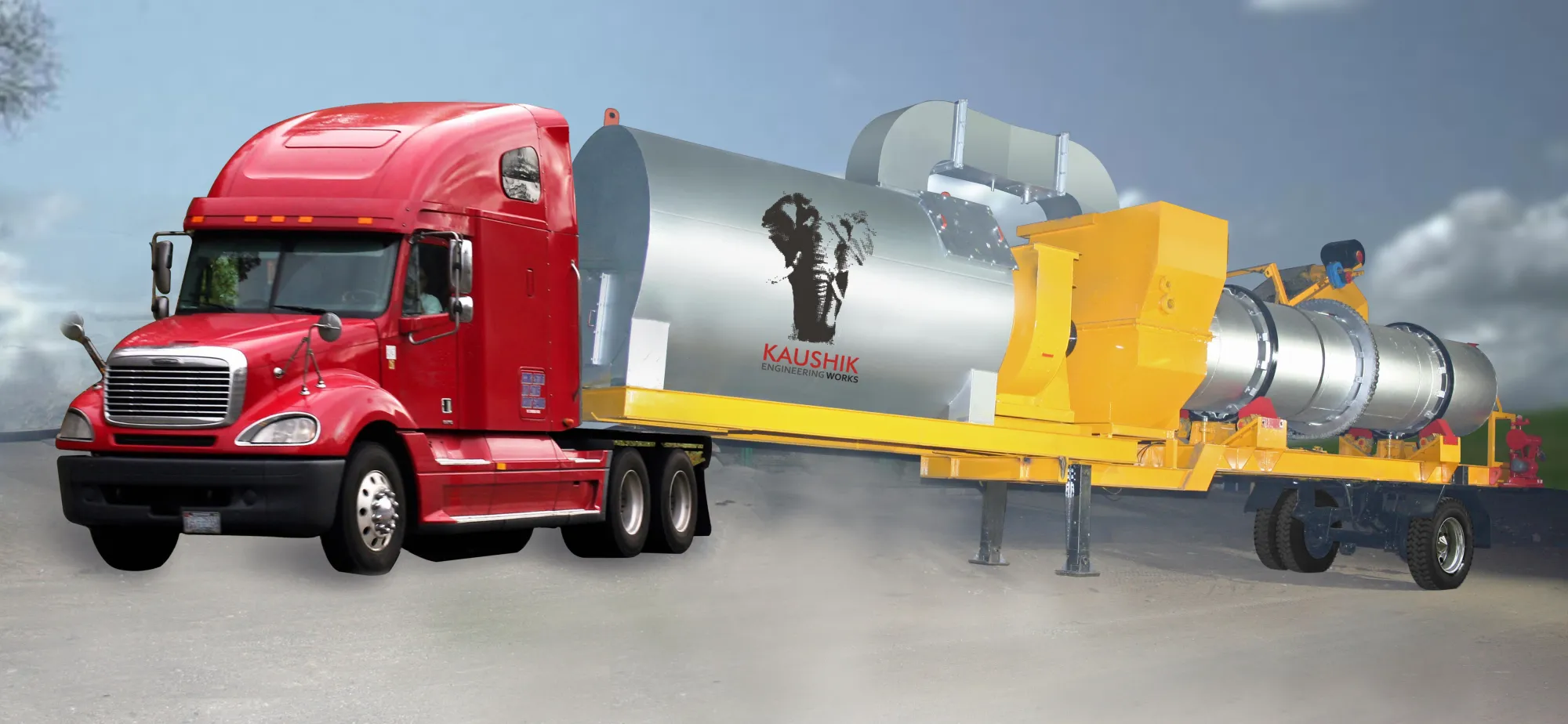

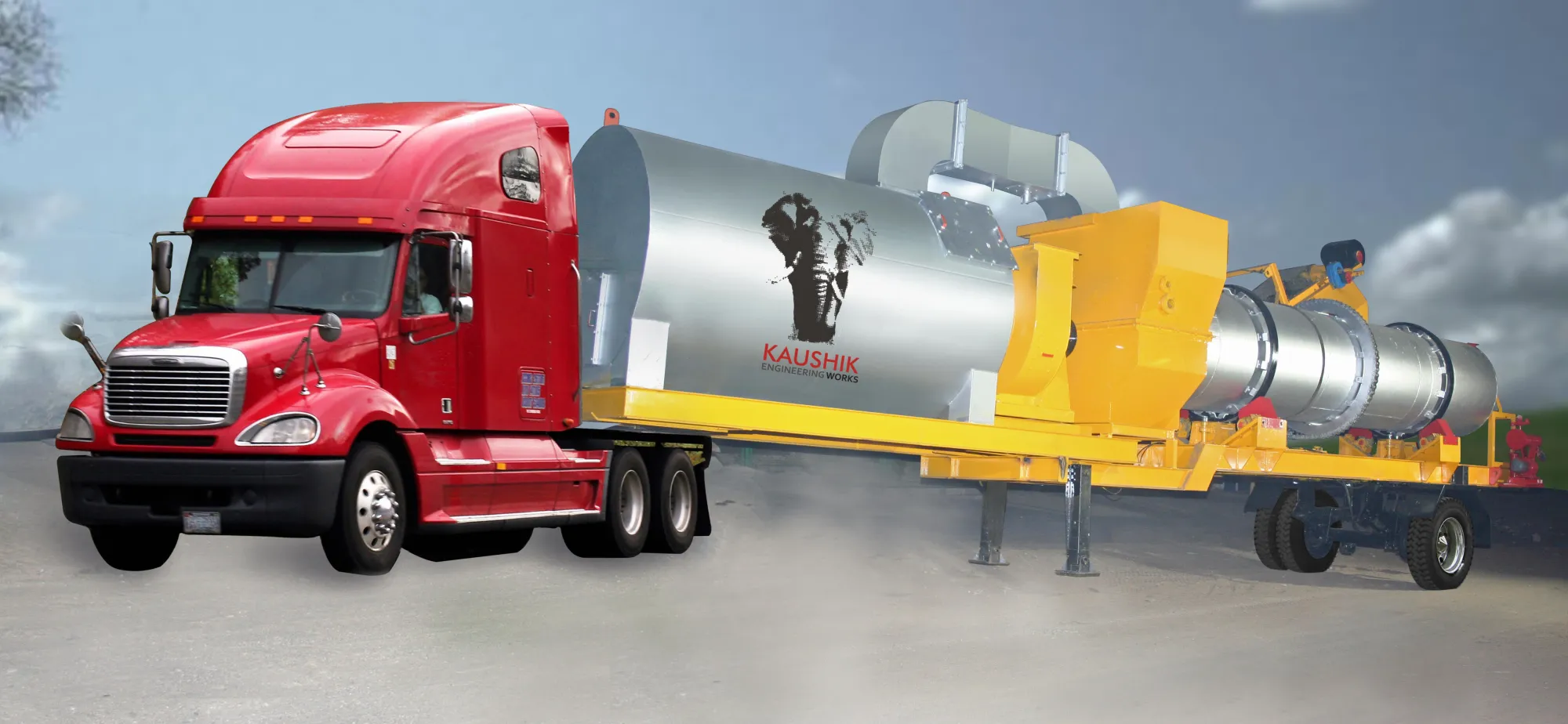
Ask any road contractor where their budget quietly leaks, and it's rarely the paving itself. It's everything that happens before the first ton of asphalt is laid — site mobilisation, transport logistics, and the weeks it can take to get a plant operational near the project. For contractors handling rural roads, emergency repairs, or infrastructure jobs on tight deadlines, that setup window is often the single biggest hidden cost on the entire project.
That's precisely the gap that fast-deploy mobile plants are closing — and it's reshaping how contractors plan projects from day one.
What a Slow Setup Actually Costs You
A stationary asphalt plant makes sense when you're running continuous, long-term operations near a city centre with steady demand. But drop that same model into a remote road upgrade or a short-notice repair job, and the cracks start showing before production even begins:
- Long haul distances from the nearest fixed plant, which drive up fuel costs and risk the mix losing temperature before it reaches the paver
- Weeks lost to setup — foundations, permits, and installation before a single batch is produced
- Capital tied up in infrastructure that doesn't move with you to the next contract
- No flexibility once the plant is built, it's committed to that one location
For contractors juggling several smaller contracts across a region, these fixed costs stack up fast — often eating into margins before the project has even properly started.
Why 24-Hour Setup Changes the Math
This is where modern Mobile Drum Mix Plants are shifting the equation. Built specifically for rapid transport and reassembly, these units are designed to go from delivery to full production in as little as 24 hours — a fraction of the time a traditional plant needs.
That kind of turnaround doesn't just save a few days on paper. It changes how a project gets planned entirely. Instead of scheduling weeks around getting a plant operational, contractors can position a Mobile Drum Mix Plant directly on or near the job site, start producing mix almost immediately, and sidestep the transport losses that come with hauling material long distances from a fixed facility.
This shift isn't isolated to a handful of projects, either. Demand for mobile and modular asphalt production has been growing significantly faster than the wider equipment sector, largely because contractors need machinery that can be deployed quickly on remote or temporary sites without compromising on production quality.
Where Fast Setup Delivers the Biggest Payoff
Not every job needs this level of speed, but for certain project types, cutting setup time from weeks to hours makes a measurable difference:
Rural and remote road projects — When the nearest fixed plant is hours away, producing mix on-site eliminates both the transport bill and the quality loss that comes with long haul times.
Emergency and disaster-response repairs — When a road needs reopening fast, a multi-week plant setup simply isn't an option. A rapid-deploy unit can be running within a day or two of reaching site.
Short-duration contracts — For projects with a fixed end date, sinking capital into permanent plant infrastructure rarely pays off. A mobile setup scales up for the job and moves on, without leaving a stranded asset behind.
Multi-site operations — Contractors running several smaller jobs across a wider region can relocate a single plant between sites instead of depending on multiple fixed facilities or constant long-distance deliveries.
The Efficiency Gains Beyond Speed
Faster deployment is the headline, but newer mobile systems bring other cost advantages that matter just as much over the life of a project:
- Lower capital outlay than a stationary plant, since there's no permanent foundation or structure to build
- More efficient burners and mixing systems, which cut fuel consumption and reduce emissions
- Compatibility with recycled asphalt pavement (RAP), lowering raw material costs while supporting sustainability requirements on public tenders
- A smaller physical footprint, useful on sites with limited space or strict environmental conditions
For contractors bidding on government infrastructure work, these factors are increasingly part of the evaluation criteria — not just the unit price, but how fast the plant can be mobilised and how efficiently it runs once it's there.
Working Out Whether It's Right for Your Next Job
Before defaulting to the nearest fixed plant, it's worth running the numbers on a mobile setup if your project involves:
- A site well beyond a short haul from existing asphalt infrastructure
- A tight delivery timeline where a multi-week setup delay isn't workable
- A short-term contract where permanent infrastructure doesn't justify the spend
- Several smaller jobs spread across a wider geographic area
When you line up transport cost, setup time, and equipment investment side by side, the case for moving production to the site — instead of moving material to the project — often becomes clear faster than expected.
Kaushik Engineering Works has been helping contractors evaluate exactly this kind of trade-off, matching plant configuration and setup timelines to the realities of each project rather than defaulting to a standard approach.
Frequently Asked Questions
1. How is a 24-hour plant setup actually achieved?
Modern mobile drum mix plants are engineered with modular components — pre-assembled sections, standardised connections, and simplified foundations — that allow the unit to be transported and reassembled far faster than a traditional stationary plant, which typically requires weeks of construction work.
2. Does faster setup mean lower asphalt quality?
No. The core mixing process in a mobile drum mix plant is comparable to a stationary plant. If anything, producing mix closer to the paving site tends to improve consistency, since it reduces the temperature loss that happens during long-distance transport.
3. Is a 24-hour setup plant only useful for small or emergency jobs?
Not anymore. While they're especially valuable for remote or time-sensitive work, many mobile plants now offer production capacities suitable for larger highway and infrastructure projects, making rapid setup an advantage across a much wider range of contracts.
Weighing up a fixed plant against a fast-deploy mobile setup for your next road project? Getting the setup timeline and cost comparison right early often makes the biggest difference to overall project margins.
























Sign in to leave a comment.