

Couple psychotherapy is more than just a method to resolve conflicts—it is a transformative process that helps partners build emotional intimacy, trust, and resilience. In today’s fast-paced world, relationships are constantly tested by stress, communication breakdowns, and external pressures. With the guidance of a skilled therapist, couples can not only resolve conflicts but also strengthen the emotional bonds that hold them together. For those seeking support, couple psychotherapy Singapore offers a safe and professional space where partners can work through challenges and rediscover connection.

Understanding the Core of Couple Psychotherapy
At its foundation, couple psychotherapy is a structured therapeutic approach where both partners work collaboratively with a trained professional to explore their emotional patterns, communication habits, and relationship dynamics. Unlike individual therapy, which focuses on personal growth, couple therapy emphasizes shared healing and mutual understanding.
A therapist acts as a neutral facilitator, guiding couples through difficult conversations, uncovering hidden emotional triggers, and helping both partners express themselves without fear of judgment. This creates a safe space where vulnerability can turn into strength.
Why Emotional Bonds Are Crucial in Relationships
Emotional bonds are the invisible threads that sustain a partnership. When strong, they provide:
- Trust and Security: Knowing that your partner understands and supports you fosters confidence in the relationship.
- Effective Communication: Couples with strong emotional connections are better at resolving conflicts and expressing needs.
- Shared Resilience: Emotional closeness helps couples face external challenges—financial stress, family issues, or work pressures—together.
- Deeper Intimacy: Physical closeness and emotional safety are deeply interlinked, making relationships more fulfilling.
When these bonds weaken, misunderstandings multiply, leading to resentment, distance, and disconnection. Couple psychotherapy helps repair and reinforce these bonds.
How Couple Psychotherapy Strengthens Emotional Bonds
1. Enhancing Communication Skills
Many relationship problems stem from poor communication. Through therapy, couples learn to listen actively, express emotions without blame, and understand nonverbal cues. By improving communication, partners feel heard, valued, and respected.
2. Addressing Underlying Emotional Wounds
Unresolved past hurts—whether from childhood experiences, previous relationships, or betrayals within the current partnership—can create invisible barriers. A therapist helps partners process and heal these wounds, allowing the relationship to move forward without the weight of past pain.
3. Cultivating Empathy and Emotional Understanding
Empathy is at the heart of any healthy relationship. In therapy, couples practice stepping into each other’s shoes, learning to validate emotions rather than dismiss them. This deepens the sense of connection and compassion between partners.
4. Rebuilding Trust After Conflict or Betrayal
Trust is fragile but can be rebuilt with consistent effort. Couple psychotherapy provides strategies for restoring faith in each other, creating transparent communication, and establishing boundaries that prevent repeated hurt.
5. Strengthening Intimacy and Affection
Intimacy often suffers when emotional bonds weaken. Therapy encourages couples to reconnect emotionally, which naturally enhances physical intimacy. By nurturing emotional closeness, partners rediscover affection, passion, and tenderness.
6. Building Conflict Resolution Skills
Disagreements are inevitable, but how couples handle them makes the difference. Therapy equips couples with tools for constructive conflict resolution, ensuring disagreements become opportunities for growth rather than destruction.
7. Developing Shared Goals and Values
When partners align on long-term goals and values, their emotional connection deepens. Therapy encourages couples to discuss dreams, expectations, and priorities, creating a sense of unity and direction.
The Role of Emotional Safety in Couple Therapy
One of the most powerful outcomes of couple psychotherapy is the creation of emotional safety. When partners feel safe, they are more willing to express vulnerability, admit mistakes, and share insecurities. Emotional safety nurtures trust, intimacy, and openness—key ingredients for lasting love.
Therapists guide couples to replace criticism with compassion, defensiveness with openness, and avoidance with honest dialogue. This shift transforms the relationship from a battleground into a safe haven.
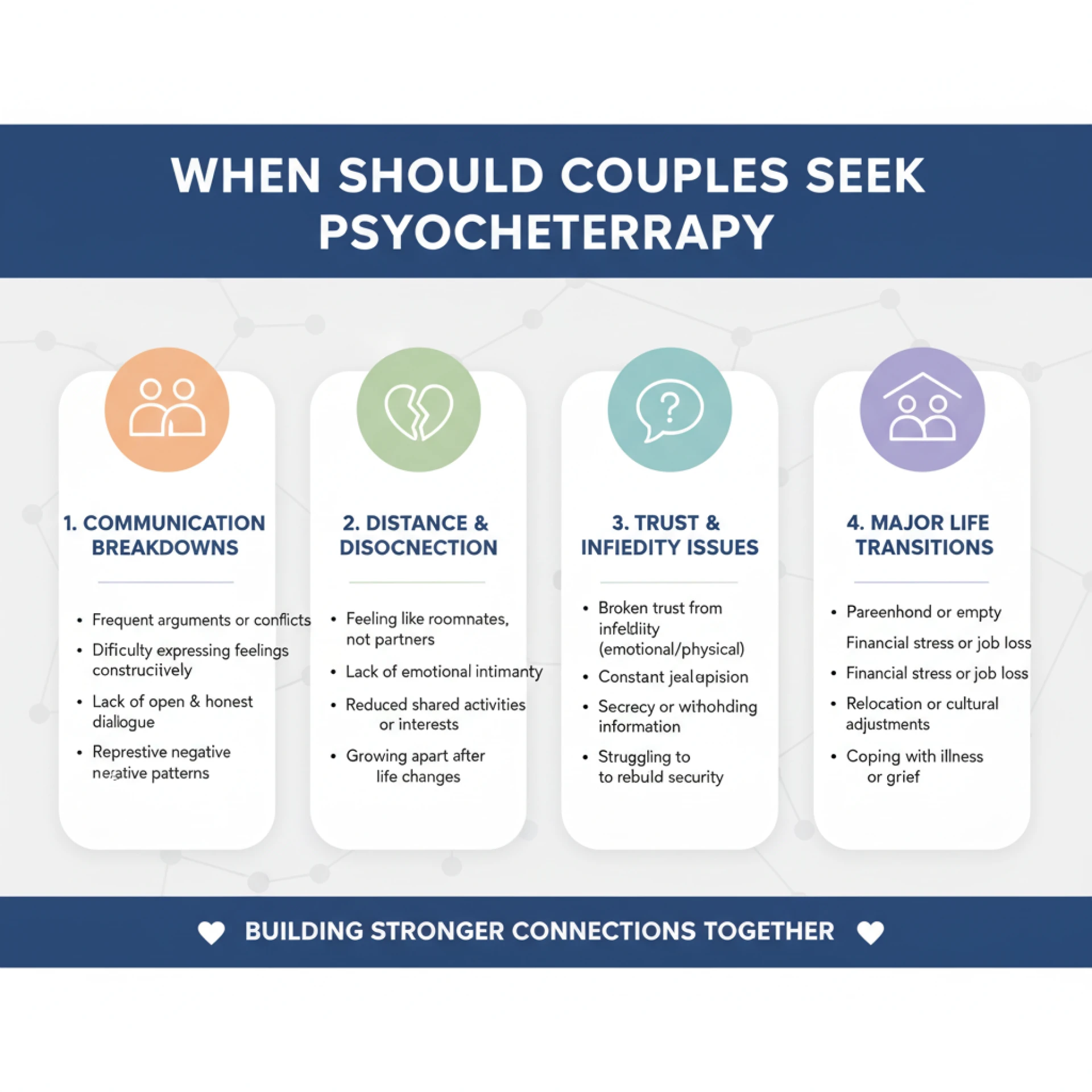
When Should Couples Seek Psychotherapy?
Couple psychotherapy is not only for relationships in crisis. It benefits couples in different stages:
- Early in the relationship: To build strong foundations of trust and communication.
- During transitions: Such as marriage, parenthood, relocation, or career changes.
- After conflicts or betrayals: To rebuild trust and repair emotional damage.
- When feeling distant: To reignite intimacy and strengthen bonds.
- As preventive care: To maintain relationship health and resilience.
Seeking therapy early often prevents problems from escalating, turning challenges into opportunities for deeper connection.
Different Approaches to Couple Psychotherapy
There are several therapeutic models, each with unique methods for strengthening emotional bonds:
- Emotionally Focused Therapy (EFT): Focuses on identifying and reshaping negative emotional cycles to build secure attachments.
- Gottman Method: Uses research-based strategies to improve communication, manage conflict, and increase intimacy.
- Cognitive-Behavioral Couple Therapy (CBCT): Helps couples identify thought patterns that influence behavior and teaches healthier responses.
- Imago Relationship Therapy: Emphasizes empathy and conscious communication to heal unresolved childhood wounds.
Each approach is tailored to the couple’s unique needs, ensuring personalized strategies for strengthening the relationship.
The Long-Term Benefits of Couple Psychotherapy
Couple psychotherapy offers lasting benefits that extend beyond conflict resolution. These include:
- Deeper Emotional Intimacy: Couples experience greater closeness and affection.
- Resilience Against Stress: Strong bonds help couples withstand external challenges.
- Improved Relationship Satisfaction: Partners feel more fulfilled and supported.
- Positive Impact on Families: Children benefit from witnessing healthy communication and love between parents.
- Personal Growth: Individuals also develop better self-awareness, emotional regulation, and interpersonal skills.
Final Thoughts
Couple psychotherapy is not just about fixing problems—it is about building a stronger, more fulfilling relationship. By fostering trust, empathy, communication, and intimacy, therapy helps couples strengthen their emotional bonds and create a resilient partnership that thrives in the face of challenges.
For couples seeking lasting connection and growth, psychotherapy provides the guidance, tools, and safe space to achieve it. Strong emotional bonds are the cornerstone of love, and with therapy, they can be nurtured to last a lifetime.



























Sign in to leave a comment.