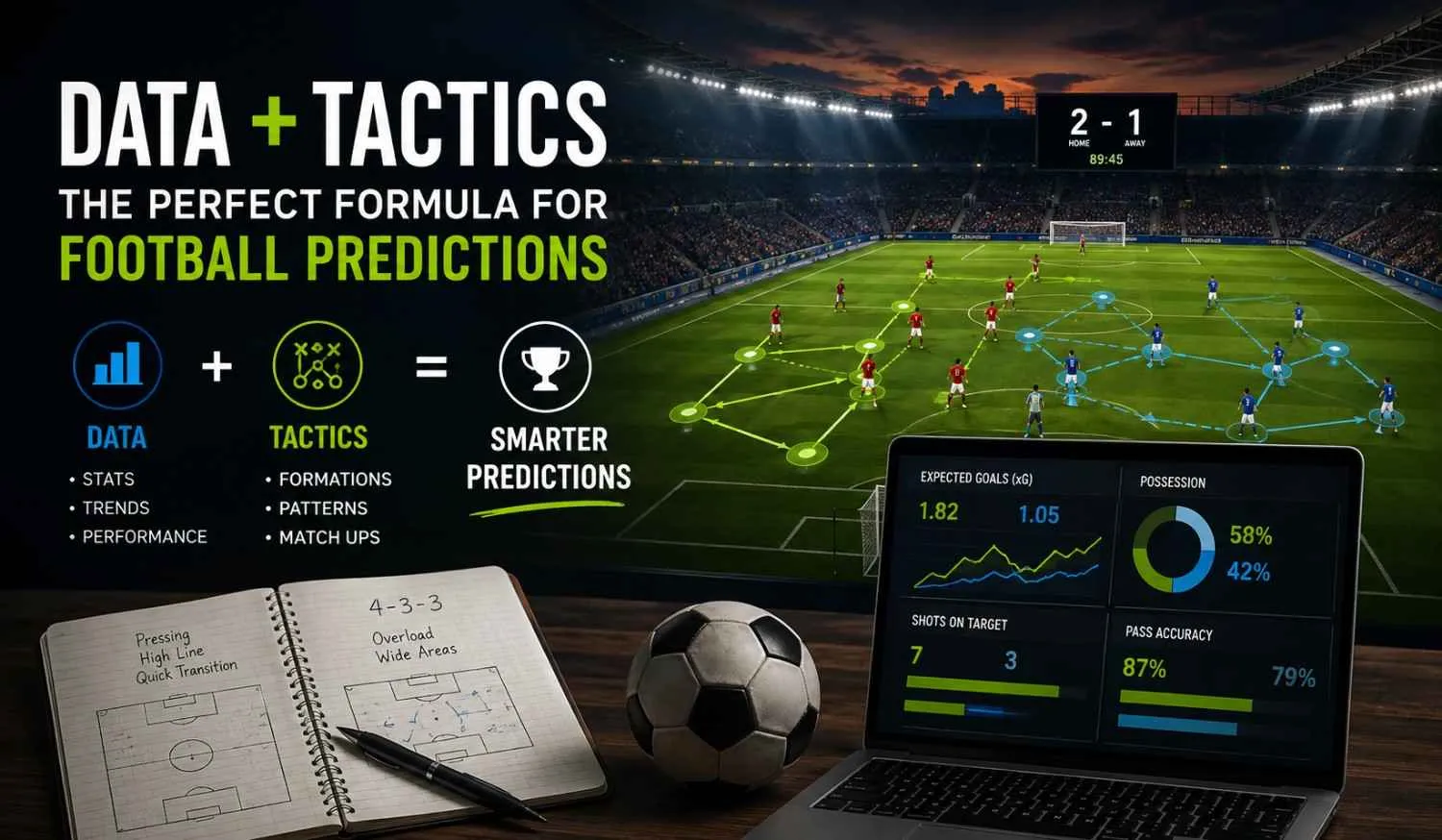

Football predictions become far more interesting when numbers meet tactics. Statistics can tell us that a team creates plenty of chances, controls possession, or struggles defensively, but they do not always explain why. That is where tactical analysis enters the picture.
At Best Previews, the stronger approach is to look beyond a single statistic and understand the story underneath it. Good Football match Insights come from connecting recent form, team data, tactical systems, player roles, and match situations. After all, a spreadsheet may look beautifully confident — right up until a footballer decides to ignore it.
What Data Tells Us About a Match
Statistics provide the foundation for analysing an upcoming fixture. Goals scored and conceded, expected goals (xG), shots, possession, passing accuracy, chances created, and defensive numbers can reveal important performance patterns.
Recent results can also show whether a team is improving or struggling. However, results alone can sometimes be misleading. A side might win 2-0 while creating very little, while another team could lose despite producing several high-quality chances.
That is why data should be treated as evidence rather than a final verdict. Numbers tell us what happened; analysis must investigate the reason behind it.
Why Tactical Trends Matter
Tactical trends provide the missing context. A team might have excellent possession statistics because it patiently builds from the back, while another could dominate the ball without creating meaningful opportunities.
Formation, pressing intensity, defensive positioning, attacking width, midfield structure, and transition play can dramatically influence a match.
For example, a team that relies heavily on a high defensive line may struggle against opponents with quick forwards and effective counterattacking patterns. Likewise, a side vulnerable under pressure could face serious problems against an aggressive pressing system.
These tactical relationships often reveal things that basic statistics cannot.
Combining Statistics With Tactical Analysis
The most useful approach is to make statistics and tactical observations work together.
First, we examine the numbers. Which team creates more chances? Which side allows more shots? How consistent has each defence been?
Next comes the tactical question: How are these numbers being produced?
If a team consistently creates chances from wide areas, we can examine whether the opponent has vulnerable fullbacks. If another team frequently concedes after losing possession, its transition defence deserves closer attention.
This combination creates stronger football prediction tips because the analysis is based on both measurable evidence and tactical context.
Tactical Trends That Can Change a Prediction
Several tactical patterns can have a major influence on a fixture.
A high press against a weak buildup team is one obvious example. If defenders struggle to play through pressure, turnovers can quickly become scoring opportunities.
Another important matchup involves a high defensive line facing fast attackers. Possession may belong to one team for long periods, but a few successful counterattacks could completely change the balance.
Set pieces, midfield overloads, attacking width, and defensive transitions can also become decisive. Sometimes a seemingly small tactical adjustment changes everything. Anyone who has watched a manager switch formation at halftime and suddenly look like a tactical genius will understand the point — football has a funny way of making simple ideas look revolutionary.
Recent Form Needs Context
Recent form is useful, but it should never be examined in isolation. Five consecutive wins look impressive, but the quality of opponents, performances, injuries, and tactical changes behind those results matter.
The same applies to a losing streak. A team may have collected poor results while consistently creating better chances than its opponents.
This is where statistical trends become particularly valuable. Expected goals, shot quality, chance creation, and defensive efficiency can help determine whether recent results genuinely reflect performance.
Combining these figures with tactical analysis gives a more balanced view of what may happen next.
Team News Can Change Everything
No prediction is complete without checking team news. Injuries, suspensions, rotation, and changes to the starting lineup can completely alter a tactical system.
Losing a creative midfielder may reduce a team's ability to progress through the centre. Missing a fullback could weaken defensive coverage on the wing. Even one absent striker can change how aggressively a team presses.
This is why historical data should be treated carefully when major personnel changes occur. A statistic from last season may tell us something about a team — but it cannot defend a corner kick this weekend.
Building a More Reliable Football Prediction
A practical prediction process can combine several important factors:
- Review recent performance and statistical trends.
- Examine attacking and defensive numbers.
- Study each team's tactical identity.
- Analyse potential tactical mismatches.
- Check injuries, suspensions, and expected lineups.
- Consider home and away performance.
- Look at how each side performs against similar tactical systems.
- Develop several realistic match scenarios.
The objective is not to pretend that football can be predicted with absolute certainty. It cannot. The objective is to build a logical assessment based on as much relevant evidence as possible.
The Best Previews Approach
Best Previews focuses on connecting statistics with the tactical details that make a match unique. Instead of simply pointing toward a team with better numbers, the analysis should explore how those numbers were created and whether the same patterns are likely to appear again.
That means looking at form, team news, tactical setups, player roles, historical context, and statistical performance together.
The strongest previews do not simply say what might happen. They explain why a particular outcome appears more likely — while leaving enough room for football to produce its usual dose of chaos.
FAQs
What is the role of data in football predictions?
Data provides measurable evidence about team and player performance. Statistics such as xG, shots, goals, possession, and chance creation help identify important trends before a match.
Why is tactical analysis important?
Tactical analysis explains the reasons behind statistical patterns. It helps identify how formations, pressing, transitions, and player positioning could influence the matchup.
Can statistics alone predict a football match?
No. Statistics are valuable but cannot account for every variable. Injuries, tactics, individual errors, game-state changes, and unexpected moments can all influence the result.
Which statistics are most useful for predictions?
Expected goals, shots, chance creation, goals scored and conceded, defensive performance, possession, and recent form can all provide useful information when considered in the correct context.
How do tactical trends improve predictions?
Tactical trends help identify potential advantages and weaknesses. For example, a strong counterattacking team may create problems for an opponent that consistently plays with a high defensive line.
What makes a football prediction reliable?
A reliable prediction combines statistics, tactical analysis, team news, recent form, player availability, and match context. It should explain the reasoning rather than rely on one statistic.
Conclusion
Data gives us the clues, while tactical analysis helps explain the story. When both work together, football predictions become more thoughtful, structured, and useful.
The numbers might suggest one outcome, but tactical matchups can reveal another possibility. That is why strong analysis looks beyond the obvious figures and asks what those figures actually mean.
Football will always have the final word — usually at the least convenient moment. But by combining evidence with tactical understanding, we can at least make our predictions with considerably more sense and considerably less guesswork.


























Sign in to leave a comment.