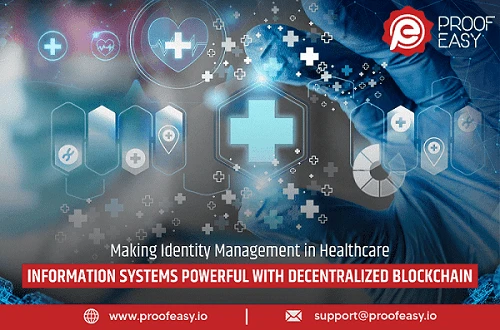

Healthcare information systems are vast and not very long ago were created and stored mainly on paper. While the migration of information from paper-based methods to computer-based systems was embraced worldwide, this progress has led to a future of nearly “paperless era”.
Additionally, several other trends have been observed in the healthcare information sector such as inclusion of patients and consumers to use healthcare information systems rather than just healthcare professionals. All of these have resulted in many challenges that we see today.
Now in the context of virtual healthcare, identity management has emerged as a prime approach to carry out healthcare operations. However, the internet protocols that exist are not really designed to sustain built-in identity management. Therefore, the outcome has been many challenges related to security, privacy and usability.
But there is a potentially strong technology today that can solve these issues and that is decentralized blockchain tech. In this post, we will delve into how this solution can revolutionize identity management in the healthcare sector, bringing forth a new era of trust and empowerment.
Impeccable Data Security
Healthcare organizations deal with an abundance of sensitive patient data, ranging from medical histories to insurance details. These valuable datasets are prime targets for hackers seeking to exploit vulnerabilities in centralized databases.
The decentralized nature of blockchain mitigates this risk by distributing data across a network of nodes. Unlike the centralized system where a single point of failure can lead to data breach, in a decentralized blockchain each data block is cryptographically linked to the previous one.
Hence, ensuring that any attempt to tamper with information is quickly detected and rejected by the network. Consequently, patients can rest assured that their personal information is safe and that only authorized personnel can access their records.
Enhanced Privacy and Consent Control
One of the most significant advantages of a decentralized blockchain in healthcare identity management is that it empowers patients to exercise greater control over their data.
With traditional systems, patients often lose ownership of their personal information once it enters a centralized database. In contrast, a blockchain-based identity management solution allows patients to grant selective access to their data through smart contracts.
These smart contracts act as permission mechanisms, ensuring that sensitive data can only be viewed by authorized parties for specific purposes, such as medical treatment or research. Patient input is more elevated in decentralized systems as it gives them the power to grant or revoke consent.
To sum things up, blockchain technology ensures that patients’ privacy is respected and protected.
Seamless Interoperability
The healthcare industry has historically faced challenges related to data interoperability. It has hindered efficient sharing of information between institutions and healthcare professionals.
But blockchain's decentralized architecture facilitates seamless data exchange and collaboration across different entities. It has the capacity to break down silos and create a comprehensive healthcare ecosystem.
Healthcare providers, insurance companies, laboratories, pharmacies and related entities can securely access necessary patient data in real-time. Therefore, leading to faster and more accurate diagnoses and treatment plans.
Identity Verification and Fraud Prevention
Over 10 million US citizens become fraud victims every year, most of it related to stolen identity. Blockchain's immutable ledger makes it an ideal tool for verifying patient identities, reducing the risk of fraud and medical identity theft.
With traditional systems, it can be challenging to ascertain the authenticity of patient information, leading to potential medical errors and unnecessary treatments. With decentralized blockchain technology, healthcare providers can verify patients' identities with certainty and ensure that medical services are provided to the right individuals.
This not only safeguards patients but also streamlines administrative processes, reducing healthcare costs and improving efficiency.
Empowering Medical Research and Public Health Initiatives
Over the years, patient data in the healthcare sector has been utilized more than just patient care management. They also serve the purpose of not only research of healthcare but even for education.
However, a major concern lies in maintaining anonymity of the patient data. Decentralized blockchain technology has the ability to make a transformative difference.
It can facilitate the secure sharing of anonymized health data for research purposes, leading to groundbreaking medical discoveries and advancements. Medical researchers can access vast datasets while respecting patient privacy, thereby accelerating the development of new treatments and therapies.
Moreover, blockchain's transparency and auditability enable authorities to monitor and respond effectively to public health crises, such as disease outbreaks or drug recalls.
Key Takeaways
In conclusion, the integration of a decentralized blockchain system for identity management in healthcare heralds a new era of trust, security, and empowerment. With the implementation of this system, healthcare institutions can ensure
Impeccable data security Grant patients greater control over their information Enhance interoperability Prevent fraud Facilitate medical research and public health initiativesIf you are looking for ways to take the next step towards ensuring security and efficiency for identity management in healthcare then ProofEasy is a great platform to help you out. Check out their website to learn how they can help you get started on the journey of effective identity management.




















Sign in to leave a comment.