
The energy industry faces some major issues at the moment; including aging infrastructure, environmental concerns, and rapid development of the renewable energy ecosystem. Dealing with these problems using conventional means is becoming increasingly difficult. Digital twin technologies provide the necessary solution. The global digital twin energy market had revenues totaling $8.6 billion in 2025 and was forecast to achieve a revenue of $38.4 billion by 2034. The number of organizations that are relying on a digital transformation partner in order to make the necessary changes keeps increasing.
So, What Is a Digital Twin?
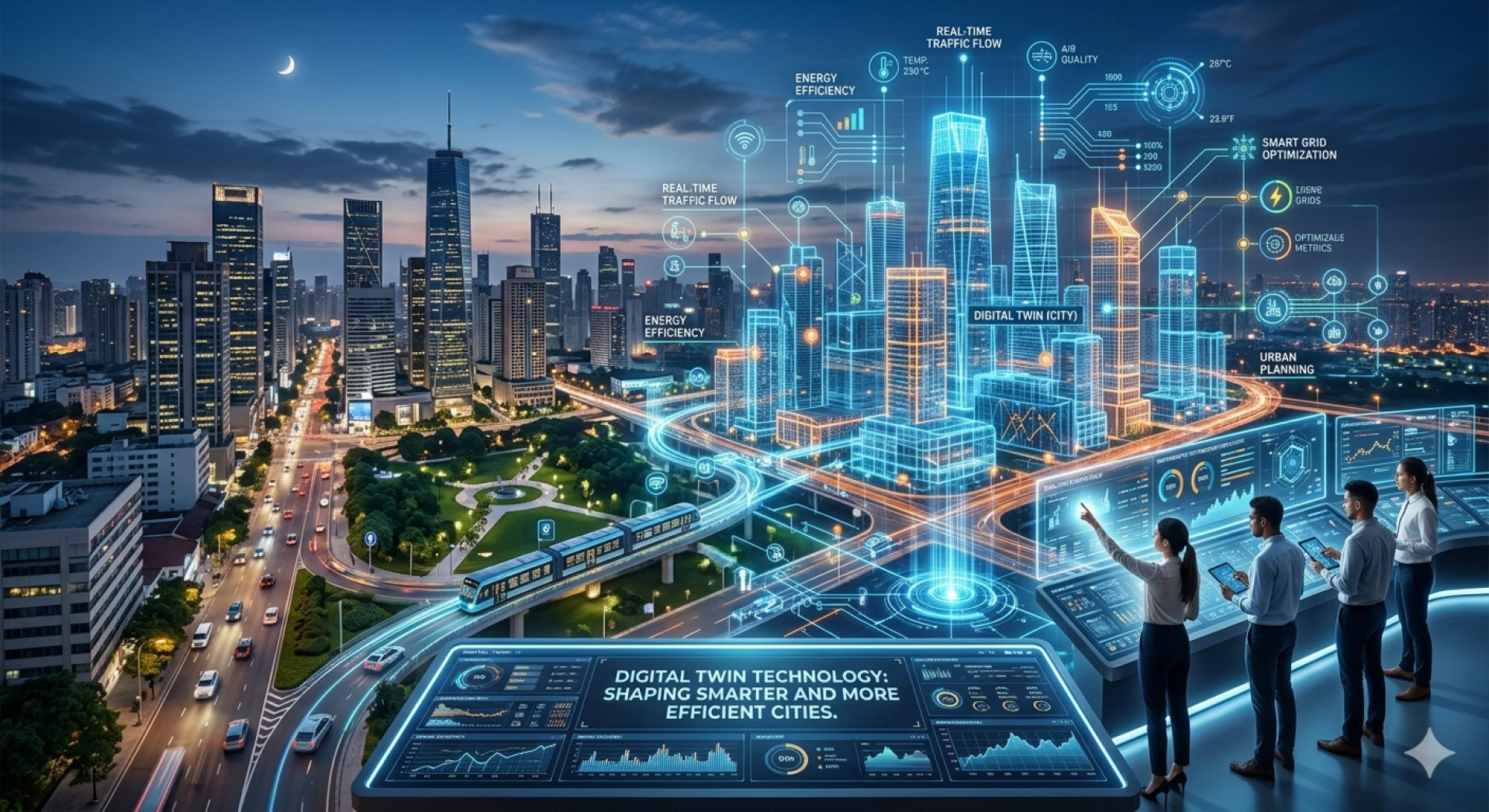
Consider the digital twin to be an actual simulation of the physical object, such as the wind turbine, boiler, or even the complete energy network. The digital twin gathers information on the condition of the real object on an ongoing basis and mirrors its actual condition at all times. The digital twin technology in the energy sector helps track degradation in turbines and boilers, optimize their operation, and minimize fuel usage. For energy networks, this technology helps detect problems in performance and optimize production capacity.
Why Renewables Need It Most
Renewable energy is the fastest-growing market segment with an anticipated CAGR of 22.5% over the forecast period up to 2034. The rise of wind and solar energy has made this market segment grow fast. These farms and facilities comprise hundreds of different units distributed over vast areas, which cannot be checked manually. With digital twins, managers can control all units simultaneously and identify any underperformers while maximizing production.
Helping With Grid Problems
As per the Energy Outlook 2026 report, there is an average loss of $325 million from energy businesses caused by the delay in connection of infrastructure to the electrical grid. As the process of setting up new capacity takes time, many businesses use the digital twin technology to maximize the use of the current capacity.
Why You Need the Right Digital Transformation Partner
The integration of digital twin technology into the energy sector can be quite difficult to achieve. This is because it requires the use of multiple systems that include sensors, data collection systems, and simulation software from various places. This is one reason why collaboration with a skilled digital transformation partner is critical. According to a survey conducted by energy utility executives in 2025, 67% of the respondents indicated that compatibility was the most critical aspect.
The perfect partner knows more than software installation; they know energy systems well enough to ensure that the technology works for you. When done correctly, digital twin technology has the potential to save energy intensive industries up to 30% on operational costs.
The Bottom Line
According to an industry survey conducted recently, as many as 58% of the senior energy executives ranked the implementation of digital twins among their highest technology priorities. There is no doubt about the rapid pace of transformation in the energy domain, and those who begin developing their capabilities around the use of digital twins today are well prepared for the future.



























Sign in to leave a comment.