

As cities grow and more residential, commercial, and mixed-use developments emerge, keeping buildings cool becomes an important challenge. Air conditioning is essential for comfort, especially in hot climates, but cooling every building independently can require significant energy, space, and maintenance. A shared cooling network offers a practical alternative by supplying cooling to several buildings from a central facility.
What Is a District Cooling Plant?
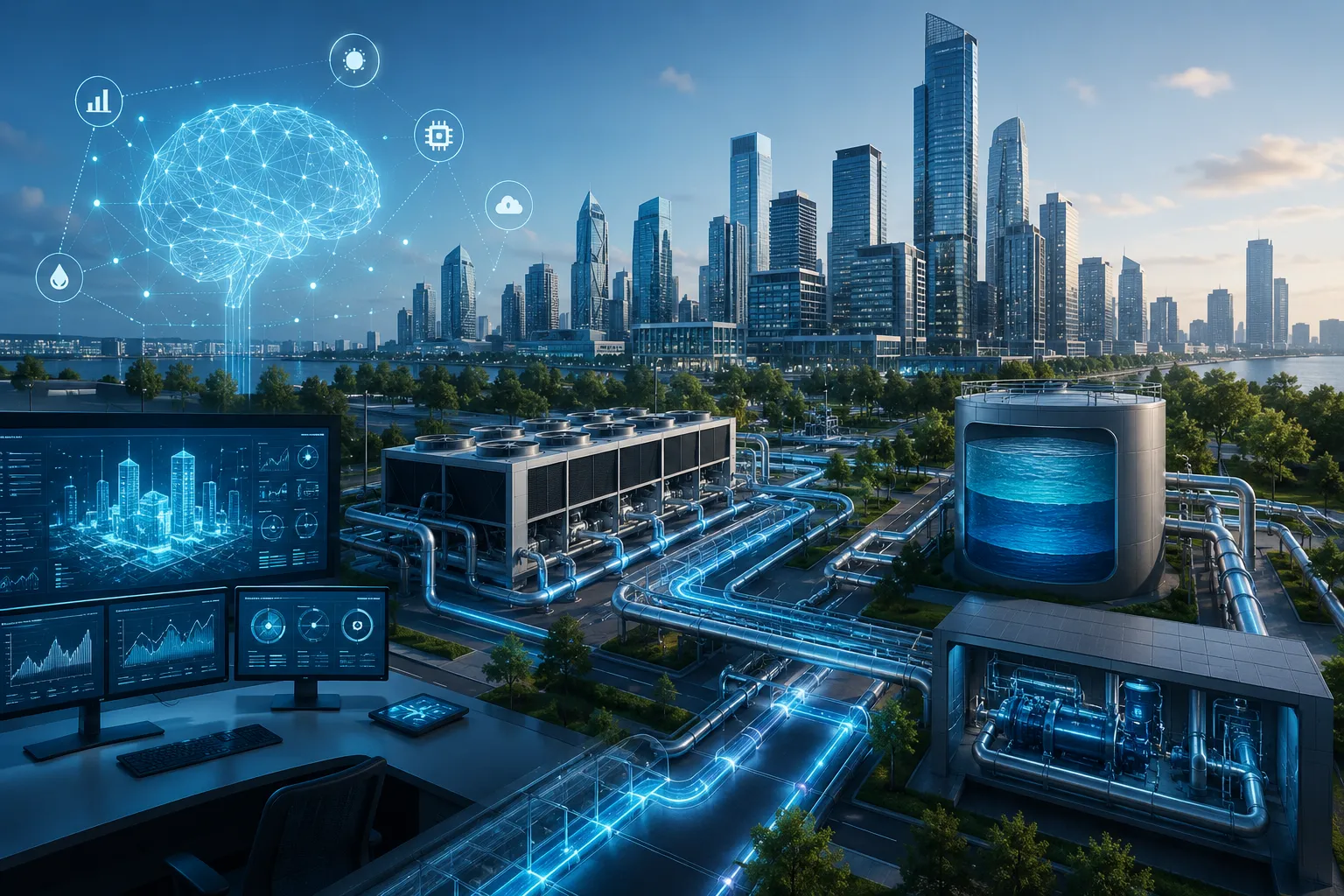
A district cooling plant is a central facility that produces chilled water and distributes it through an insulated underground pipe network to multiple buildings. Instead of installing large cooling equipment in every building, you can receive cooling from a shared system designed to serve an entire district or development.
The plant typically uses chillers, pumps, heat exchangers, and control systems to produce and deliver chilled water. Each connected building has equipment that transfers cooling to its internal air conditioning system. After absorbing heat from the building, the water returns to the plant to be cooled again.
This arrangement allows multiple properties to share cooling infrastructure while maintaining comfortable indoor temperatures.
How Does One Plant Cool Multiple Buildings?
The process involves three main stages:
1. Centralised cooling production
The plant uses chillers to remove heat from water. Depending on the design, it may also use thermal energy storage to produce and store cooling during suitable periods for later use.
2. Distribution through a pipe network
Insulated pipes carry chilled water from the plant to connected buildings. Pumps maintain the required water flow and pressure, helping deliver cooling across the network. The system can serve different buildings according to their individual cooling requirements.
3. Cooling inside each building
At each property, heat exchangers or other interface equipment transfer cooling from the network to the building's internal system. The water then returns to the central plant, where it is cooled again. This continuous cycle supports cooling across several properties without requiring every building to produce its own chilled water.
Benefits for Large Residential and Commercial Developments
One of the main advantages is reduced duplication of equipment. When you connect several buildings to a shared network, you may need less space for individual chillers and related machinery. This can free up valuable areas for parking, landscaping, and other building facilities.
A centralised system can also make maintenance easier. Instead of managing large cooling equipment across multiple properties, building operators can rely on a specialised plant operator to manage central production and distribution. Individual buildings still require maintenance of their internal air conditioning equipment.
Energy performance is another important consideration. A well-designed network can use efficient chillers, automated controls, and thermal storage to match cooling production with demand. However, actual savings depend on plant efficiency, network losses, operating conditions, and the buildings being served.
Supporting Energy Efficiency and Urban Growth
A well-planned network can serve apartments, offices, hotels, shopping centres, and other facilities with different cooling needs. By combining these requirements, operators can manage overall demand more effectively and adjust plant output as conditions change.
For you as a building owner or developer, chilled water air conditioning can reduce the need for on-site cooling production equipment. The building still needs suitable internal distribution systems, controls, and equipment to deliver cooling to occupied spaces.
District cooling can also help reduce noise from individual cooling units and limit the amount of rooftop space occupied by large equipment. Its environmental benefits depend on factors such as electricity sources, plant performance, water use, and network design.
Why Planning and Management Matter
To serve multiple buildings reliably, the network must be designed around current and future demand. Engineers assess expected cooling loads, pipeline routes, plant capacity, and the timing of peak demand. Operators also monitor temperatures, water flow, and equipment performance to maintain consistent service.
When a development expands, the network may be extended or the plant's capacity increased, provided the infrastructure can support additional demand. This makes district cooling a useful option for growing urban communities.
Conclusion
By supplying cooling from a central facility, a district cooling energy system helps multiple buildings share infrastructure, reduce equipment duplication, and manage cooling demand more effectively. With careful planning, efficient operation, and regular maintenance, it can support comfortable indoor environments while contributing to more sustainable urban development.As cities continue to grow, this approach offers a practical way to meet the cooling needs of expanding residential and commercial communities.





















Sign in to leave a comment.