
Children rarely need to be convinced to learn when learning feels like part of a great story. That is the quiet strength of bilingual picture books. Instead of presenting Spanish to young readers as a subject to master, these books weave the language into characters, pictures, emotions, adventures, and familiar moments. A child may believe they are simply discovering what happens next, while their mind is already connecting Spanish words with meaning.
Spanish English bilingual picture books are especially suited to this natural approach. With engaging illustrations, parallel bilingual text, diverse stories, and age-appropriate themes, children can encounter Spanish in context rather than through isolated vocabulary exercises.
Collections of Spanish bilingual children’s books commonly include fiction, nonfiction, folktales, family stories, nature themes, and culturally diverse experiences, giving young readers many ways to connect language with ideas they already understand.
The Story Comes Before the Vocabulary
Traditional language instruction often begins with vocabulary lists and repetition. Picture books reverse that experience. They begin with something children naturally care about: a story. When a character loses something, explores an unfamiliar place, meets a new friend, or solves a problem, children want to understand what is happening. Spanish words appearing within that experience gain meaning from the surrounding narrative.
The child is therefore not thinking, “I need to memorize this Spanish word.” Instead, they follow the action and gradually recognize how the language communicates it. This distinction matters because meaningful context can make unfamiliar language feel relevant. Spanish becomes part of the reading experience rather than an interruption to it.
Pictures Give Spanish Words Immediate Context
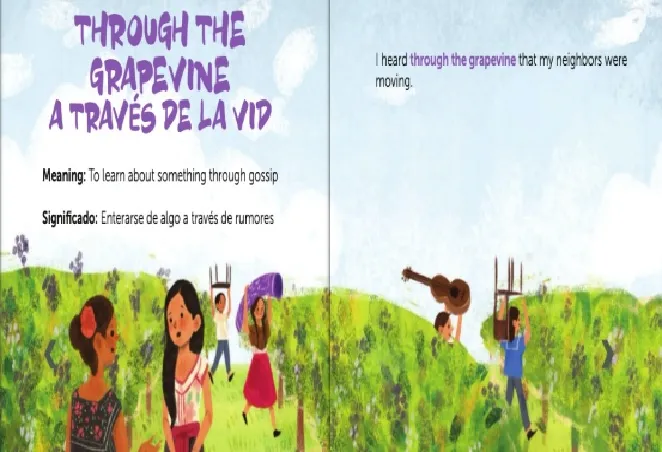
Illustrations are more than decoration in bilingual picture books. They provide visual clues that help children interpret unfamiliar words and sentences. Imagine a page showing a child walking beneath the moon, animals moving through a habitat, or family members sharing food. Even when a young reader does not understand every Spanish word, the illustration provides information about the setting, objects, actions, and emotions.
This combination reduces the pressure to translate everything immediately. Language Lizard’s Spanish collection, for example, combines bilingual text with colorful illustrations across stories involving family, friendship, nature, cultural experiences, folktales, and other child-friendly subjects. Children can observe the image, listen to the words, and gradually make connections between the two.
Side by Side Text Removes the Guesswork
One reason Spanish English bilingual picture books can feel comfortable is that children are not separated from the language they already understand. Dual language books can present English and Spanish together, allowing readers to compare them while continuing to follow the story. Language Lizard describes its bilingual books as using side-by-side text, either on the same page or on facing pages.
For beginners, this structure provides reassurance. If a Spanish sentence feels unfamiliar, the English text can provide context. As recognition improves, children may begin relying less on English. The familiar language becomes a bridge rather than a substitute for Spanish.
Repetition Happens Without Drills
Picture books naturally repeat important ideas. Characters return, actions happen again, familiar objects reappear, and recurring phrases help establish the rhythm of a story. That repetition gives children multiple opportunities to encounter Spanish vocabulary without turning reading time into a drill.
Repeated readings strengthen this effect. A favorite story might be requested night after night simply because a child enjoys it. Each reading provides another opportunity to hear pronunciation, notice sentence patterns, recognize vocabulary, and anticipate familiar phrases. Learning happens through enjoyment and familiarity rather than forced memorization.
Familiar Themes Make Spanish Easier to Approach
A completely unfamiliar language can initially feel intimidating. A familiar subject makes it considerably more approachable. Stories about grandparents, friendship, kindness, food, animals, sports, gardens, and everyday experiences give children recognizable reference points. Language Lizard’s Spanish collection includes themes ranging from family relationships and community to healthy habits, environmental awareness, science, nature, and folktales from around the world.
When children already understand the basic idea, they have more mental space to notice the Spanish associated with it. A child who loves animals, for example, may enthusiastically explore an animal story without viewing the Spanish text as an academic requirement.
Culture Becomes Part of the Experience
Language becomes more meaningful when children see that it belongs to people, communities, traditions, and stories. Bilingual picture books can introduce cultural perspectives alongside vocabulary. Multicultural characters, settings, folktales, foods, family experiences, and traditions show children that Spanish is not simply a collection of words to memorize.
It is a language people use to communicate experiences and tell stories. That perspective can encourage curiosity about both language and the wider world while supporting cultural awareness through everyday reading.
Reading Together Keeps the Experience Relaxed
Adults do not need to turn every Spanish word into a question. Instead of constantly asking children to translate or repeat vocabulary, parents and educators can read naturally, discuss illustrations, react to characters, predict what happens next, and revisit favorite pages.
The goal is to make Spanish feel present and accessible. Audio-supported bilingual resources can provide another way for children to hear language while following the story. Language Lizard offers Spanish English resources that include audio options alongside various fiction and nonfiction titles.
Let Spanish Become Part of Storytime
The most inviting introduction to Spanish may be one that children barely recognize as instruction. Pictures provide clues, English offers support, stories create motivation, and repetition builds familiarity. Together, these elements allow Spanish to enter reading time naturally.
Explore Spanish English bilingual picture books that combine engaging stories, meaningful themes, and visual storytelling to make discovering another language an enjoyable part of everyday reading.
























Sign in to leave a comment.