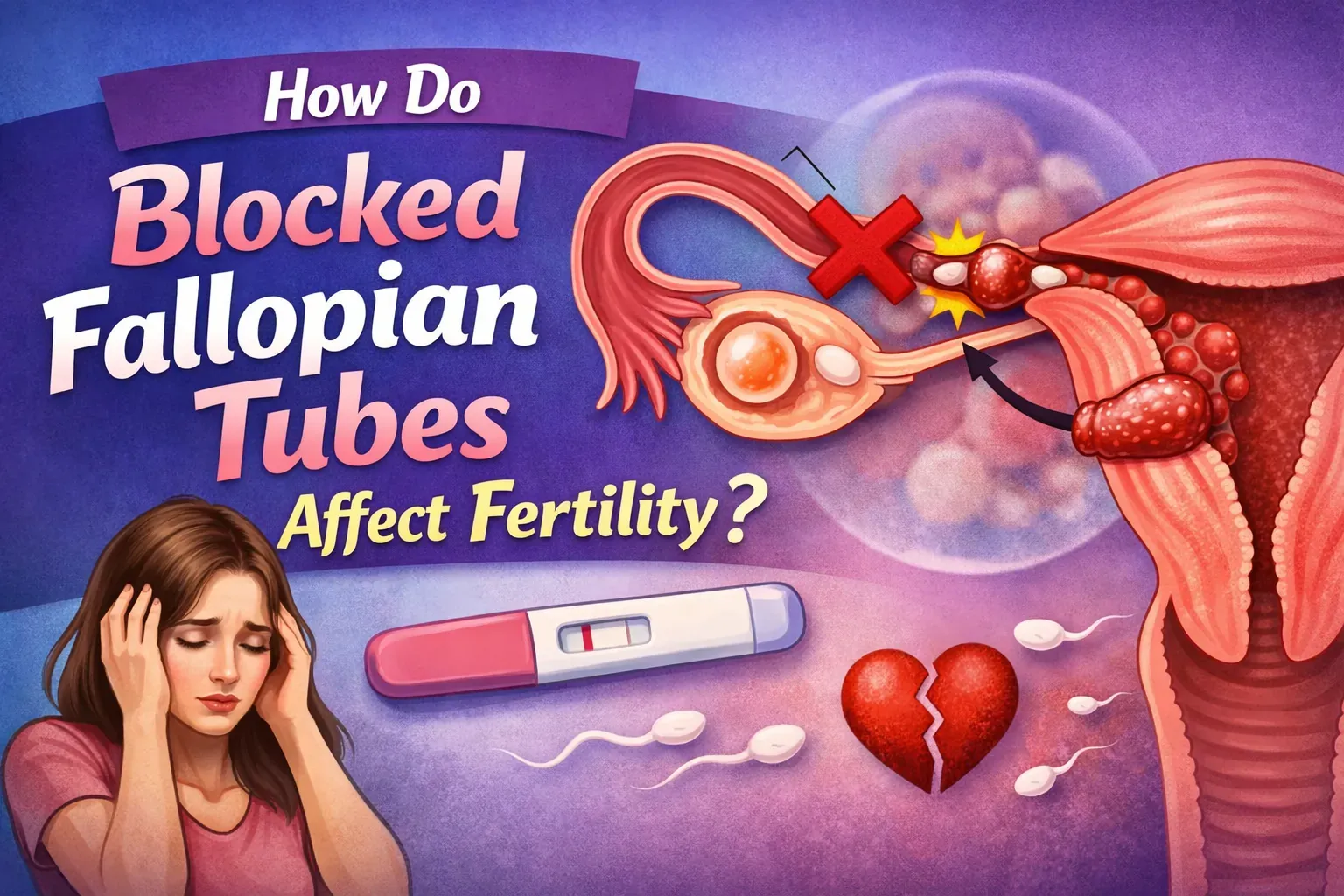

You have tracked your ovulation, changed your diet, and hoped with every passing month to see two lines on a pregnancy test kit, which hasn’t come yet. It feels like you are doing everything right, yet the door to motherhood remains closed. It’s exhausting, and you might feel confused, thinking what could be the reason. So, one major reason disrupting your pregnancy could be blocked fallopian tubes.
But what is a fallopian tube?
Fallopian tubes are a pair of hollow uterine tubes that reside between your ovaries and your uterus. If these tubes are damaged, then it can cause infertility.
According to the research shared by the National Library of Medicine (NLM), due to blocked fallopian tubes, 25% to 35% of women face infertility issues.
Now, if you want to know how damaged or blocked fallopian tubes cause infertility, what are the symptoms of damaged or blocked fallopian tubes, treatment, and solutions for blocked fallopian tubes, then this blog will give detailed insights, so read this blog till the end.
What Are Blocked Fallopian Tubes?
Your fallopian tubes are two small pathways that connect your ovaries to your uterus. They help an egg travel from the ovaries to the uterus.
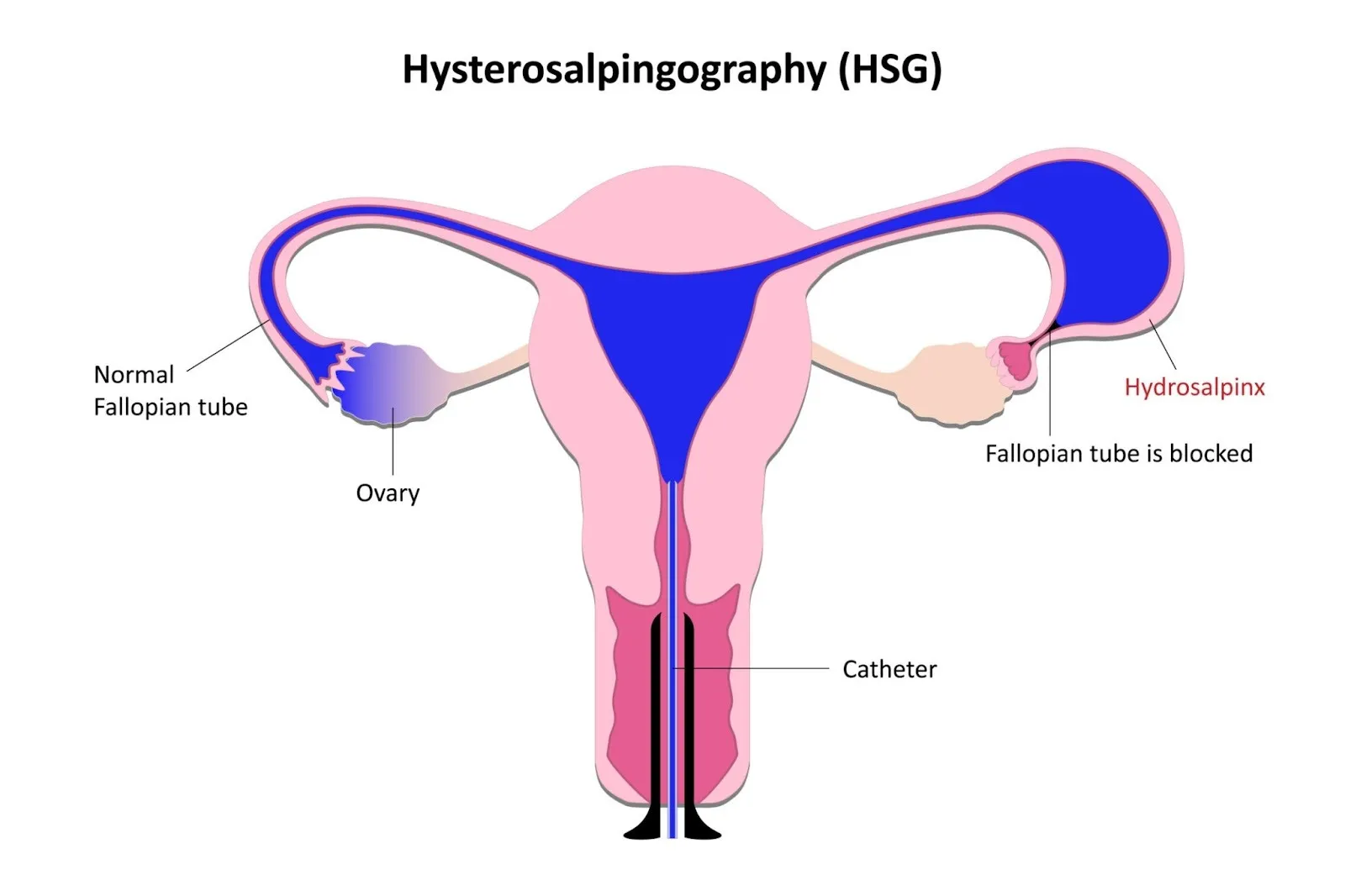
A blocked fallopian tube, or the tubal occlusion, is a condition where one or both of the thin tubes connecting the ovaries to the uterus are obstructed.
If only one tube is blocked, conception is still possible through the other side. But if both tubes are affected, a natural pregnancy becomes very difficult without medical support.
What Causes Blocked Fallopian Tubes in Women?
Your fallopian tubes can be blocked due to several reasons, including:
- Pelvic Inflammatory Disease (PID): PID develops due to bacterial infections that can spread from the vagina or cervix to the uterus. This infection can be caused by chlamydia or gonorrhea (a sexually transmitted disease).
- Endometriosis: This occurs when tissue similar to the lining of the uterus grows outside, mostly on the pelvic walls or ovaries. This growth can lead to inflammation and the formation of tissues. These tissues wrap around and press against the tubes, which causes the blockage.
- Past Surgeries: Sometimes scar tissue from abdominal or pelvic surgeries, such as appendectomies, c-sections, or cyst removal, can leave internal damage, which can be the reason for blockage.
- Fibroids: Fibroids are non-cancerous cysts that can press against or physically block the tube.
What are the Symptoms of Blocked Fallopian Tubes?
Blocked fallopian tubes mostly don't show any symptoms. However, it might give discomfort in your daily routine, such as extreme pain during your periods, unusual discharge, and constant pelvic pain. To understand them in detail, let's read below:
- Menstrual Changes: You might experience heavy bleeding during your periods, or spotting or irregular periods.
- Unusual Vaginal Discharge: You might feel an unusual discharge from the uterus or a weird smell from the vagina that can be due to pelvic inflammatory disease.
- Dyspareunia (Pain during intercourse): This is one of the most ignored symptoms; you might feel discomfort during or after intercourse.
- Difficulty in Pregnancy: This is the most common symptom. Even after doing unprotected intercourse for months, you are not able to conceive.
How are Blocked Fallopian Tubes Diagnosed?
Blocked fallopian tubes are mostly asymptomatic. They are diagnosed using specialized imaging tests or minimally invasive surgery. Let's read them below in detail:
- HSG (Hysterosalpingogram): This is the most common procedure to diagnose blocked fallopian tubes. In this process, a liquid is injected through the cervix into your uterus, followed by X-rays. If the tubes are okay, the liquid will flow and spill into the pelvic cavity, and if the tubes are blocked, the liquid will stop.
- Hysterosalpingo-contrast sonography (HyCoSy): This is a modern ultrasound, an alternative to HSG. In this process, a saline solution is spilled into your uterus, and doctors will check the flow through an ultrasound.
- Laparoscopy: This is called a “gold standard” procedure that allows your doctor to look directly at the tubes and sometimes even fix the issue during the same session.
Treatments or Solutions for Blocked Fallopian Tubes
Depending on the type of blockage, there are many ways your doctors will suggest to you according to your condition. It can be recanalization, fimbrioplasty, laparoscopic surgery, etc. Let’s understand them in detail:
- Laparoscopic Surgery: This is a minimally invasive procedure to remove the adhesions or scar tissue that is blocking the tube.
- Tubal Cannulation: This is a non-surgical or minimally invasive procedure using a thin catheter that is inserted through the cervix to clear blockage.
- Fimbrioplasty: This procedure is performed to repair the finger-like fimbriae that catch the egg, and when the blockage is at the end of the tube.
Conclusion
Blocked fallopian tubes are asymptomatic and one of the silent reasons many women suffer from infertility. In the past, this was a closed door, but today, with advanced reproductive technology and the right timing, you can create a new path to motherhood that doesn't depend on those tubes. If you have been trying to conceive without success, or if you have been told your reports are normal but still have not conceived, it may be time to look a little deeper.




























Sign in to leave a comment.