Introduction
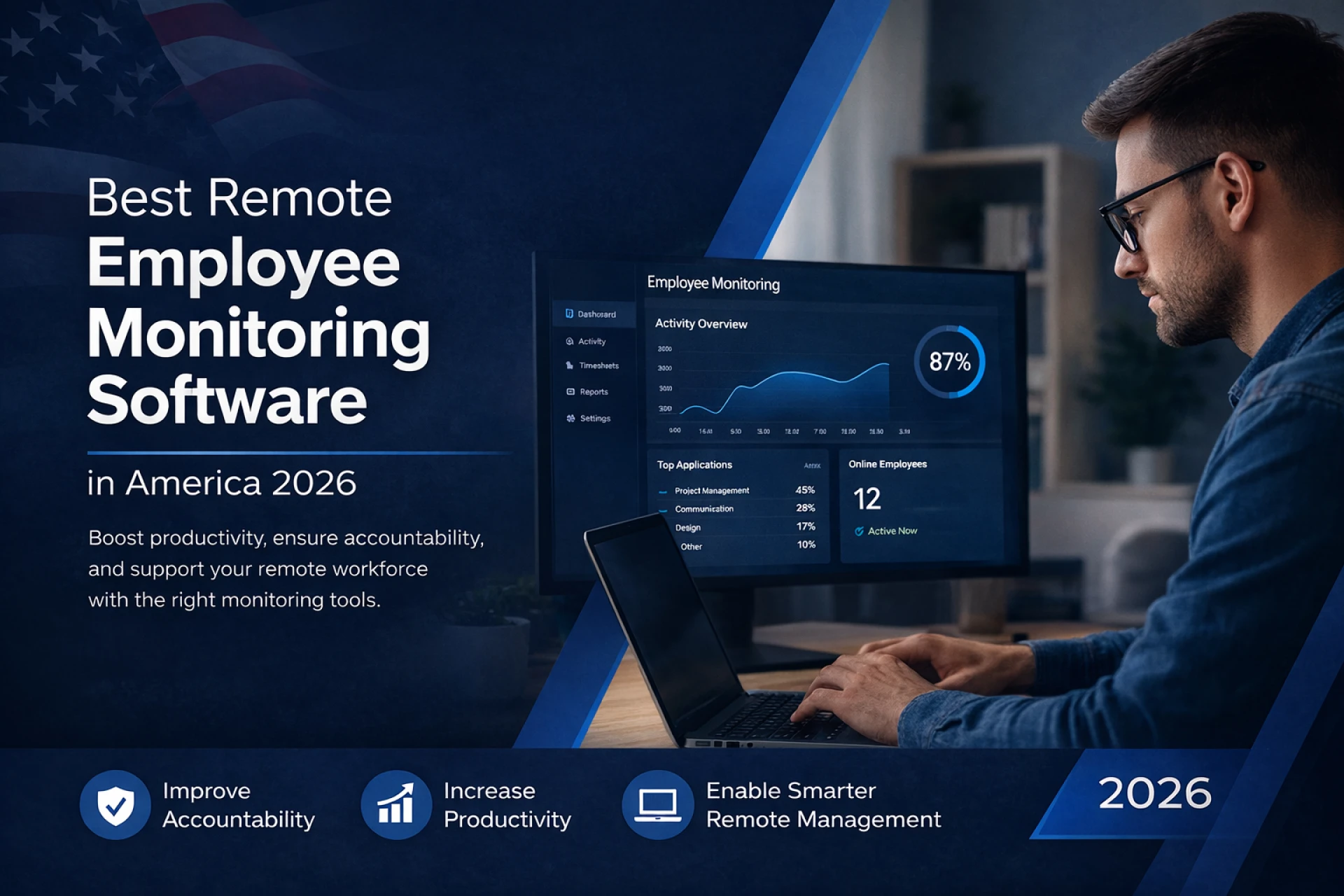
Remote work has become a permanent part of modern business operations. As companies continue to hire talent across cities, countries, and time zones, maintaining productivity and accountability has become increasingly important. This is why many organizations rely on remote employee monitoring software to gain visibility into work activities, project progress, and team performance.
Modern monitoring solutions do much more than simply track employee activity. Today's tools combine time tracking software, productivity analytics, attendance monitoring, and workforce intelligence to help businesses improve efficiency while supporting employee wellbeing. Advanced platforms also offer features such as overtime tracking software, live screen monitoring software, and detailed reporting dashboards that help managers make informed decisions.
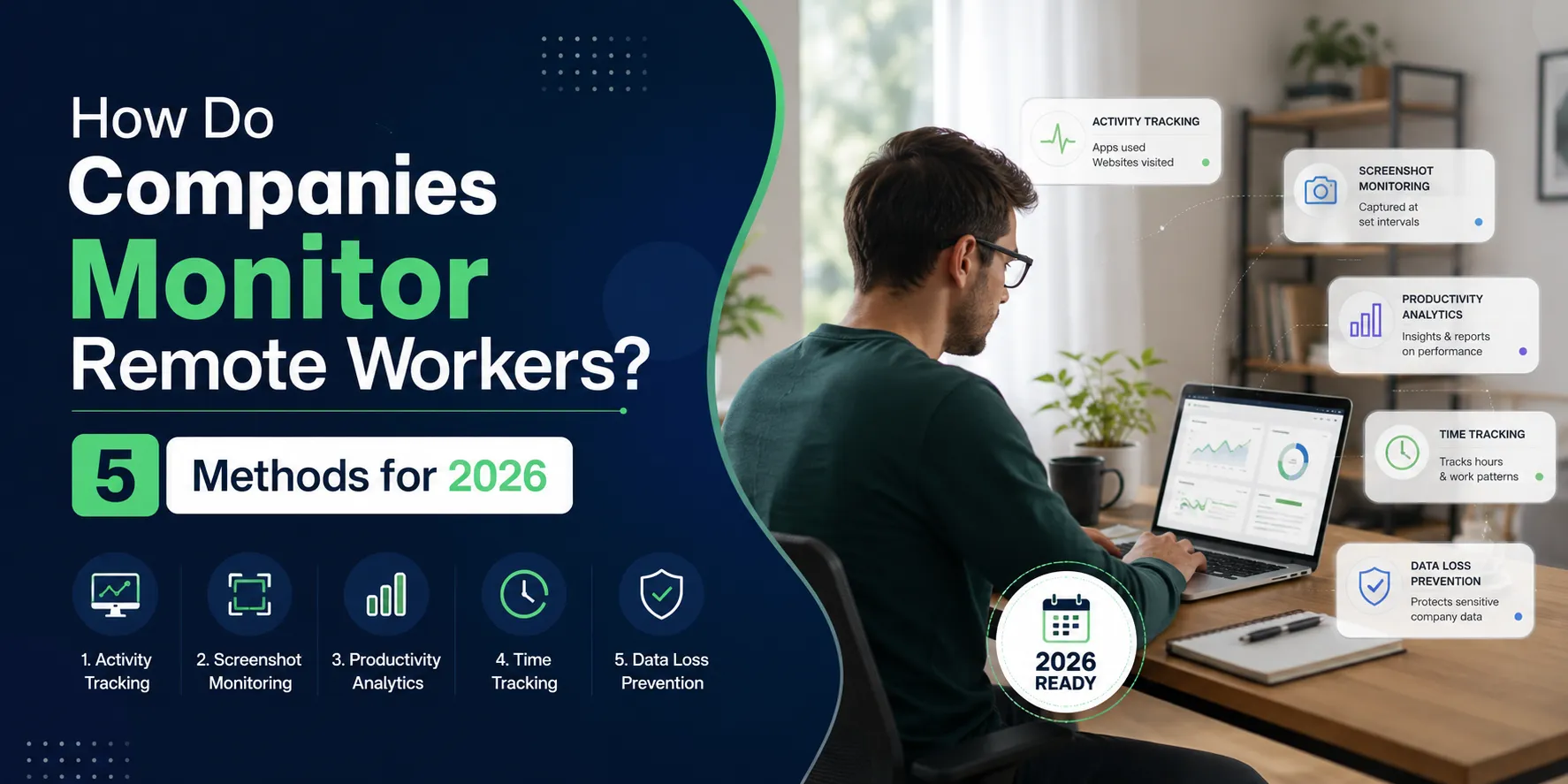
In this guide, we'll explore how companies monitor remote workers in 2026, the technologies they use, and the five most common monitoring methods adopted by successful organizations.
Why Companies Use Remote Employee Monitoring Software
Companies invest in remote employee monitoring software for several reasons beyond simply checking whether employees are online.
Improve Productivity Visibility
Managers need insights into how work is completed across distributed teams. Monitoring tools provide visibility into productive hours, application usage, and workflow patterns.
Manage Employee Work Hours
Many organizations use time tracking software to understand how employees allocate their workday and identify inefficiencies.
Prevent Employee Burnout
Tracking workloads helps businesses recognize when employees consistently work beyond their scheduled hours. Modern overtime tracking software allows managers to identify excessive overtime and redistribute work before burnout occurs.
Strengthen Security
Remote workers frequently access sensitive business data. Monitoring solutions help detect unusual behavior, unauthorized access attempts, and potential security risks.
Method #1 – Time Tracking Software
One of the most common ways companies monitor remote employees is through time tracking software.
These tools record:
- Work hours
- Project hours
- Break times
- Task duration
- Attendance patterns
Businesses use this data to:
- Improve resource planning
- Measure project profitability
- Monitor workload distribution
- Increase accountability
Unlike traditional punch-in systems, modern time tracking platforms provide detailed productivity insights without requiring constant supervision.
Why Time Tracking Matters in 2026
As hybrid and remote work continue to expand, companies need accurate data on how time is spent. Time tracking software helps organizations understand employee capacity and optimize workflows across teams.
Method #2 – Live Screen Monitoring Software
Another increasingly popular approach involves live screen monitoring software.
This technology allows managers to view employee screens in real time when necessary. Organizations typically use live monitoring for:
- Customer support teams
- Training sessions
- Security monitoring
- Quality assurance
Benefits of Live Screen Monitoring Software
- Immediate visibility into workflows
- Faster employee coaching
- Better compliance management
- Improved operational oversight
Companies should implement live monitoring transparently to maintain employee trust and avoid privacy concerns.
Method #3 – Window Screen Time Tracker Tools
Many businesses use a window screen time tracker to understand how employees spend their digital workday.
These tools monitor:
- Active applications
- Browser activity
- Software usage duration
- Time spent on productive tasks
For example, managers can identify:
- Time spent in CRM software
- Time spent on project management platforms
- Collaboration activity
- Excessive non-work-related browsing
A window screen time tracker provides valuable productivity insights without requiring invasive surveillance practices.
Method #4 – Overtime Tracking Software
Employee burnout remains one of the biggest challenges in remote work environments.
This is where overtime tracking software becomes essential.
Remote employees often work longer hours than office-based workers because the boundaries between personal and professional life can become blurred.
Overtime tracking tools help organizations:
- Monitor extra hours worked
- Identify workload imbalances
- Reduce burnout risks
- Ensure labor law compliance
- Improve workforce planning
Why Overtime Tracking Matters
Many businesses mistakenly assume that more hours mean greater productivity. In reality, excessive overtime often leads to fatigue, lower performance, and employee turnover.
Modern overtime tracking software helps managers maintain healthy workloads while supporting long-term productivity.
Method #5 – Workforce Analytics and Remote Employee Monitoring Software
The most advanced organizations rely on comprehensive remote employee monitoring software that combines multiple monitoring functions into a single platform.
Features often include:
- Time tracking
- Attendance monitoring
- Productivity analytics
- Website tracking
- Application monitoring
- Employee engagement insights
- Overtime reporting
- Screen monitoring capabilities
These platforms provide managers with actionable data rather than simply recording activity.
Features Found in the Best Remote Employee Monitoring Softwares
When evaluating the top remote employee monitoring softwares, organizations typically look for several key capabilities.
• Productivity Tracking
Provides insights into employee work patterns and focus time.
• Time Tracking
Tracks work hours, projects, and attendance.
• Overtime Monitoring
Identifies employees working beyond scheduled hours.
• Screen Monitoring
Offers optional visibility into employee workflows when needed.
• Automated Reports
Generates productivity, attendance, and performance reports.
• Employee Privacy Controls
Ensures monitoring remains transparent and compliant with workplace regulations.
How to Monitor Remote Employees Without Hurting Trust
The most successful companies understand that monitoring should support employees rather than create a culture of surveillance.
Best practices include:
• Be Transparent
Clearly explain what data is collected and why.
• Focus on Outcomes
Measure results rather than tracking every minute of activity.
• Use Monitoring for Coaching
Use insights to improve workflows and employee development.
•Respect Privacy
Avoid unnecessary surveillance and collect only relevant business data.
Conclusion
As remote and hybrid work continue to dominate the modern workplace, businesses need reliable ways to maintain visibility and accountability. In 2026, organizations primarily rely on five methods:
- Time tracking software
- Live screen monitoring software
- Window screen time tracker tools
- Overtime tracking software
- Comprehensive remote employee monitoring software
The best remote employee monitoring softwares go beyond simple activity tracking. They help businesses improve productivity, reduce burnout, strengthen security, and support employee success. When implemented transparently and ethically, these tools create a healthier and more efficient remote work environment for both employers and employees.

























Sign in to leave a comment.