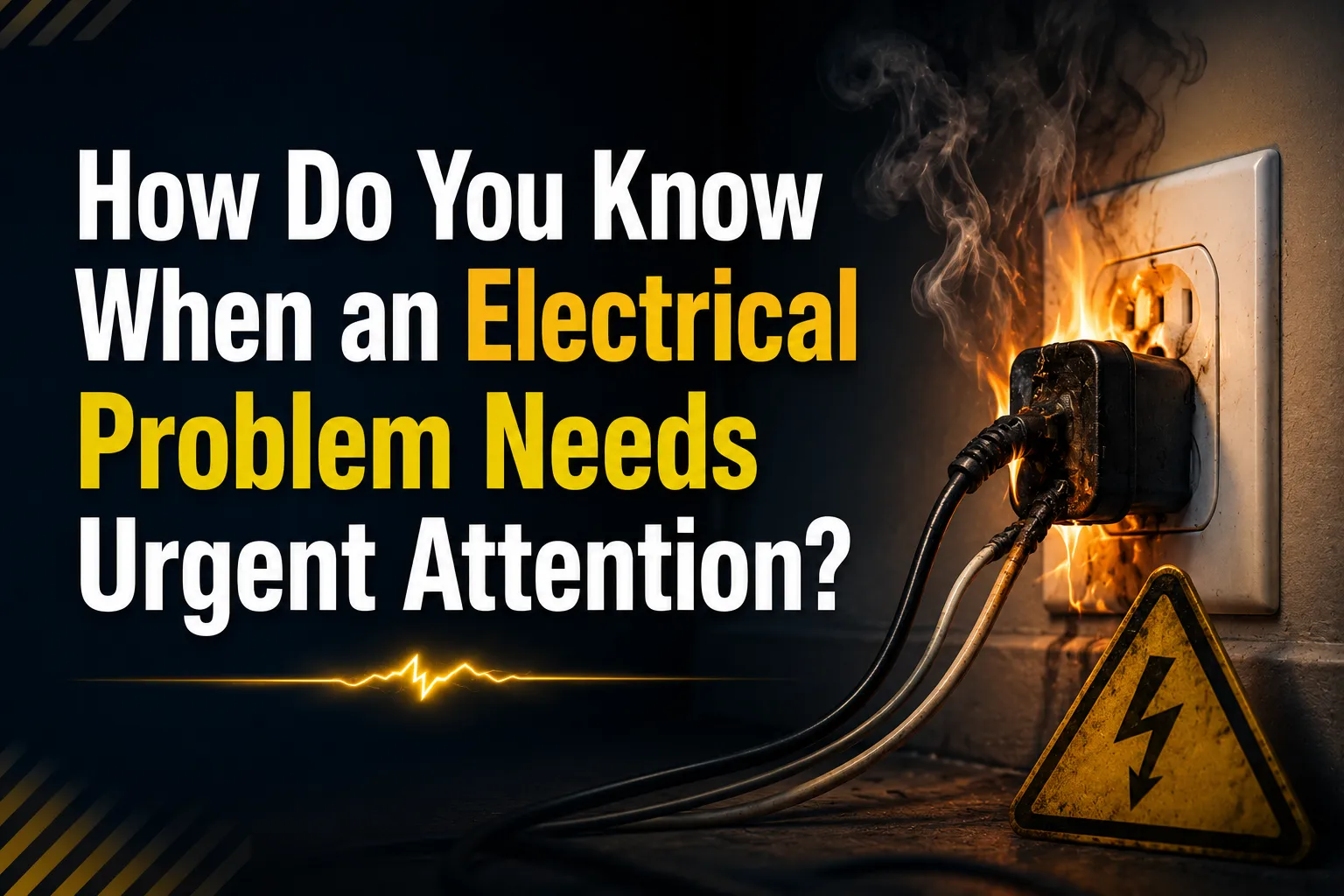

Electrical problems are not always obvious, and a small warning can sometimes point to a much bigger safety issue. If you are searching for an electrician surfers paradise residents can rely on, it is important to know which electrical faults need immediate professional attention and which can be scheduled as routine maintenance. Burning smells, sparks, electric shocks, repeated circuit trips, buzzing sounds, hot outlets, exposed wires and sudden power problems should never be treated as normal. Queensland's Electrical Safety Office advises homeowners not to ignore shocks or tingles because they may indicate faults in wiring, equipment, the switchboard or nearby electrical infrastructure.
The most urgent electrical situations are those involving fire, smoke, exposed live wiring, electric shock, water near electrical equipment or fallen powerlines. In these cases, do not attempt to investigate or repair the problem yourself. Move people away from the danger, avoid touching affected equipment and contact the appropriate emergency service or electricity distributor when necessary. If someone is receiving an electric shock, Queensland guidance says not to touch them until the power is safely disconnected and to call 000 for emergency assistance.
Knowing the warning signs can help you act before a fault becomes a fire, serious shock or major property damage. Electrical work should be left to a licensed professional in Queensland. The Electrical Safety Office specifically recommends using a licensed electrician for electrical work rather than attempting DIY repairs.
Burning Smells or Smoke From Electrical Equipment
A burning or unusual smell coming from a power point, appliance, light fitting, switchboard or power board should be taken seriously.
The smell may indicate overheating insulation, damaged wiring, a failing connection or an appliance developing an electrical fault. If smoke is visible, the situation becomes even more urgent because overheating electrical components can lead to fire.
Do not continue using the affected equipment simply because it still appears to work. Switch it off if you can do so safely, keep away from the affected area and arrange professional assistance.
If there is an active electrical fire, do not put yourself at risk trying to investigate the source. Get everyone to safety and contact emergency services.
Queensland electrical safety guidance recommends checking electrical equipment for signs such as discolouration caused by overheating or moisture, damaged casings and other visible deterioration. Faulty equipment should not continue to be used.
Sparks, Arcing or Flashing
A brief spark when plugging in certain equipment can occasionally occur, but repeated sparking, visible arcing or flashes from an outlet, switch or appliance should not be ignored.
Sparks can indicate loose connections, damaged components, short circuits or faulty equipment. The danger is greater if sparks are accompanied by a burning smell, heat, smoke or unusual sounds.
Do not repeatedly switch the appliance on and off to see whether the problem disappears. Stop using the equipment and have the fault assessed by a qualified professional.
This is particularly important with damaged power points, plugs and electrical leads. Queensland safety guidance warns that damaged electrical equipment can expose people to electric shock and recommends having faulty equipment repaired or checked professionally.
An Electrical Outlet Feels Hot
Power points and switches should not become unusually hot during normal use.
A warm or hot outlet can suggest an overloaded circuit, loose electrical connection, damaged wiring or a problem with the appliance connected to it. Ignoring the warning could allow heat to build inside the wall or electrical fitting.
If an outlet is hot, discoloured, cracked or producing a strange smell, stop using it. Do not remove the outlet cover or attempt to tighten connections yourself.
A licensed electrician can determine whether the issue is limited to the outlet or whether there is a wider problem with the circuit.
You Receive a Shock or Tingle
An electric shock should never be dismissed simply because it feels minor.
Queensland's Electrical Safety Office states that shocks and tingles can indicate an electrical problem and should be taken seriously, even when they happen infrequently.
If an appliance gives you a shock or tingle, stop using it immediately and keep others away from it. If the shock comes from a tap, metal fitting or another part of the property, the situation can be especially concerning because the electrical fault may involve the building's wiring or electrical supply.
The safest response depends on where the shock occurred. Queensland guidance advises people experiencing shocks or tingles from metal fittings such as taps to stay clear and contact their electricity distributor rather than touching the switchboard or attempting to investigate the problem themselves.
Anyone who receives an electric shock should also seek appropriate medical advice, because some injuries may not be immediately obvious.
Your Safety Switch Keeps Tripping
A safety switch that trips once does not necessarily mean there is a major emergency. It may have detected a genuine fault and disconnected power as intended.
However, repeated or unexplained trips should not be ignored.
Frequent tripping may be caused by a faulty appliance, overloaded circuit, damaged wiring or another electrical problem. Queensland guidance describes repeated nuisance tripping as something that requires attention.
Homeowners can sometimes identify a faulty plug-in appliance by safely unplugging appliances from the affected circuit and reconnecting them one at a time. However, if the safety switch continues to trip, do not keep resetting it repeatedly. Professional inspection may be required.
A safety switch is there to reduce the risk of electric shock. It should not be treated as a permanent solution to an underlying electrical fault.
Buzzing, Crackling or Hissing Sounds
Electricity should not normally produce noticeable buzzing, crackling or hissing sounds from wall outlets, switches, light fittings or the switchboard.
These sounds can indicate loose connections, electrical arcing or failing components. The risk becomes more serious when unusual sounds occur alongside heat, flickering lights, burning smells or discolouration.
Do not open the switchboard or remove electrical fittings to locate the sound. Electrical components can remain dangerous even when you believe the relevant circuit has been switched off.
Instead, keep people away from the affected area and arrange an inspection by a licensed electrician.
Lights Keep Flickering or Dimming
One isolated flicker may not always indicate an emergency. But persistent flickering, sudden dimming or repeated changes in brightness deserve attention, particularly when several lights or appliances are affected.
The cause could range from an appliance problem to a circuit fault or another issue with the property's electrical installation.
Pay attention to patterns. If lights flicker when a large appliance starts, if several rooms experience the problem, or if flickering happens together with buzzing, burning smells or circuit trips, professional assessment becomes more important.
Do not assume that replacing the light bulb will solve the underlying problem.
You Notice Exposed or Damaged Wiring
Exposed wires, cracked insulation, damaged plugs and broken electrical fittings create an obvious physical hazard.
Children, pets and adults can accidentally touch exposed conductors, while damaged wiring can also become vulnerable to moisture or further deterioration.
Do not cover damaged wiring with tape and continue using it. Queensland electrical safety guidance recommends contacting a licensed electrician to repair or replace damaged power points, switches, electrical equipment and frayed leads.
If wiring is visibly damaged, keep people away from the area until it has been assessed.
Water Has Reached Electrical Equipment
Water and electricity create a particularly dangerous combination.
If flooding, leaks or storm damage have affected power points, appliances, switchboards, extension leads or other electrical equipment, do not assume that everything is safe once the water disappears.
Queensland's Electrical Safety Office advises extra caution around electrical equipment exposed to weather and water and recommends professional inspection of damaged electrical systems.
Do not touch electrical equipment while standing in water. If you believe an electrical installation has become unsafe, stay away and seek professional or emergency assistance.
This is especially important after storms and flooding, when hidden electrical hazards may remain even after visible water has gone.
Fallen Powerlines Require Immediate Action
Fallen powerlines are always an emergency hazard.
Never assume a fallen line is safe because there are no sparks or visible signs of electricity. Queensland guidance states that fallen powerlines should always be treated as live. People should stay well clear and contact the relevant electricity distributor.
Keep children, pets and other people away from the area. Do not touch the line, nearby objects or anyone who may be in contact with it.
If there is an immediate danger to life, call 000.
When Is an Electrical Problem a Routine Repair?
Not every electrical issue requires an emergency call.
For example, a damaged appliance that has been safely disconnected and is no longer being used may be suitable for a scheduled inspection. Similarly, planning a new light, replacing outdated equipment or improving an electrical system can generally be handled through normal electrical maintenance.
The key difference is whether there is an immediate risk of shock, fire, overheating or contact with live electricity.
When in doubt, it is safer to stop using the affected equipment and ask a qualified professional for advice rather than experimenting with electrical repairs yourself.
For homeowners looking for an MCV Electrical electrician surfers paradise property owners can contact for electrical faults, the most important consideration should be proper licensing, experience and a clear explanation of the work required.
What Should You Do While Waiting for an Electrician?
Your first priority should be keeping people away from the hazard.
Do not remove switchboard covers, handle exposed wires, investigate burning smells inside walls or dismantle electrical equipment. Queensland's electrical safety guidance is clear that homeowners should not perform their own electrical work.
If the situation involves smoke, fire, electric shock or fallen powerlines, use emergency procedures rather than waiting for a routine appointment.
For less immediate problems, make a note of what happened. Record which appliance or circuit was involved, whether a safety switch tripped and whether you noticed heat, noise, smell or visible damage. This information can help the electrician diagnose the problem more efficiently.
How Can Homeowners Reduce Electrical Risks?
Prevention is often easier than dealing with an electrical emergency.
Have damaged equipment repaired or replaced instead of continuing to use it. Avoid overloading power points and power boards. Keep electrical equipment away from water unless it is specifically designed for that environment. Follow manufacturer maintenance instructions and have fixed electrical systems professionally inspected when concerns arise.
Safety switches are also an important part of home electrical protection. Queensland's Electrical Safety Office recommends safety switches on all circuits and advises testing them every three months.
Older homes may also benefit from an electrical safety assessment, especially if the property has outdated wiring, older switchgear, limited power points or a history of electrical faults.
Know the Difference Between a Warning and an Emergency
The most useful rule is simple: do not wait for an electrical problem to become dramatic before taking action.
A burning smell, smoke, repeated sparking, exposed wiring, hot outlets, electric shocks, unexplained safety-switch trips and water-damaged electrical equipment all deserve prompt attention. Some situations, particularly electric shock, active fire and fallen powerlines, require immediate emergency action.
Electrical faults can be difficult to diagnose because dangerous problems may exist behind walls, inside appliances or within the switchboard. Trying to save money with a DIY repair can create a much larger safety risk.
If you notice warning signs, stop using the affected equipment when it is safe to do so and seek professional help. For local homeowners, choosing a licensed MCV Electrical electrician surfers paradise service can provide a safer way to identify the cause of the fault and determine the right repair.
The goal is not simply to restore power. It is to make sure the electrical system is safe for the people living in the property.
When an electrical issue involves immediate danger, however, professional electrical assistance should not replace emergency services. Get people away from the hazard, call 000 where appropriate and follow advice from Queensland's electricity distributor or emergency authorities. Electrical safety starts with knowing when not to take chances.






















Sign in to leave a comment.