Ever wondered how a brushless motor actually knows when to turn, slow down, or stop? That’s where the motor controller comes in — and if you’re working with a 24V BLDC setup, the controller becomes just as important as the motor itself. But how do brushless motor controllers work? And how exactly do you connect one to your motor without frying a wire or two?
Let’s break it down — not as a textbook, but as someone wiring this up on a bench or inside a robot chassis.
Brushless DC (BLDC) motors don’t have brushes or commutators. That means they rely on electronic control to switch the current between motor windings in the correct sequence. And that switching? It’s the controller’s job. A brushless motor controller manages timing, commutation, speed, and direction — all based on sensor feedback or sensorless algorithms.
So how does a BLDC motor controller actually work? It receives a DC voltage input (say, 24V), interprets control signals (PWM, analog voltage, etc.), and then energizes the motor’s coils in the correct sequence to make it spin. If you’ve got Hall sensors, the controller uses their feedback to know rotor position; if not, it uses back-EMF detection to time the switching.
If you're curious how to connect a brushless motor to a controller, it's not too bad once you get the hang of it. You’ll usually have three phase wires (A-B-C) from the motor to the controller, and optionally 3 Hall sensor wires if it’s a sensored setup — plus power (typically a 24V DC source), and signal inputs (like a throttle or control switch). The controller does the rest, as long as it’s configured correctly.
Now — what if you wanted to build a brushless motor controller yourself? Unless you're deep into embedded systems and motor control theory, it’s probably easier to start with a ready-made option. Designing your own from scratch involves dealing with gate drivers, PWM generation, dead-time control, fault handling, and sensor decoding — not exactly beginner territory.
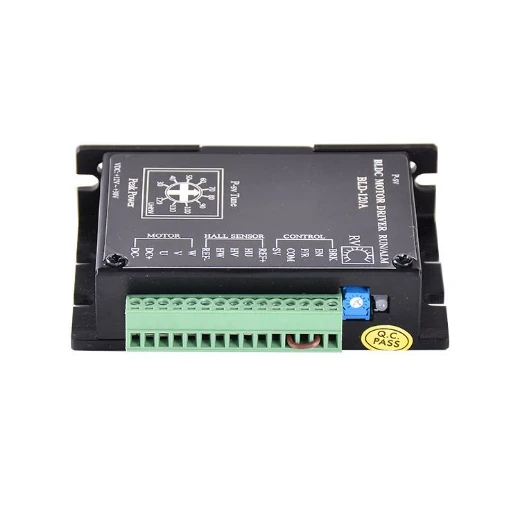
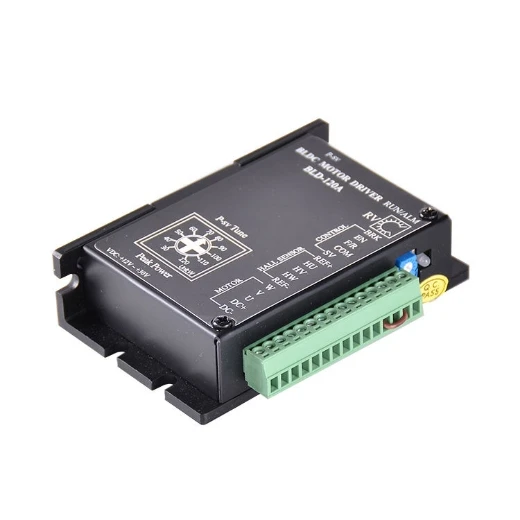
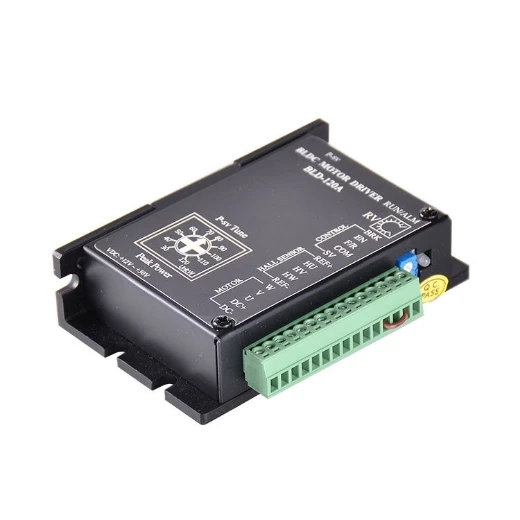
This is why off-the-shelf options like the 24V BLDC Motor Controller from Brushless.com make so much sense. It handles up to 30A peak, supports analog and PWM input, and can work with both sensored and sensorless motors. For most people, that’s exactly what you want — flexible, safe, and already engineered to handle common use cases.
Whether you’re running a robotics platform, a DIY electric scooter, or a CNC spindle, the controller is what makes the system run smoothly — or not run at all. Understanding the basics helps, but using the right hardware helps even more.























Sign in to leave a comment.