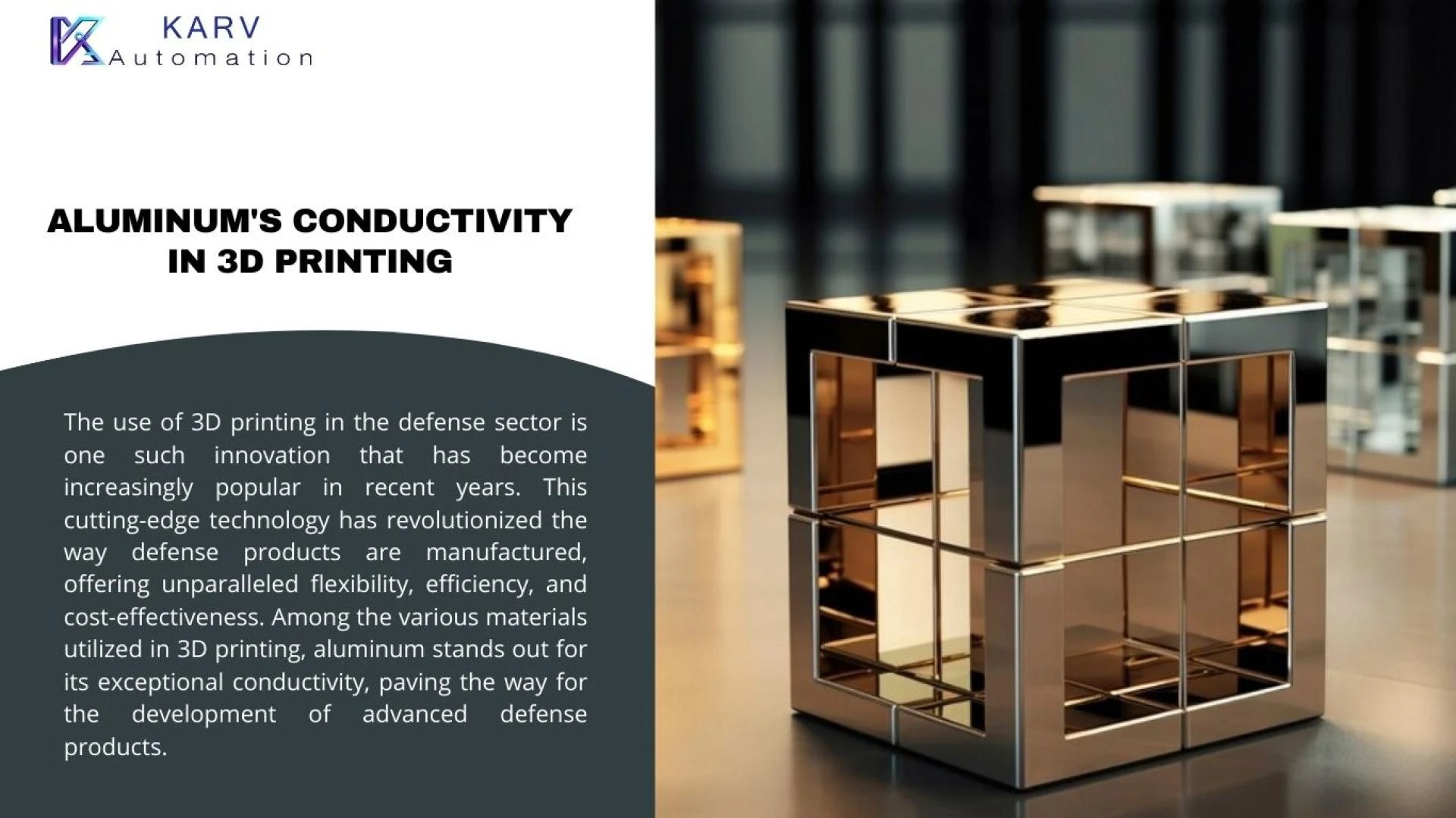

The use of 3D printing in the defense sector is one such innovation that has become increasingly popular in recent years. This cutting-edge technology has revolutionized the way defense products are manufactured, offering unparalleled flexibility, efficiency, and cost-effectiveness. Among the various materials utilized in 3D printing, aluminum stands out for its exceptional conductivity, paving the way for the development of advanced defense products.
Advantages of Aluminum's Conductivity in Defense Applications
The conductivity of aluminum can be combined with 3D printing technology to unlock a vast amount of conductivity that is essential for improving the functionality and performance of defense products. It is the perfect material for a variety of applications, such as thermal management systems, electronic enclosures, and aerospace components because of its effective heat and electricity conductivity.
In the word of defense, where reliability and performance are paramount, aluminum's conductivity offers several advantages:
Efficient Heat Dissipation: In high-performance defense systems such as radars, electronic warfare equipment, and missile guidance systems, managing heat is crucial to ensure optimal performance and longevity. Aluminum's high thermal conductivity enables efficient heat dissipation, preventing overheating and ensuring continuous operation even in demanding environments.Enhanced Electrical Connectivity: Defense products often require intricate electrical circuitry and components to function effectively. Aluminum's excellent electrical conductivity facilitates seamless connectivity, reducing resistance and minimizing signal loss. This is particularly advantageous in advanced communication systems, where signal integrity is critical for mission success.Lightweight yet Durable Construction: Aluminum is a popular material for military applications like armored vehicles and aircraft because of its lightweight design. Despite its low density, aluminum boasts remarkable strength and durability, ensuring robust performance in challenging operational conditions.3D Printing Techniques Utilized in Defense Manufacturing
Within the defense industry, several 3D printing techniques are employed to fabricate aluminum components with precision and efficiency.Direct Metal Laser Sintering (DMLS) and Selective Laser Melting (SLM) are two of the most popular methods for creating aluminum parts with complex geometries and high strengths. These methods involve melting aluminum powder layer by layer using a laser, resulting in fully dense and functional components.
Furthermore, Binder Jetting and Electron Beam Melting (EBM) techniques are also utilized for aluminum 3D printing in defense industry. These methods have the advantage of being able to produce complex designs with better mechanical properties quickly, with little waste of material.
Role of 3D Printing in Defense Manufacturing
Due to its capacity to create complicated parts on demand, shorten lead times, and improve customization, 3D printing has become increasingly significant in the defense industry. Its advantages are manifold, and they include:
Streamlined Supply Chains: 3D printing enables on-demand production of defense components, reducing reliance on traditional supply chains and mitigating logistical challenges associated with inventory management and procurement.Cost-Effective Production: By eliminating the need for expensive tooling and reducing material waste, 3D printing offers significant cost savings in defense manufacturing, allowing for more efficient allocation of resources and budgets.Enhanced Design Flexibility:Complex, lightweight structures that are optimized for functionality and performance can be created thanks to the design freedom provided by 3D printing, leading to the development of next-generation defense products with unprecedented capabilities.3D printing has the potential to significantly improve the capabilities and preparedness of defense forces across the globe as technology develops.
Regulatory and Safety Considerations in Aluminum Defense Products
Despite the numerous benefits offered by aluminum 3D printing in defense industry, regulatory compliance and safety considerations remain paramount. Defense agencies must adhere to stringent standards and regulations governing materials, manufacturing processes, and product quality to ensure reliability and safety in the field.
Additionally, the unique properties of aluminum, such as its susceptibility to corrosion and fatigue, require thorough testing, validation, and maintenance protocols to mitigate potential risks and ensure long-term performance of defense products. By adhering to rigorous regulatory frameworks and implementing robust quality control measures, defense agencies can confidently leverage aluminum 3D printing technology to bolster national security and defense capabilities.
The integration of aluminum's conductivity with 3D printing technology holds immense potential for advancing defense products and systems. By harnessing the advantages of aluminum's conductivity, employing innovative 3D printing techniques, and addressing regulatory and safety considerations, defense agencies can unlock new possibilities in design, performance, and efficiency, ultimately strengthening national defense capabilities in an ever-evolving security scenery.

























Sign in to leave a comment.