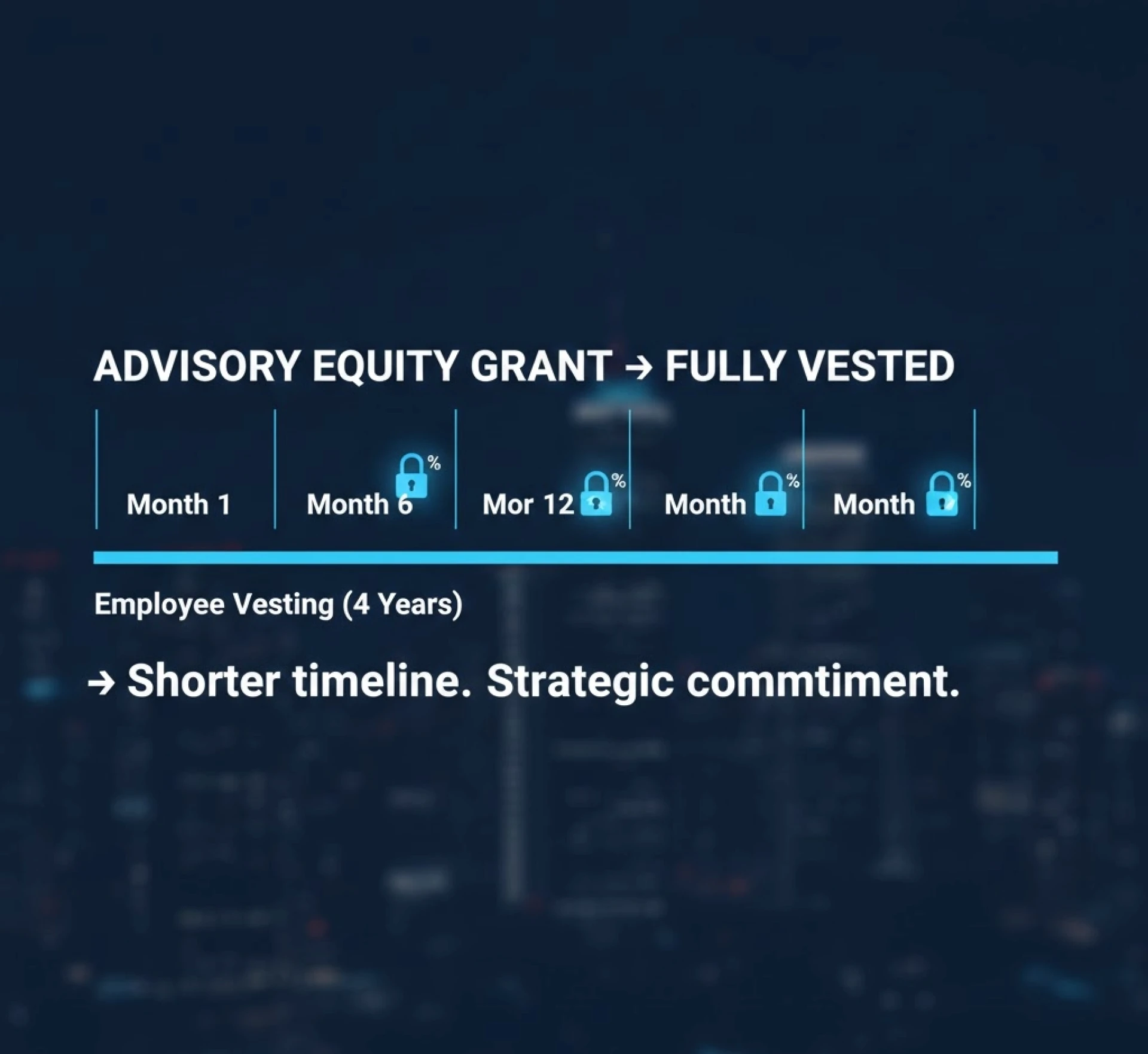

Vesting also ensures that the advisor is involved and continues to provide support. If there was no vesting schedule, the advisor would be given the whole equity grant and would stop providing support. This would not be the best situation. Therefore, vesting ensures that the equity compensation is spread over a period where the advisor is still involved.
Advisory vesting schedules are typically shorter than those for employees. Employee vesting schedules typically take four years, while vesting for advisors is typically for one or two years. This is because of the less time-intensive nature of the work.
Monthly or quarterly vesting is common. Some agreements use performance-based vesting, especially when the advisor is expected to deliver specific results such as introductions, market access, or fundraising support. Performance-based models help ensure that the advisor’s equity reflects real contributions rather than simply time spent.
Cliffs are not as common for advisors as they are for employees. A long cliff would allow an advisor to work for several months without earning any equity, which feels unfair given the limited time commitment. If a cliff is used, it is usually short.
A well-chosen vesting schedule protects the company while keeping the advisor engaged and motivated.
Content source: https://bit.ly/3LYLNoe
































Sign in to leave a comment.