

In the current challenging investment environment, venture capital firms, private equity professionals, and angel investors are bombarded with various opportunities. For startups to growth stage companies, the volume of opportunities to screen may quickly get out of hand. Organizing all these opportunities by hand is not only time-consuming but may also entail accuracy concerns. That is where deal flow software comes in as a game-changer. The software presents an organized and systematic way of tracking investments, communication, and decision-making.
The guide examines the concept of deal flow software, the significance of such software to the investment department in institutional asset management organizations such as mutual funds or pension funds, and how to select the software.
What is Deal Flow Software?
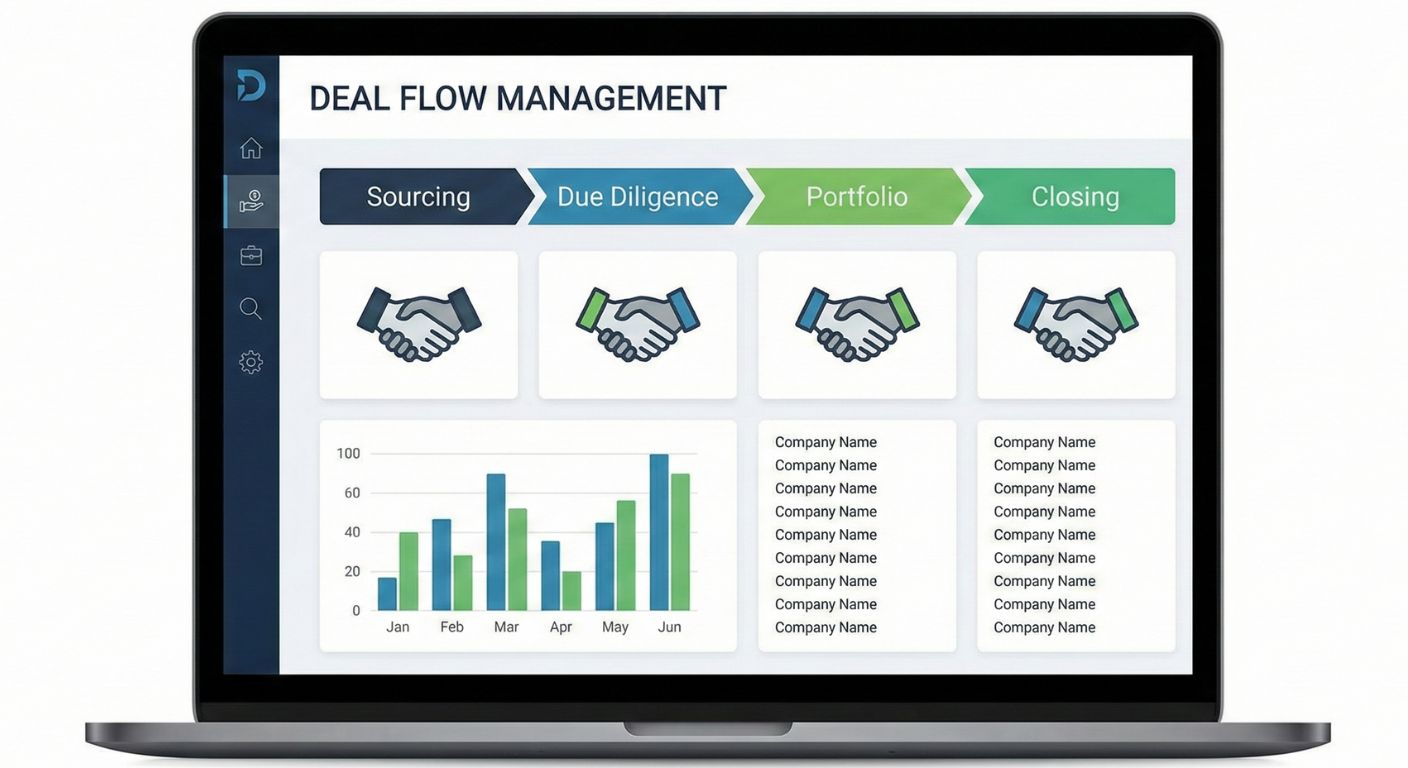
Deal flow management software is an application enabling investment opportunities to be handled right from the time of initial contact through closing. It is different from the spreadsheet program or the conventional CRM in the sense that it is investment-oriented.
The software organizes information about startups, founders, funding rounds, and communication history. By centralizing all this data, teams can ensure no opportunity is missed and every potential deal is evaluated systematically.
While most commonly used by venture capital firms, private equity firms, corporate investment teams, and angel investors also benefit from deal flow tools. The software supports efficiency, consistency, and better decision-making across all stages of the investment lifecycle.
Why Do Investment Teams Need Deal Flow Software?
The management of the deal flow process is difficult. There is also the problem of losing critical emails or missing critical deadlines. The critical communications are also sent through different tools. The deal flow software helps solve both issues.
Centralizing information is one of the main benefits. Every opportunity, document, and interaction is stored in one system, reducing the risk of lost information. It also provides clarity on which deals are active, what stage they are in, and who is responsible for the next steps.
Efficiency is another advantage. It is able to automate functions such as reminders and reporting. This means that teams are able to focus on analysis and communication with founders as opposed to working with spreadsheets and emails.
Lastly, deal flow tools optimize decision-making. The fact that teams have access to trends, historical data, and conversion rates means decisions are data-driven. Decisions will not depend on guesswork or memory.
How Does Deal Flow Software Improve Investment Tracking?
Essentially, investment tracking is basic to the management of venture capital. Deal flow software enhances a couple of basic aspects of this process.
First, pipeline visibility provides the teams with a view of the status of all deals on a single screen. Each opportunity is given a stage, like initial contact, due diligence, negotiation, or closure. This visually intuitive overview supports teams in effective prioritization and resource allocation.
Secondly, historical records ensure continuity. Every meeting, email, and phone call can be logged in the system. This means team members can pick up where others left off without losing context. It also helps evaluate patterns, such as which types of deals are more likely to succeed.
Thirdly, automated notifications remind teams of staying on schedule. Notifications for follow-up communications, deadlines, and urgent tasks ensure no deal remains overlooked. This prevents the possibility of losing out due to human negligence.
Lastly, performance metrics allow evaluating efficiency and effectiveness. Conversion rates, time to close, as well as industry results permit insights for next investment choices.
How does deal flow software support venture capital deal sourcing?
For venture capital funds, finding quality deal flow is essential. What deal flow software does for them is make the process of sorting through leads from multiple deal flow sources in one system seamless. Startups can be sourced through referrals, incubators, portals, and offline networking events. Otherwise, many could be missed.
Deal flow tools also make teamwork easier. Analysts, partners, and associates can now view deals and analyze them collectively and make notes and ratings regarding opportunities. All this helps overcome biases and make investment decisions of better quality.
Historical data plays a crucial role in sourcing. By analyzing trends related to past investments, the venture capital teams learn which industries and stages of investments can make way for high-quality investments in the future.
Additionally, most deal flow platforms come with connectivity to other research tools, including market intelligence databases and customer relationship management tools. Such components are quite valuable, as they increase the richness of the due diligence process, where teams are able to build their knowledge of possible deals.
What’s the difference between a pipeline tracker and a deal flow management tool?
A common question among investment teams is the difference between a pipeline tracker and a deal flow management tool. Although the two are related, their scope and functionality differ significantly.
A deal flow management tool, in contrast, is comprehensive. It includes all the features of a pipeline tracker but also allows for data storage, task automation, team collaboration, and analytics. It is designed to manage the complete investment lifecycle, from deal discovery to closing, in a structured and efficient manner.
This knowledge is vital for choosing the right tool for the purpose because one might realize that while in small teams, pipeline trackers might serve the purpose, in reality, deal management systems will add much more value.
What features should investors look for in deal flow software?
When assessing deal flow software, a number of the key features stand out such as custom pipelines alignment, this enables the team to mold the software to fit its investment processes. Every firm has different stages, criteria, and evaluation methods, and the software should adapt accordingly.
Functionality for collaboration plays an important part. Decisions on investment are not made in a vacuum, and having the ability to share comments, tasks, and evaluations inside the system will have the effect of promoting collaboration.
Integration with other systems is another key factor. Emailing, calendar management tools, as well as market research systems, should be integrated with the system to eliminate repetition in the work.
Analytics and reporting capabilities provide insights into pipeline health, sector trends, and deal quality. This data helps teams make better decisions and allocate resources effectively.
Security is also essential. Information regarding investments is very sensitive. Services provided on investment platforms should have robust access controls and techniques that can encrypt confidential information.
How can firms implement deal flow software successfully?
However, investing in the software is just the starting point; effective implementation is the key to unlocking its advantages.
Begin by articulating the processes in terms of workflows. The complete process for making an investment should be defined and replicated in the software. By this measure, it should be seen as one of the benefits of using the software.
Training is critical. It is important to empower all users to understand how to utilize the system, use logging data entries credibly, and maximize system features. Without this training, system adoption might be low, and system benefits may not be actualized to their fullest potential.
Another key consideration is data migration. The act of bringing in past deal data and documents helps to create continuity that would have been lost had the information not been retained. Email, calendar, and research integration increases the usefulness of the software.
Finally, review the system regularly. Investment processes evolve, and workflows may need adjustment over time. Regular audits help ensure the software continues to meet the team’s needs effectively.
What are the key benefits of using deal flow software for investors?
The benefits of deal flow software transcend efficiency. It also enables the teams to handle high volumes of opportunities without increasing administrative work.
It improves the field of visibility. Every opportunity gets recorded, tracked, and viewed by the whole team, thereby ensuring accountability and the risk of losing a deal is minimized.
Decision-making is enhanced through data-driven insights. Teams can analyze past performance, sector trends, and conversion metrics to make better investment choices.
Collaboration improves as well. Notes, updates, and tasks are centralized, keeping everyone aligned. This is especially valuable for teams spread across multiple locations.
Scalability is another important advantage. With an increasing number of transactions, deal flow software can be scaled up easily to deal with complex situations with little manual intervention.
What challenges do firms face when using deal flow software, and how can they overcome them?
Despite the enormous advantages of using deal flow software, it is important to note that the implementation stage might be filled with challenges. The fact is that some employees might resist change if they have been carrying out their respective deal flow in other software such as emails, spreadsheets, among other programs.
Data quality is another concern. Inaccurate or incomplete records reduce the effectiveness of the platform. Establishing clear guidelines for data entry and performing regular audits helps maintain consistency.
Overcomplication is a risk as well. Too many options and workflows would confuse users. The best approach would be to begin with a simple system and develop it further.
Integration issues may also arise if the software does not connect seamlessly with other tools. Choosing a platform that fits within the existing technology ecosystem reduces disruption and improves adoption.
What does deal flow software look like in real-world use?
Take a mid-sized venture capital firm with dozens of deals. In their previous system, they had deal management using spreadsheets and email threads. Follow-ups were getting missed, and duplicate work was also a common occurrence.
After implementing a deal flow management tool, the firm experienced a dramatic improvement. All deals were centralized in one platform. People could easily collaborate and annotate deals and see the entire process of a deal in real time. Analytics highlighted the sector and conversion rate trends; the company could focus in on the most promising deals.
This example shows how deal flow software transforms investment management from reactive and chaotic to proactive and organized.
How can firms choose the right deal flow software for their investment needs?
The choice of the best platform, however, demands great care. The size and structure shape the functionality. For more significant teams, there might be a demand for more complex reporting functions, while for smaller teams, simplicity might be preferred.
Investment focus also matters. Some tools are better suited for early-stage startups, while others handle growth-stage or corporate investments more effectively. Budget considerations should also guide the choice. The software must deliver value without unnecessary complexity or cost.
Ease of use is also an important consideration. An unappealing system that is difficult to learn could even inhibit its adoption and use in the first place. The most preferable platforms will simply feel like second nature and will complement the level of technical comfort of their group’s team.

What trends are shaping the future of deal flow software?
Deal flow software is constantly being improved, providing new features for investment teams. The cloud-based system may help teams in distributed locations as well. The analytics dashboard allows stakeholders to immediately view the progress of the negotiations, the upcoming activities, and the real performance of the agreements within seconds.
Data analysis and reporting are becoming more sophisticated, helping teams identify high-potential opportunities earlier.
It integrates with market research tools, databases, and CRM systems to enrich the deal evaluation process with efficiency.
In a scenario where the competition for quality is only getting tougher, the ability to track and act quickly on new business opportunities will definitely stand out as a differentiating capability in its own right.































Sign in to leave a comment.