

If you manage a fleet of electric vehicles in Dubai, you already know that the switch from petrol to electric wasn't just a change of engine. It was a change of everything. Maintenance schedules shifted. Fueling routines disappeared. Driver training had to be updated. And somewhere in the middle of all that change, one critical piece got overlooked.
What happens when one of your fleet EVs breaks down?
For most corporate fleet managers in Dubai, the honest answer is: we deal with it the same way we dealt with petrol car breakdowns. We call the same tow company. We wait the same amount of time. And we absorb the same downtime costs. Except with EVs, every one of those steps takes longer, costs more, and introduces risks that petrol vehicles never had.
This is a problem that's about to get much bigger. And the companies solving it now will have a serious operational advantage over those that aren't.
The Fleet EV Boom in Dubai Is Real
Electric fleets are no longer a pilot project in Dubai. They're becoming operational reality. Ride-hailing companies are adding EVs to their lineup. Delivery operators are testing electric vans for last-mile logistics. Corporate shuttle services are transitioning to electric buses. Real estate developers are offering EV courtesy cars. Even government entities are converting portions of their fleets.
The economics make sense. Lower fuel costs, reduced maintenance compared to combustion engines, and alignment with the UAE's sustainability mandates. For many fleet operators, the question isn't whether to go electric. It's how fast.
But there's a gap between buying EVs and running them efficiently. And that gap shows up most clearly when things go wrong on the road.
Why Fleet EV Breakdowns Are Different From Personal EV Breakdowns
When your personal EV breaks down, it ruins your afternoon. When a fleet EV breaks down, it creates a cascade of operational problems.
Revenue loss is immediate. A ride-hailing EV sitting on the shoulder of Sheikh Zayed Road isn't earning fares. A delivery van stranded in Deira isn't completing orders. Every minute of downtime translates directly into lost revenue and missed SLAs.
Driver productivity evaporates. The driver can't just switch to another vehicle. They're stuck waiting for help, managing the situation, coordinating with dispatch. One breakdown can take a driver offline for 4 to 8 hours depending on how it's handled.
Replacement logistics get complicated. Fleet managers need to dispatch a backup vehicle, reassign routes, notify customers about delays, and coordinate the recovery of the stranded EV. That's three to four people involved in solving a single breakdown.
Reputation takes a hit. If your delivery doesn't arrive on time because your EV ran out of charge, the customer doesn't care about your sustainability commitment. They just know you missed the window.
Data gaps create repeat failures. Without proper breakdown tracking, fleet managers can't identify patterns. Is a specific route causing battery drain? Is a particular EV model more breakdown-prone? Is a specific driver not charging properly? Without this intelligence, the same problems keep happening.
The Three Mistakes Fleet Managers Keep Making
After watching how corporate fleets in Dubai handle EV breakdowns, a clear pattern of mistakes emerges.
Mistake 1: Using the same roadside provider for EVs and petrol cars.
Most fleet contracts include roadside assistance bundled with insurance or a general auto service provider. These providers are designed for petrol vehicles. When they get a call about a stranded EV, they send a standard tow truck. The driver arrives and realizes they can't tow the EV with wheels down. They call for a flatbed. Another 45 minutes pass. The flatbed arrives and takes the EV to a workshop that may or may not have EV-trained technicians. The entire process can take 6 hours when the actual problem might have been solvable in 45 minutes by someone with mobile charging equipment.
Mistake 2: No centralized breakdown protocol for EVs.
Ask most fleet drivers what to do when their EV breaks down and you'll get different answers from every person. Some call their personal insurance. Some call the fleet dispatch. Some try to find a charging station themselves. There's no standardized procedure, no dedicated number, no clear chain of action. This wastes time and creates confusion at exactly the moment when speed matters most.
Mistake 3: Treating charging management and breakdown management as separate problems.
These are the same problem. Most fleet EV breakdowns happen because of poor charging management. Drivers don't plug in overnight. Vehicles aren't topped up between shifts. Routes are planned without considering battery range in summer conditions. If fleet managers integrated their charging strategy with their breakdown response, most breakdowns would never happen in the first place.
What Smart Fleet Operators Are Doing Differently
The fleet managers who are getting this right share a few common approaches.
Dedicated EV breakdown partnerships. Instead of relying on generic roadside providers, they contract with EV-specific breakdown assistance services that understand electric drivetrains, carry mobile charging equipment, and employ technicians trained on high-voltage systems. The response is faster, the diagnosis is better, and the resolution doesn't default to "tow it and hope for the best."
Standardized driver protocols. Every fleet driver gets a laminated card or app-based guide that says exactly what to do when their EV has a problem. Step one: pull over safely and activate hazards. Step two: call this specific number. Step three: describe the dashboard warning. Step four: wait for the mobile unit. No ambiguity, no personal judgment calls, no wasted time.
Subscription-based priority service. Some fleet operators in Dubai now use subscription plans with EV service providers that guarantee priority response times. When you're managing 20 EVs across the city, knowing that any breakdown will be addressed within 60 minutes regardless of location changes the entire risk calculation.
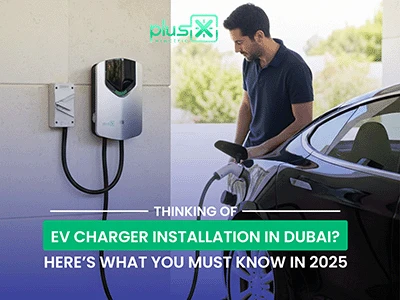
Preventive charging schedules. The best fleet managers have stopped treating charging as the driver's responsibility. They schedule doorstep charging at fleet depots or assigned parking spots overnight or between shifts. This keeps every vehicle above 60 percent charge at all times and virtually eliminates range-related breakdowns.
Breakdown data tracking. Every incident gets logged. Location, time, cause, response time, resolution, cost. Over months, this data reveals patterns that allow fleet managers to adjust routes, retrain specific drivers, or flag problematic vehicles before they break down again.
The Math That Makes Fleet Managers Pay Attention
Let's run some rough numbers for a mid-size delivery fleet in Dubai.
Assume you operate 15 EVs with an average of 2 breakdowns per vehicle per year. That's 30 breakdown events annually.
Using a traditional tow-and-workshop approach, each event costs roughly AED 800 in towing plus an average of 5 hours of driver downtime. At an estimated driver cost of AED 40 per hour and a revenue loss of AED 150 per hour of downtime, that's AED 1,750 per incident. Multiply by 30, and you're looking at AED 52,500 per year in breakdown-related losses.
Using a dedicated EV breakdown service with mobile charging and priority response, the average resolution time drops to about 90 minutes. The per-incident cost including the service fee is roughly AED 350, and downtime losses drop to AED 225. That's AED 575 per incident, or AED 17,250 annually.
The difference is AED 35,250 per year. For a fleet of 15 vehicles. Scale that to 50 or 100 vehicles and the savings are substantial enough to justify an entirely new operational process.
These numbers are estimates, but the directional math is consistent across every fleet operator who has made the switch. Faster response means less downtime. Less downtime means more revenue. Better resolution means fewer repeat incidents. It compounds.
What Fleet Managers Should Do This Month
If you manage any number of EVs in Dubai, here are four things worth doing in the next 30 days.
Audit your current breakdown response. Call your existing roadside provider and ask specifically what happens when an EV calls for help. Do they carry mobile charging? Do they use flatbed towing? Are their technicians EV-certified? If the answers are vague, you have a gap.
Set up a dedicated EV breakdown number. Whether you partner with an EV-specific service or not, every driver should know exactly who to call and what to say. One number, one process, no guessing.
Track your last 6 months of EV incidents. If you haven't been logging breakdowns, start now. Even basic data (date, vehicle, location, cause, resolution time) will reveal patterns you're currently blind to.
Explore subscription or priority plans. Several EV service providers in Dubai now offer fleet packages with guaranteed response times, dedicated account managers, and bundled charging plus breakdown coverage. The cost is usually offset by the downtime savings within the first quarter.
Dubai's fleet landscape is going electric whether operators are ready or not. The fleets that build proper EV support systems now, covering both routine charging and emergency breakdown response, will run leaner, lose less revenue, and scale faster. Everyone else will keep paying the hidden tax of treating electric vehicles like petrol cars.
About the Author: This article was written for fleet operators and corporate decision-makers managing electric vehicles in the UAE. For dedicated EV breakdown assistance and fleet charging solutions across Dubai, visit PlusX Electric or download the PlusX Electric app. Call +971 54 279 6424.



























Sign in to leave a comment.